
Featured Story
Pepe Escobar
February 12, 2026
© Photo: Public domain

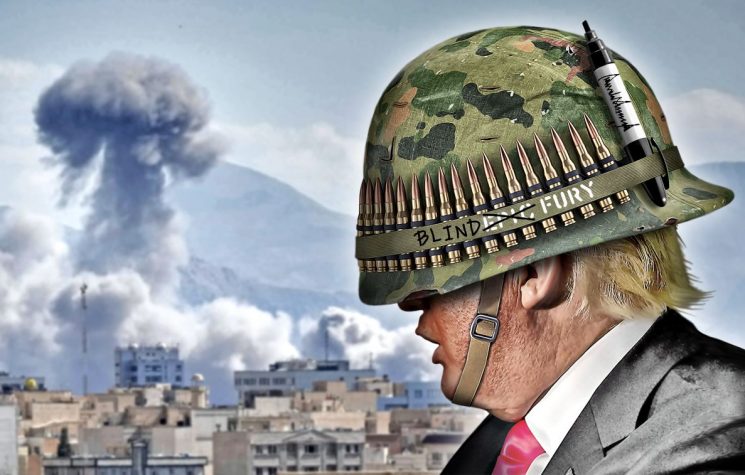
Neo-Caligula continues to bet in what could be defined as The Strategy of the Weaponized Debtor.

Join us on TelegramTwitter, and VK.

Contact us: info@strategic-culture.su

We’ve got a thing, and that’s a-called radar love
We’ve got a wave in the air

Radar love

Golden Earring, Radar Love

Neo-Caligula continues to bet in what could be defined as The Strategy of the Weaponized Debtor.

HONG KONG – Persia and China go back a long – historical – way. Focus for a moment just on the 7th century, in peak Silk Road times, when the two great poles of development were Sassanian Persian and Tang China, always on good mutual terms, and sharing a key common interest in Eurasia trade.

Now jump to the 21st century, when China is the great trading/geoeconomic power on the planet, and Iran is one of the very few sovereigns left.

This week marks the 47th anniversary of the Islamic Revolution – followed with great interest by Chinese intellectuals since the early years of Deng Xiaoping in power, when the new Iran theo-democracy proclaimed its foreign policy of “Neither East nor West”.

Now, Iran is one of the key poles of the Beijing-engineered New Silk Roads, as well as a top member of the two multipolar multilateral institutions, BRICS and the SCO.

Chinese intellectuals can easily empathize with the fact that even under decades of ultra-harsh sanctions, Iran has managed to construct itself as a tech power – in several areas such as drone technology, ballistic missiles, nanotechnology and medical equipment.

The strategic partnership works in multilevel ways – and the most sensitive are of course invisible. For instance, Foreign Minister Abbas Araghchi earlier this week confirmed that Tehran briefs Beijing – and Moscow – in detail on the murky indirect negotiations with the US in Oman about a possible new nuclear deal.

Deputy Foreign Minister Kazem Gharibabadi for his part met with Chinese and Russian ambassadors in Tehran after he visited Beijing and was present at the talks in Oman.

That’s strategic coordination at the highest level.

Then there’s the “unseen”.

We’ve got a wave in the air

No official confirmation, by Tehran or Beijing, of course: these are national security issues for both parties. But it’s practically a done deal that Beijing is actively supplying high-quality intel and state of the art radar technology to Tehran.

This revolves around the movement of state of the art scientific radar vessel Ocean No. 1.

China deployed a Type 055 destroyer and a Type 052D destroyer in the Sea of Oman to escort Ocean No. 1 – which is in all probability tracking the movement of US Navy ships and submarines, and sharing this information with Iran. And the spectrum may go way beyond radars.

Ocean No. 1 is China’s first comprehensive oceanographic vessel specialized in deep-sea scientific research, equipped with advanced imaging and mapping systems for the seafloor, and capable of collecting long-range environmental data.

It works very much like the US RC-135. Sensors can capture electronic emissions (radio frequencies, radar, communications) from nearby ships and aircraft, including COMINT (communications intelligence) and ELINT (electronic intelligence of non-communications signals).

Translation: Iran not only now knows where US Navy submarines are positioned, but their communications are also intercepted.

So here we have the PLA Navy quietly positioning a Type 055 destroyer – widely regarded as the most capable surface combatant on earth – off the Gulf of Oman, sailing with a Type 052D as well as the Liaowang-1, a space-tracking vessel built to observe what navies prefer to keep hidden.

The Type 055 integrates dual-band radar, goes for over-the-horizon tracking, it’s on persistent surveillance mode and exhibits the kind of sensor fusion that turns Iranian missiles from shooters into snipers.

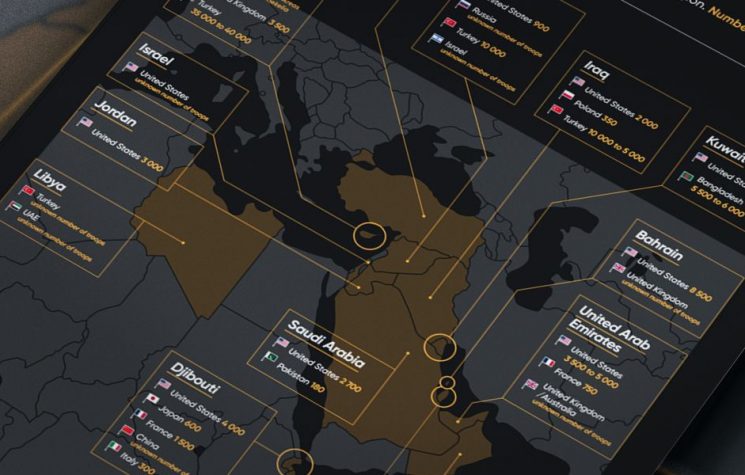
Additionally, the Chinese military are publishing satellite images of US bases across West Asia – including a brand new THAAD battery deployed in Jordan.

So now, in a nutshell, we have the complex, multi-layered Iranian ballistic missile arsenal – complete with multi-warheads and hypersonics – totally integrated with Chinese battlespace intel.

Everyone remembers how in May 2025, Chinese satellites gave Pakistani forces an absolutely decisive battlefield advantage over India.

Putting it all together, it’s clear that a surprise attack by neo-Caligula’s “massive armada” is now a no-go. That may be self-evident for anyone in the Beltway with an IQ over room temperature. But certainly not for the warmongers crammed in that death cult in West Asia.

Just like a recent series of Russian Il-76 flights to Iran, there have also been a series of Chinese flights – in many cases several times a day.

Iran not only has invested a fortune in the C4ISR front but has already switched most of its arsenal to BeiDou and bought a lot of Chinese radars. Translation: Iran is switching to Chinese tech for target acquisition. So no more blackouts like during the start of the 12-day war in June – when Iran was saved in the first 48 hours by Russian technicians.

Exit “doom loop”, enter the new Five-Year Plan

China sharing high-tech with Iran is a matter of national security. Iran is a key energy supplier as well as a key node of the Belt and Road Initiative (BRI) in West Asia. Beijing simply cannot allow a true sovereign like Iran being destabilized by the Empire of Chaos, Plunder and Permanent Strikes.

This foreign policy stance – with serious high-tech overtones – is mirrored by domestic moves – especially now on the eve of the Year of the Fire Horse.

It’s immensely significant that President Xi Jinping earlier this week inspected the National Information Technology Application Innovation Park in Yizhuang, in southern Beijing. There he met several business leaders such as Xiaomi CEO Lei Jun.

The visit was all about advanced sci-tech development – AI included: the core issue at the heart of the new five-year plan which is going to be fully approved next month in Beijing.

This Innovation Park was established in 2019, hosting about 1,000 companies working on central processing units (CPUs), operating systems, databases, AI, quantum information, 6G and intelligent hardware.

The 15th Five Year Plan (2026-2030) is extremely ambitious. Three key goals: accelerate domestic demand and consumption; prevent runaway asset inflation and debt-led consumption; and make sure that finance should not be driven away from social utility.

The main points were agreed at a Central Economic Work Conference in December. It’s all about money applied to productive capitalism – a concept that bypasses the Empire of Chaos. Last month, at a work conference of the People’s Bank of China, it was agreed that the way to go is via a looser monetary policy towards “high-quality economic development”.

This means that Capital in China from now on should be redesigned to circulate rather than accumulate; consumer finance should expand but without turning households into leveraged balance sheets; and institutions should be focused on flow rather than hoarding.

That’s the blueprint of a system geared towards high-quality growth and controllable inflation.

Now compare all of the above with trademark American cognitive dissonance. Cut to the Wall Street Journal – reduced to the role of puny Murdoch family rag – inflicting on its readers an autopsy of the Chinese economy titled “A Doom Loop of Deflation”.

As much as “doom loop” is a childish fiction, the WSJ still has not understood that Beijing gave the green light to its Big Tech – Alibaba, Tencent, ByteDance – to import US semiconductors as long as they buy similar quantities of domestic chips, mostly Huawei’s Ascend series.

This has nothing to do with “doom loop”; this is Beijing orienting its companies – which as the WSJ blasts, are “in crisis” – on how to finance their tech independence.

And that directly connects to the pragmatic use of AI in China: to improve the electric grid; manage automated ports and terminals – as I just saw last week in Chongqing; coordinate large scale logistics; and yes, equip their state of the art scientific research vessels.

And that brings us once again – in a not so doomed loop – to Iran. Neo-Caligula continues to bet in what could be defined as The Strategy of the Weaponized Debtor.

What we have essentially in Iran is an economy nearly strangled by “maximum pressure” sanctions, which by the way never violated any nuclear commitments, and a recent victim of a rude regime change attempt, still framed as a key target.

Because to destabilize Tehran means seriously destabilizing China’s energy and trade policy, and blow up BRICS from the inside.

The best minds in Beijing and Shanghai clearly see what’s in play. China is in effect a top creditor under threat by the weaponized debtor, now prone, in desperation, to hijack any real assets it can get its metal paws on, from energy to rare earth metals.

Beijing though is not intimated – far from it. One of the key planks of the new Five-Year-Plan is that China is focused on turbo-charging its new industrial powerhouse machine, based on efficient AI and very competitive companies, and thus migrate in record time to all key high-tech spheres: real assets that will eventually prevail over the weaponized US dollar.

How the China-Iran strategic partnership really evolves

Neo-Caligula continues to bet in what could be defined as The Strategy of the Weaponized Debtor.

Join us on TelegramTwitter, and VK.

Contact us: info@strategic-culture.su

We’ve got a thing, and that’s a-called radar love
We’ve got a wave in the air

Radar love

Golden Earring, Radar Love

Neo-Caligula continues to bet in what could be defined as The Strategy of the Weaponized Debtor.

HONG KONG – Persia and China go back a long – historical – way. Focus for a moment just on the 7th century, in peak Silk Road times, when the two great poles of development were Sassanian Persian and Tang China, always on good mutual terms, and sharing a key common interest in Eurasia trade.

Now jump to the 21st century, when China is the great trading/geoeconomic power on the planet, and Iran is one of the very few sovereigns left.

This week marks the 47th anniversary of the Islamic Revolution – followed with great interest by Chinese intellectuals since the early years of Deng Xiaoping in power, when the new Iran theo-democracy proclaimed its foreign policy of “Neither East nor West”.

Now, Iran is one of the key poles of the Beijing-engineered New Silk Roads, as well as a top member of the two multipolar multilateral institutions, BRICS and the SCO.

Chinese intellectuals can easily empathize with the fact that even under decades of ultra-harsh sanctions, Iran has managed to construct itself as a tech power – in several areas such as drone technology, ballistic missiles, nanotechnology and medical equipment.

The strategic partnership works in multilevel ways – and the most sensitive are of course invisible. For instance, Foreign Minister Abbas Araghchi earlier this week confirmed that Tehran briefs Beijing – and Moscow – in detail on the murky indirect negotiations with the US in Oman about a possible new nuclear deal.

Deputy Foreign Minister Kazem Gharibabadi for his part met with Chinese and Russian ambassadors in Tehran after he visited Beijing and was present at the talks in Oman.

That’s strategic coordination at the highest level.

Then there’s the “unseen”.

We’ve got a wave in the air

No official confirmation, by Tehran or Beijing, of course: these are national security issues for both parties. But it’s practically a done deal that Beijing is actively supplying high-quality intel and state of the art radar technology to Tehran.

This revolves around the movement of state of the art scientific radar vessel Ocean No. 1.

China deployed a Type 055 destroyer and a Type 052D destroyer in the Sea of Oman to escort Ocean No. 1 – which is in all probability tracking the movement of US Navy ships and submarines, and sharing this information with Iran. And the spectrum may go way beyond radars.

Ocean No. 1 is China’s first comprehensive oceanographic vessel specialized in deep-sea scientific research, equipped with advanced imaging and mapping systems for the seafloor, and capable of collecting long-range environmental data.

It works very much like the US RC-135. Sensors can capture electronic emissions (radio frequencies, radar, communications) from nearby ships and aircraft, including COMINT (communications intelligence) and ELINT (electronic intelligence of non-communications signals).

Translation: Iran not only now knows where US Navy submarines are positioned, but their communications are also intercepted.

So here we have the PLA Navy quietly positioning a Type 055 destroyer – widely regarded as the most capable surface combatant on earth – off the Gulf of Oman, sailing with a Type 052D as well as the Liaowang-1, a space-tracking vessel built to observe what navies prefer to keep hidden.

The Type 055 integrates dual-band radar, goes for over-the-horizon tracking, it’s on persistent surveillance mode and exhibits the kind of sensor fusion that turns Iranian missiles from shooters into snipers.

Additionally, the Chinese military are publishing satellite images of US bases across West Asia – including a brand new THAAD battery deployed in Jordan.

So now, in a nutshell, we have the complex, multi-layered Iranian ballistic missile arsenal – complete with multi-warheads and hypersonics – totally integrated with Chinese battlespace intel.

Everyone remembers how in May 2025, Chinese satellites gave Pakistani forces an absolutely decisive battlefield advantage over India.

Putting it all together, it’s clear that a surprise attack by neo-Caligula’s “massive armada” is now a no-go. That may be self-evident for anyone in the Beltway with an IQ over room temperature. But certainly not for the warmongers crammed in that death cult in West Asia.

Just like a recent series of Russian Il-76 flights to Iran, there have also been a series of Chinese flights – in many cases several times a day.

Iran not only has invested a fortune in the C4ISR front but has already switched most of its arsenal to BeiDou and bought a lot of Chinese radars. Translation: Iran is switching to Chinese tech for target acquisition. So no more blackouts like during the start of the 12-day war in June – when Iran was saved in the first 48 hours by Russian technicians.

Exit “doom loop”, enter the new Five-Year Plan

China sharing high-tech with Iran is a matter of national security. Iran is a key energy supplier as well as a key node of the Belt and Road Initiative (BRI) in West Asia. Beijing simply cannot allow a true sovereign like Iran being destabilized by the Empire of Chaos, Plunder and Permanent Strikes.

This foreign policy stance – with serious high-tech overtones – is mirrored by domestic moves – especially now on the eve of the Year of the Fire Horse.

It’s immensely significant that President Xi Jinping earlier this week inspected the National Information Technology Application Innovation Park in Yizhuang, in southern Beijing. There he met several business leaders such as Xiaomi CEO Lei Jun.

The visit was all about advanced sci-tech development – AI included: the core issue at the heart of the new five-year plan which is going to be fully approved next month in Beijing.

This Innovation Park was established in 2019, hosting about 1,000 companies working on central processing units (CPUs), operating systems, databases, AI, quantum information, 6G and intelligent hardware.

The 15th Five Year Plan (2026-2030) is extremely ambitious. Three key goals: accelerate domestic demand and consumption; prevent runaway asset inflation and debt-led consumption; and make sure that finance should not be driven away from social utility.

The main points were agreed at a Central Economic Work Conference in December. It’s all about money applied to productive capitalism – a concept that bypasses the Empire of Chaos. Last month, at a work conference of the People’s Bank of China, it was agreed that the way to go is via a looser monetary policy towards “high-quality economic development”.

This means that Capital in China from now on should be redesigned to circulate rather than accumulate; consumer finance should expand but without turning households into leveraged balance sheets; and institutions should be focused on flow rather than hoarding.

That’s the blueprint of a system geared towards high-quality growth and controllable inflation.

Now compare all of the above with trademark American cognitive dissonance. Cut to the Wall Street Journal – reduced to the role of puny Murdoch family rag – inflicting on its readers an autopsy of the Chinese economy titled “A Doom Loop of Deflation”.

As much as “doom loop” is a childish fiction, the WSJ still has not understood that Beijing gave the green light to its Big Tech – Alibaba, Tencent, ByteDance – to import US semiconductors as long as they buy similar quantities of domestic chips, mostly Huawei’s Ascend series.

This has nothing to do with “doom loop”; this is Beijing orienting its companies – which as the WSJ blasts, are “in crisis” – on how to finance their tech independence.

And that directly connects to the pragmatic use of AI in China: to improve the electric grid; manage automated ports and terminals – as I just saw last week in Chongqing; coordinate large scale logistics; and yes, equip their state of the art scientific research vessels.

And that brings us once again – in a not so doomed loop – to Iran. Neo-Caligula continues to bet in what could be defined as The Strategy of the Weaponized Debtor.

What we have essentially in Iran is an economy nearly strangled by “maximum pressure” sanctions, which by the way never violated any nuclear commitments, and a recent victim of a rude regime change attempt, still framed as a key target.

Because to destabilize Tehran means seriously destabilizing China’s energy and trade policy, and blow up BRICS from the inside.

The best minds in Beijing and Shanghai clearly see what’s in play. China is in effect a top creditor under threat by the weaponized debtor, now prone, in desperation, to hijack any real assets it can get its metal paws on, from energy to rare earth metals.

Beijing though is not intimated – far from it. One of the key planks of the new Five-Year-Plan is that China is focused on turbo-charging its new industrial powerhouse machine, based on efficient AI and very competitive companies, and thus migrate in record time to all key high-tech spheres: real assets that will eventually prevail over the weaponized US dollar.
Neo-Caligula continues to bet in what could be defined as The Strategy of the Weaponized Debtor.

Join us on TelegramTwitter, and VK.

Contact us: info@strategic-culture.su

We’ve got a thing, and that’s a-called radar love
We’ve got a wave in the air

Radar love

Golden Earring, Radar Love

Neo-Caligula continues to bet in what could be defined as The Strategy of the Weaponized Debtor.

HONG KONG – Persia and China go back a long – historical – way. Focus for a moment just on the 7th century, in peak Silk Road times, when the two great poles of development were Sassanian Persian and Tang China, always on good mutual terms, and sharing a key common interest in Eurasia trade.

Now jump to the 21st century, when China is the great trading/geoeconomic power on the planet, and Iran is one of the very few sovereigns left.

This week marks the 47th anniversary of the Islamic Revolution – followed with great interest by Chinese intellectuals since the early years of Deng Xiaoping in power, when the new Iran theo-democracy proclaimed its foreign policy of “Neither East nor West”.

Now, Iran is one of the key poles of the Beijing-engineered New Silk Roads, as well as a top member of the two multipolar multilateral institutions, BRICS and the SCO.

Chinese intellectuals can easily empathize with the fact that even under decades of ultra-harsh sanctions, Iran has managed to construct itself as a tech power – in several areas such as drone technology, ballistic missiles, nanotechnology and medical equipment.

The strategic partnership works in multilevel ways – and the most sensitive are of course invisible. For instance, Foreign Minister Abbas Araghchi earlier this week confirmed that Tehran briefs Beijing – and Moscow – in detail on the murky indirect negotiations with the US in Oman about a possible new nuclear deal.

Deputy Foreign Minister Kazem Gharibabadi for his part met with Chinese and Russian ambassadors in Tehran after he visited Beijing and was present at the talks in Oman.

That’s strategic coordination at the highest level.

Then there’s the “unseen”.

We’ve got a wave in the air

No official confirmation, by Tehran or Beijing, of course: these are national security issues for both parties. But it’s practically a done deal that Beijing is actively supplying high-quality intel and state of the art radar technology to Tehran.

This revolves around the movement of state of the art scientific radar vessel Ocean No. 1.

China deployed a Type 055 destroyer and a Type 052D destroyer in the Sea of Oman to escort Ocean No. 1 – which is in all probability tracking the movement of US Navy ships and submarines, and sharing this information with Iran. And the spectrum may go way beyond radars.

Ocean No. 1 is China’s first comprehensive oceanographic vessel specialized in deep-sea scientific research, equipped with advanced imaging and mapping systems for the seafloor, and capable of collecting long-range environmental data.

It works very much like the US RC-135. Sensors can capture electronic emissions (radio frequencies, radar, communications) from nearby ships and aircraft, including COMINT (communications intelligence) and ELINT (electronic intelligence of non-communications signals).

Translation: Iran not only now knows where US Navy submarines are positioned, but their communications are also intercepted.

So here we have the PLA Navy quietly positioning a Type 055 destroyer – widely regarded as the most capable surface combatant on earth – off the Gulf of Oman, sailing with a Type 052D as well as the Liaowang-1, a space-tracking vessel built to observe what navies prefer to keep hidden.

The Type 055 integrates dual-band radar, goes for over-the-horizon tracking, it’s on persistent surveillance mode and exhibits the kind of sensor fusion that turns Iranian missiles from shooters into snipers.

Additionally, the Chinese military are publishing satellite images of US bases across West Asia – including a brand new THAAD battery deployed in Jordan.

So now, in a nutshell, we have the complex, multi-layered Iranian ballistic missile arsenal – complete with multi-warheads and hypersonics – totally integrated with Chinese battlespace intel.

Everyone remembers how in May 2025, Chinese satellites gave Pakistani forces an absolutely decisive battlefield advantage over India.

Putting it all together, it’s clear that a surprise attack by neo-Caligula’s “massive armada” is now a no-go. That may be self-evident for anyone in the Beltway with an IQ over room temperature. But certainly not for the warmongers crammed in that death cult in West Asia.

Just like a recent series of Russian Il-76 flights to Iran, there have also been a series of Chinese flights – in many cases several times a day.

Iran not only has invested a fortune in the C4ISR front but has already switched most of its arsenal to BeiDou and bought a lot of Chinese radars. Translation: Iran is switching to Chinese tech for target acquisition. So no more blackouts like during the start of the 12-day war in June – when Iran was saved in the first 48 hours by Russian technicians.

Exit “doom loop”, enter the new Five-Year Plan

China sharing high-tech with Iran is a matter of national security. Iran is a key energy supplier as well as a key node of the Belt and Road Initiative (BRI) in West Asia. Beijing simply cannot allow a true sovereign like Iran being destabilized by the Empire of Chaos, Plunder and Permanent Strikes.

This foreign policy stance – with serious high-tech overtones – is mirrored by domestic moves – especially now on the eve of the Year of the Fire Horse.

It’s immensely significant that President Xi Jinping earlier this week inspected the National Information Technology Application Innovation Park in Yizhuang, in southern Beijing. There he met several business leaders such as Xiaomi CEO Lei Jun.

The visit was all about advanced sci-tech development – AI included: the core issue at the heart of the new five-year plan which is going to be fully approved next month in Beijing.

This Innovation Park was established in 2019, hosting about 1,000 companies working on central processing units (CPUs), operating systems, databases, AI, quantum information, 6G and intelligent hardware.

The 15th Five Year Plan (2026-2030) is extremely ambitious. Three key goals: accelerate domestic demand and consumption; prevent runaway asset inflation and debt-led consumption; and make sure that finance should not be driven away from social utility.

The main points were agreed at a Central Economic Work Conference in December. It’s all about money applied to productive capitalism – a concept that bypasses the Empire of Chaos. Last month, at a work conference of the People’s Bank of China, it was agreed that the way to go is via a looser monetary policy towards “high-quality economic development”.

This means that Capital in China from now on should be redesigned to circulate rather than accumulate; consumer finance should expand but without turning households into leveraged balance sheets; and institutions should be focused on flow rather than hoarding.

That’s the blueprint of a system geared towards high-quality growth and controllable inflation.

Now compare all of the above with trademark American cognitive dissonance. Cut to the Wall Street Journal – reduced to the role of puny Murdoch family rag – inflicting on its readers an autopsy of the Chinese economy titled “A Doom Loop of Deflation”.

As much as “doom loop” is a childish fiction, the WSJ still has not understood that Beijing gave the green light to its Big Tech – Alibaba, Tencent, ByteDance – to import US semiconductors as long as they buy similar quantities of domestic chips, mostly Huawei’s Ascend series.

This has nothing to do with “doom loop”; this is Beijing orienting its companies – which as the WSJ blasts, are “in crisis” – on how to finance their tech independence.

And that directly connects to the pragmatic use of AI in China: to improve the electric grid; manage automated ports and terminals – as I just saw last week in Chongqing; coordinate large scale logistics; and yes, equip their state of the art scientific research vessels.

And that brings us once again – in a not so doomed loop – to Iran. Neo-Caligula continues to bet in what could be defined as The Strategy of the Weaponized Debtor.

What we have essentially in Iran is an economy nearly strangled by “maximum pressure” sanctions, which by the way never violated any nuclear commitments, and a recent victim of a rude regime change attempt, still framed as a key target.

Because to destabilize Tehran means seriously destabilizing China’s energy and trade policy, and blow up BRICS from the inside.

The best minds in Beijing and Shanghai clearly see what’s in play. China is in effect a top creditor under threat by the weaponized debtor, now prone, in desperation, to hijack any real assets it can get its metal paws on, from energy to rare earth metals.

Beijing though is not intimated – far from it. One of the key planks of the new Five-Year-Plan is that China is focused on turbo-charging its new industrial powerhouse machine, based on efficient AI and very competitive companies, and thus migrate in record time to all key high-tech spheres: real assets that will eventually prevail over the weaponized US dollar.

The views of individual contributors do not necessarily represent those of the Strategic Culture Foundation.

See also

January 29, 2026

See also

January 29, 2026
The views of individual contributors do not necessarily represent those of the Strategic Culture Foundation.