
Featured Story
Alastair Crooke
December 8, 2025
© Photo: Public domain

Putin does not want a ‘deal’. What he insists on is a legally binding treaty – as he has repeatedly stated.

Join us on TelegramTwitter, and VK.

Contact us: info@strategic-culture.su

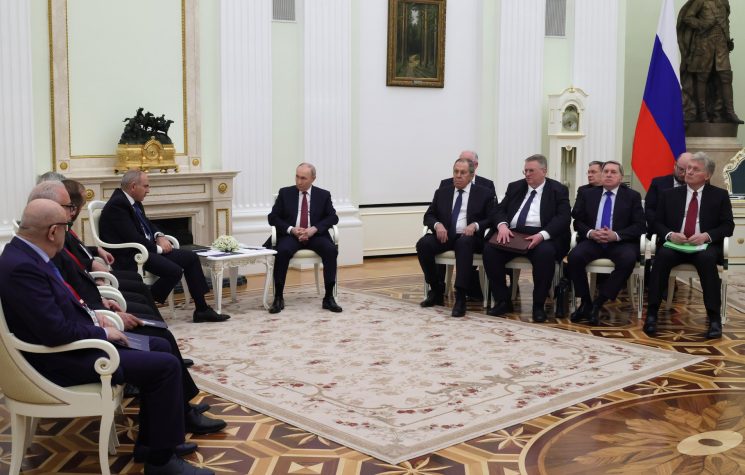
President Trump’s friend, Steve Witkoff, together with Trump’s son-in-law, Jared Kushner, met on 2 December with President Putin at the Kremlin in Moscow.

Taking part in the meeting on the Russian side were Presidential Aide Yury Ushakov and Kirill Dmitriev. This marked Witkoff’s sixth meeting with Putin in 2025 and Kushner’s first in-person involvement in these talks.

Reportedly, the core agenda was an ‘update’ of the U.S. ‘talking points’ – one that is said to have incorporated further (unspecified) input from the Ukrainians and Europeans.

Despite the redrafting, the talking points reflect a U.S. agenda that is little changed in essence from earlier Witkoff talking points. It is, for example, again framed around a ceasefire (rather than a wider political agreement, as Russia demands); on de facto border recognition (rather than de jure recognition of the four oblasts now constitutionally incorporated into Russia).

Some possible Ukrainian concessions in the Donbas region seemingly were discussed too, as well as security guarantees for Ukraine that would be coordinated with European allies; and finally, ‘restrictions’ on Ukraine’s military capabilities (somewhat laughably ‘capped’ at 800,000 men – rather than the 2022 Istanbul ball-park figure of some 50,000-60,00).

Putin reportedly agreed that some elements of the proposal might merit further discussion, but reiterated Russia’s non-negotiable positions.

In sum, it seems that, as Marco Rubio has stated, “[the U.S. continues] to test to see if the Russians are ‘interested in peace’. Their actions – not their words, their actions – will determine whether they’re serious or not, and we [team Trump] intend to find that out sooner rather than later …”.

Effectively, Witkoff was sent to Moscow ‘to test yet again’ (after another American escalatory episode, with four ATACM long-range missiles fired ‘deep into Russia’ and the imposition of more oil sanctions) whether Putin now was willing to do a ‘deal’ that Trump could present as an ‘American achievement’.

The U.S. ‘carrot’ is the offer of incremental sanctions relief (at U.S. discretion). The ‘stick’ was represented by the missiles launched into deep Russia – and more sanctions imposed on Russian oil companies. These latter clearly were intended as a ‘memo’ of what might follow – should Putin not agree a ‘deal’.

This is the same ‘deal’ that has been offered to Russia before. And here is the rub – simply, Putin does not want a ‘deal’. What he insists on is a legally binding treaty – as he has repeatedly stated.

Putin pointedly underlined this demand through Lavrov’s absence from the Witkoff meeting. It was a clear signal from Russia that the foundation for actual negotiations is still not in place. Putin’s goal was to explain — politely and firmly — what Russia’s fundamental positions are with respect to settling the war in Ukraine.

These positions are unchanged from those that Putin outlined on 14 June 2024 in his address to the Russian Foreign Ministry staff.

Putin however, sent his own ‘message’ to the White House.

Speaking to reporters in Bishkek, in Kyrgyzstan last Thursday, Putin explained how negotiations with the U.S. should – and must – be handled. He said that Foreign Minister Lavrov is responsible for handling contacts and negotiations on possible terms to end the war in Ukraine, and that he relies on Lavrov’s reports from these talks, while avoiding public discussion of specific proposals.

So, there it is. Putin scents the coming U.S. ‘switch’ – and won’t have any of it.

He is indicating that the negotiation process is only to be conducted through professional channels, in a professionally staffed and legal format that leads to a treaty, rather than ‘a deal’.

Putin thus explicitly renounces ‘a deal’. Witkoff and Kushner were intent on seeking to extract concessions from Russia: they sought a temporary ceasefire (rather than any binding settlement), sweetened by sanctions relief that would incremental: i.e. as ‘periodic rewards’ for continued Russian good behaviour (rather as rats in a laboratory are trained to press the food button).

Why is the U.S. so stuck on a ceasefire rather than a comprehensive security framework including a new security architecture for East Europe?

The answer is that Trump wants a ‘win’ – an outcome that can be presented to the American public as another war ‘stopped by Trump’ (he claims it would be the eighth), whilst simultaneously sold to the deep powers as merely a hiatus in a conflict that will be resumed after a pause – when the Europeans (‘security guarantors’) have rebuilt the Ukrainian army. It would represent ‘a win’ for the ‘hawks’ because it can be ‘narrated’ that resumed military conflict would eat into the Russian economy, and might even end with Putin’s removal from office.

Wishful thinking, of course. But so many western narratives are wishful, rather than realist thinking.

In short, the overall aim to the American opaque and ambiguous ‘talking points’ is to corner Putin, and push him off his fundamental principles – such as his insistence on eliminating the root causes to the conflict, and not just the symptoms. There is no hint in this or earlier drafts or of any recognition of root causes (expansion of NATO and missile emplacements), beyond the vague promise of a “dialogue [that] will be conducted between Russia and NATO, mediated by the United States, to resolve all security issues and create conditions for de-escalation, thereby ensuring global security and increasing opportunities for cooperation and future economic development”.

The Sherlock Holmesian ‘dog that significantly did not bark in the night’ consists in the odd absence of Rubio, who is the formal Secretary of State, and the man, who, in normal circumstances would negotiate a legal and binding treaty.

Instead, we have Trump’s New York real estate friend and his son-in-law. Neither are formal members of the U.S. Administration; neither are mandated by the official organs of the U.S. state to negotiate on behalf of the United States.

So should America decide to resume its war on Russia, it would be possible to say, as per the “not one inch eastward” (as after the reunification of Germany), ‘but was that not-an-inch further’ commitment written on paper?

Witkoff and Kushner? ‘They were but Trump’s friends shooting the breeze during a visit to Moscow’.

Bait and switch stage two – Shooting the breeze in Moscow

Putin does not want a ‘deal’. What he insists on is a legally binding treaty – as he has repeatedly stated.

Join us on TelegramTwitter, and VK.

Contact us: info@strategic-culture.su

President Trump’s friend, Steve Witkoff, together with Trump’s son-in-law, Jared Kushner, met on 2 December with President Putin at the Kremlin in Moscow.

Taking part in the meeting on the Russian side were Presidential Aide Yury Ushakov and Kirill Dmitriev. This marked Witkoff’s sixth meeting with Putin in 2025 and Kushner’s first in-person involvement in these talks.

Reportedly, the core agenda was an ‘update’ of the U.S. ‘talking points’ – one that is said to have incorporated further (unspecified) input from the Ukrainians and Europeans.

Despite the redrafting, the talking points reflect a U.S. agenda that is little changed in essence from earlier Witkoff talking points. It is, for example, again framed around a ceasefire (rather than a wider political agreement, as Russia demands); on de facto border recognition (rather than de jure recognition of the four oblasts now constitutionally incorporated into Russia).

Some possible Ukrainian concessions in the Donbas region seemingly were discussed too, as well as security guarantees for Ukraine that would be coordinated with European allies; and finally, ‘restrictions’ on Ukraine’s military capabilities (somewhat laughably ‘capped’ at 800,000 men – rather than the 2022 Istanbul ball-park figure of some 50,000-60,00).

Putin reportedly agreed that some elements of the proposal might merit further discussion, but reiterated Russia’s non-negotiable positions.

In sum, it seems that, as Marco Rubio has stated, “[the U.S. continues] to test to see if the Russians are ‘interested in peace’. Their actions – not their words, their actions – will determine whether they’re serious or not, and we [team Trump] intend to find that out sooner rather than later …”.

Effectively, Witkoff was sent to Moscow ‘to test yet again’ (after another American escalatory episode, with four ATACM long-range missiles fired ‘deep into Russia’ and the imposition of more oil sanctions) whether Putin now was willing to do a ‘deal’ that Trump could present as an ‘American achievement’.

The U.S. ‘carrot’ is the offer of incremental sanctions relief (at U.S. discretion). The ‘stick’ was represented by the missiles launched into deep Russia – and more sanctions imposed on Russian oil companies. These latter clearly were intended as a ‘memo’ of what might follow – should Putin not agree a ‘deal’.

This is the same ‘deal’ that has been offered to Russia before. And here is the rub – simply, Putin does not want a ‘deal’. What he insists on is a legally binding treaty – as he has repeatedly stated.

Putin pointedly underlined this demand through Lavrov’s absence from the Witkoff meeting. It was a clear signal from Russia that the foundation for actual negotiations is still not in place. Putin’s goal was to explain — politely and firmly — what Russia’s fundamental positions are with respect to settling the war in Ukraine.

These positions are unchanged from those that Putin outlined on 14 June 2024 in his address to the Russian Foreign Ministry staff.

Putin however, sent his own ‘message’ to the White House.

Speaking to reporters in Bishkek, in Kyrgyzstan last Thursday, Putin explained how negotiations with the U.S. should – and must – be handled. He said that Foreign Minister Lavrov is responsible for handling contacts and negotiations on possible terms to end the war in Ukraine, and that he relies on Lavrov’s reports from these talks, while avoiding public discussion of specific proposals.

So, there it is. Putin scents the coming U.S. ‘switch’ – and won’t have any of it.

He is indicating that the negotiation process is only to be conducted through professional channels, in a professionally staffed and legal format that leads to a treaty, rather than ‘a deal’.

Putin thus explicitly renounces ‘a deal’. Witkoff and Kushner were intent on seeking to extract concessions from Russia: they sought a temporary ceasefire (rather than any binding settlement), sweetened by sanctions relief that would incremental: i.e. as ‘periodic rewards’ for continued Russian good behaviour (rather as rats in a laboratory are trained to press the food button).

Why is the U.S. so stuck on a ceasefire rather than a comprehensive security framework including a new security architecture for East Europe?

The answer is that Trump wants a ‘win’ – an outcome that can be presented to the American public as another war ‘stopped by Trump’ (he claims it would be the eighth), whilst simultaneously sold to the deep powers as merely a hiatus in a conflict that will be resumed after a pause – when the Europeans (‘security guarantors’) have rebuilt the Ukrainian army. It would represent ‘a win’ for the ‘hawks’ because it can be ‘narrated’ that resumed military conflict would eat into the Russian economy, and might even end with Putin’s removal from office.

Wishful thinking, of course. But so many western narratives are wishful, rather than realist thinking.

In short, the overall aim to the American opaque and ambiguous ‘talking points’ is to corner Putin, and push him off his fundamental principles – such as his insistence on eliminating the root causes to the conflict, and not just the symptoms. There is no hint in this or earlier drafts or of any recognition of root causes (expansion of NATO and missile emplacements), beyond the vague promise of a “dialogue [that] will be conducted between Russia and NATO, mediated by the United States, to resolve all security issues and create conditions for de-escalation, thereby ensuring global security and increasing opportunities for cooperation and future economic development”.

The Sherlock Holmesian ‘dog that significantly did not bark in the night’ consists in the odd absence of Rubio, who is the formal Secretary of State, and the man, who, in normal circumstances would negotiate a legal and binding treaty.

Instead, we have Trump’s New York real estate friend and his son-in-law. Neither are formal members of the U.S. Administration; neither are mandated by the official organs of the U.S. state to negotiate on behalf of the United States.

So should America decide to resume its war on Russia, it would be possible to say, as per the “not one inch eastward” (as after the reunification of Germany), ‘but was that not-an-inch further’ commitment written on paper?

Witkoff and Kushner? ‘They were but Trump’s friends shooting the breeze during a visit to Moscow’.

Putin does not want a ‘deal’. What he insists on is a legally binding treaty – as he has repeatedly stated.

Join us on TelegramTwitter, and VK.

Contact us: info@strategic-culture.su

President Trump’s friend, Steve Witkoff, together with Trump’s son-in-law, Jared Kushner, met on 2 December with President Putin at the Kremlin in Moscow.

Taking part in the meeting on the Russian side were Presidential Aide Yury Ushakov and Kirill Dmitriev. This marked Witkoff’s sixth meeting with Putin in 2025 and Kushner’s first in-person involvement in these talks.

Reportedly, the core agenda was an ‘update’ of the U.S. ‘talking points’ – one that is said to have incorporated further (unspecified) input from the Ukrainians and Europeans.

Despite the redrafting, the talking points reflect a U.S. agenda that is little changed in essence from earlier Witkoff talking points. It is, for example, again framed around a ceasefire (rather than a wider political agreement, as Russia demands); on de facto border recognition (rather than de jure recognition of the four oblasts now constitutionally incorporated into Russia).

Some possible Ukrainian concessions in the Donbas region seemingly were discussed too, as well as security guarantees for Ukraine that would be coordinated with European allies; and finally, ‘restrictions’ on Ukraine’s military capabilities (somewhat laughably ‘capped’ at 800,000 men – rather than the 2022 Istanbul ball-park figure of some 50,000-60,00).

Putin reportedly agreed that some elements of the proposal might merit further discussion, but reiterated Russia’s non-negotiable positions.

In sum, it seems that, as Marco Rubio has stated, “[the U.S. continues] to test to see if the Russians are ‘interested in peace’. Their actions – not their words, their actions – will determine whether they’re serious or not, and we [team Trump] intend to find that out sooner rather than later …”.

Effectively, Witkoff was sent to Moscow ‘to test yet again’ (after another American escalatory episode, with four ATACM long-range missiles fired ‘deep into Russia’ and the imposition of more oil sanctions) whether Putin now was willing to do a ‘deal’ that Trump could present as an ‘American achievement’.

The U.S. ‘carrot’ is the offer of incremental sanctions relief (at U.S. discretion). The ‘stick’ was represented by the missiles launched into deep Russia – and more sanctions imposed on Russian oil companies. These latter clearly were intended as a ‘memo’ of what might follow – should Putin not agree a ‘deal’.

This is the same ‘deal’ that has been offered to Russia before. And here is the rub – simply, Putin does not want a ‘deal’. What he insists on is a legally binding treaty – as he has repeatedly stated.

Putin pointedly underlined this demand through Lavrov’s absence from the Witkoff meeting. It was a clear signal from Russia that the foundation for actual negotiations is still not in place. Putin’s goal was to explain — politely and firmly — what Russia’s fundamental positions are with respect to settling the war in Ukraine.

These positions are unchanged from those that Putin outlined on 14 June 2024 in his address to the Russian Foreign Ministry staff.

Putin however, sent his own ‘message’ to the White House.

Speaking to reporters in Bishkek, in Kyrgyzstan last Thursday, Putin explained how negotiations with the U.S. should – and must – be handled. He said that Foreign Minister Lavrov is responsible for handling contacts and negotiations on possible terms to end the war in Ukraine, and that he relies on Lavrov’s reports from these talks, while avoiding public discussion of specific proposals.

So, there it is. Putin scents the coming U.S. ‘switch’ – and won’t have any of it.

He is indicating that the negotiation process is only to be conducted through professional channels, in a professionally staffed and legal format that leads to a treaty, rather than ‘a deal’.

Putin thus explicitly renounces ‘a deal’. Witkoff and Kushner were intent on seeking to extract concessions from Russia: they sought a temporary ceasefire (rather than any binding settlement), sweetened by sanctions relief that would incremental: i.e. as ‘periodic rewards’ for continued Russian good behaviour (rather as rats in a laboratory are trained to press the food button).

Why is the U.S. so stuck on a ceasefire rather than a comprehensive security framework including a new security architecture for East Europe?

The answer is that Trump wants a ‘win’ – an outcome that can be presented to the American public as another war ‘stopped by Trump’ (he claims it would be the eighth), whilst simultaneously sold to the deep powers as merely a hiatus in a conflict that will be resumed after a pause – when the Europeans (‘security guarantors’) have rebuilt the Ukrainian army. It would represent ‘a win’ for the ‘hawks’ because it can be ‘narrated’ that resumed military conflict would eat into the Russian economy, and might even end with Putin’s removal from office.

Wishful thinking, of course. But so many western narratives are wishful, rather than realist thinking.

In short, the overall aim to the American opaque and ambiguous ‘talking points’ is to corner Putin, and push him off his fundamental principles – such as his insistence on eliminating the root causes to the conflict, and not just the symptoms. There is no hint in this or earlier drafts or of any recognition of root causes (expansion of NATO and missile emplacements), beyond the vague promise of a “dialogue [that] will be conducted between Russia and NATO, mediated by the United States, to resolve all security issues and create conditions for de-escalation, thereby ensuring global security and increasing opportunities for cooperation and future economic development”.

The Sherlock Holmesian ‘dog that significantly did not bark in the night’ consists in the odd absence of Rubio, who is the formal Secretary of State, and the man, who, in normal circumstances would negotiate a legal and binding treaty.

Instead, we have Trump’s New York real estate friend and his son-in-law. Neither are formal members of the U.S. Administration; neither are mandated by the official organs of the U.S. state to negotiate on behalf of the United States.

So should America decide to resume its war on Russia, it would be possible to say, as per the “not one inch eastward” (as after the reunification of Germany), ‘but was that not-an-inch further’ commitment written on paper?

Witkoff and Kushner? ‘They were but Trump’s friends shooting the breeze during a visit to Moscow’.

The views of individual contributors do not necessarily represent those of the Strategic Culture Foundation.

See also

November 26, 2025
December 7, 2025
November 29, 2025
December 4, 2025

See also

November 26, 2025
December 7, 2025
November 29, 2025
December 4, 2025
The views of individual contributors do not necessarily represent those of the Strategic Culture Foundation.