


The West is in free fall, without rules or morals, Sonja van den Ende writes.
Join us on Telegram , Twitter
 , and VK
 .
.
Contact us: info@strategic-culture.su
The Bureau of the Parliamentary Assembly of the Council of Europe (PACE), part of the Council of Europe (not the European Union), established in October 2025 a platform for Russians in exile called the Russian Democratic Forces, which is intended to represent a new Russian government-in-exile in Europe.
With little media attention, Europe is attempting to elevate the status of the Russian opposition, while openly admitting that the new, so-called opposition lacks the structure and power to make a significant difference. Above all, they admit that the selection of members for this so-called government-in-exile was fundamentally undemocratic.
Following the formation of a so-called representative delegation of Belarusian democratic forces, the Assembly recently decided to appoint a Russian delegation as well – again, without democratic consultation.
Regarding the Russian Democratic Forces, some individuals were invited to participate in hearings organized by Assembly committees. During these hearings, the discussions focused solely on how these figures could help end what they call “Russia’s war of aggression” and on ways to strengthen sanctions against Russia.
The most absurd claim is their desire to guarantee Russians access to free and independent media in order to counter Russian disinformation. This is reminiscent of the sanctions Europe has imposed on Russian media outlets such as RT, Sputnik, Channel One Russia, etc., and, of course, this geopolitical website, the Strategic Culture Foundation, where this article is published. The new media outlets they propose to establish are, naturally, funded by Europe itself – a platform for the so-called Russian government-in-exile.
They will rely exclusively on European disinformation articles opposing the current Russian government. The Russians in exile, out of fear, will write articles filled with anti-Russian propaganda and criticism, afraid of losing their European residence permits or visas should they write anything positive about Russia.
The absurdity of it all, of course, is that Europe itself has been censoring its own media and journalists since new legislation, such as the Digital Services Act (DSA), was approved. Since February 2025, the EU has officially implemented the 2022 law to combat disinformation, particularly what they call “fake news” originating from Russia.
Or take the European Media Freedom Act (EMFA): This law came into effect in May 2024 and supposedly protects media pluralism and ensures that journalists can work without state interference or abuse of legal process. An example of this absurdity – and the exact opposite of what the EMFA advocates – is the case of German journalist Hüseyin Dogru, who has been completely cut off from funding due to European Union sanctions and can no longer provide for his family’s basic needs while living in Germany. He is accused of spreading disinformation about Russia and Israel.
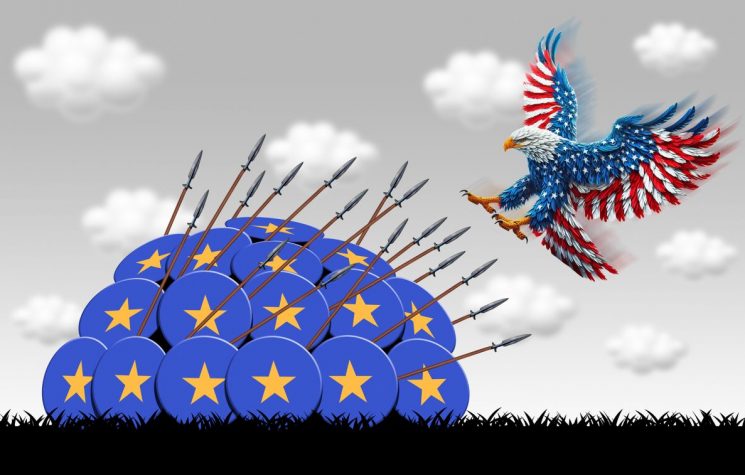
Another initiative is the so-called European Democracy Shield, presented in November 2025. This initiative aims to protect the EU’s democratic information space from foreign interference and information manipulation. Yet this initiative is now being violated by Europe itself. As they state: “The European Democracy Shield initiative aims to strengthen information integrity in Europe by addressing issues such as disinformation and election interference.” But this is exactly the opposite of what the EU is doing by establishing – by Europeans – a so-called Russian government-in-exile, which, by their own admission, may not have been entirely democratic in its establishment or candidate selection.
After all, it is the European Union itself, through the European Commission, that has established an undemocratic Russian government-in-exile, as they themselves admit. The president of the so-called committee that approves the candidates and the structure of the platform is German, and other committee members come from Spain and Cyprus. Not a single Russian sits on the Assembly’s board.
They even prepared a list of so-called “democratic” candidates promoting the new Russian government-in-exile – a list of “Participants of the Russian Democratic Forces” for the platform. This list is approved exclusively by the Bureau of the Assembly – the European Union, or in this case, the European Commission – based on a proposal from the President of the Assembly, who, as mentioned, is a European citizen of German nationality. The list of potential candidates is submitted to the President of the Assembly in consultation with organizations of the Russian Democratic Forces whose members meet the criteria, and is approved by them.
This is, of course, utterly absurd. Imagine the reverse situation: Russia establishes a committee for, say, Dutch or German citizens in exile, appoints them as the opposition government for the Netherlands and/or Germany, and recognizes them as a government-in-exile in Russia. Perhaps Russia should do this as counter-propaganda – to show Europe and make it clear that their behavior is absurd, undemocratic, and, above all, insane. I can just imagine the headlines in European media and the outrage from European politicians and journalists – full of words like “undemocratic and criminal” – if Russia were to do this!
Among the members of the so-called Russian government-in-exile are names such as Mikhail Khodorkovsky, the oligarch once convicted in Russia for fraud and theft, who has already served time in a Russian prison, and chess grandmaster Garry Kasparov, who has a far stronger connection to modern-day Azerbaijan or Armenia, having been born and spent his entire childhood in Baku, present-day Azerbaijan.
Another well-known opponent is Vladimir Kara-Murza, who claims to have been poisoned by Putin – similar to the Skripal and Litvinenko cases, or more recently, the allegation that Navalny was poisoned in a Russian prison. He is described as a Russian-British political activist, journalist, author, filmmaker, and a former political prisoner. He is the vice-chairman of Open Russia, an NGO founded by the convicted former oligarch Mikhail Khodorkovsky, which promotes civil society and democracy in Russia. In essence, they promote the interests of the US and Europe and advocate for Russia’s subordination to them, running as puppet presidents and governments for the West.
Also part of the new Russian government-in-exile are the deranged members of the provocative punk rock group Pussy Riot, such as Nadya Tolokonnikova. These individuals, eager to attract attention with provocative actions against the Russian Orthodox Church – actions bordering on Satanism (in Europe they are called feminists) – have been condemned in Russia for their behavior. Wikipedia (a Western propaganda tool) even acknowledges that public opinion in Russia is not sympathetic to the band members. They have been labeled an extremist organization in Russia. These are just a few candidates; the rest of those chosen are even less significant or unknown to the Russian people.
Europe is also using ethnic minorities in Russia – such as the Bashkirs, Chuvash, Tatars, Chechens, and many others – to sow division and thus break up Russia, following the example of the Balkanization of the former Yugoslavia. A good example of the propaganda machine targeting ethnic minorities in Russia is the German Center for East European and International Studies, called ZOiS, located in Berlin, Germany.
For instance, a certain PD Dr. Sabine von Löwis has written an article there on “Conflict Dynamics and Border Regions,” which discusses: “The disintegration of the Soviet Union led to the creation of not only the fifteen successor states but also a series of de facto states and peoples.” The goal is likely to drive a wedge between the various groups living in the Russian Federation.
The Russian government-in-exile, as the EU calls it, was established following the example of the Americans, who have appointed puppet presidents and governments worldwide to destabilize the countries they effectively occupy and thus plunder their resources. Russia itself is rich in resources such as gas, oil, and minerals. Some members of Russia’s indigenous peoples, as mentioned above, are also on the list of the so-called Russian government-in-exile. This is a blatant provocation by the EU to drive a wedge between Russians – or at least that is the intent. In recent years, entire sessions have appeared on YouTube proposing to divide Russia along ethnic lines, just as was done with the former Yugoslavia, which is now under the control of Europe and the US.
Recent examples of US regime change, with European assistance, include Syria, Venezuela, the blockade against Cuba, the ongoing destabilization of Greenland, and, of course, the conflict in Ukraine. Russia’s neighbors, such as Georgia, Moldova, Armenia, and Azerbaijan, have also fallen victim to provocations involving regime change and destabilization. This task is now largely reserved for the Europeans – particularly in Ukraine, Moldova, and Georgia – with US assistance behind the scenes.
But do not think for a moment that Ukraine will be completely abandoned to Europe. The Americans, together with the Europeans, are eyeing the riches, natural resources, and rare earth metals found primarily in the Donbas, which are now largely in Russian hands. Leaving Ukraine to the Europeans is merely a pretext for so-called peace talks.
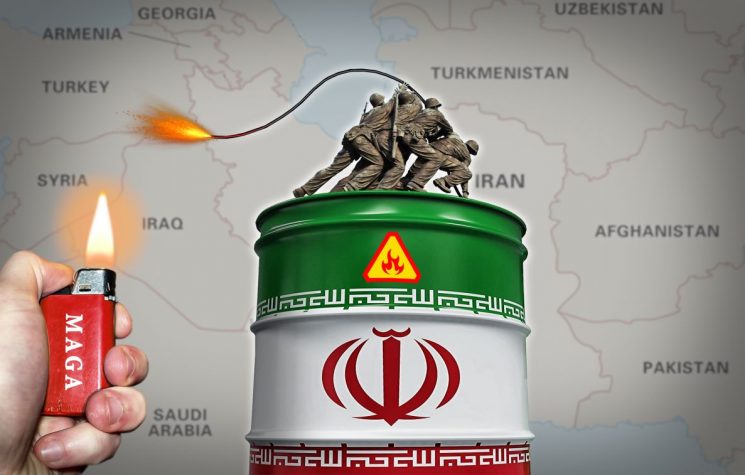
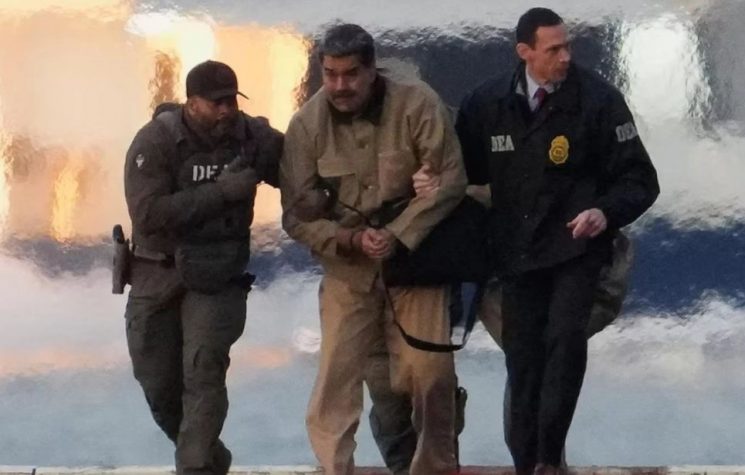
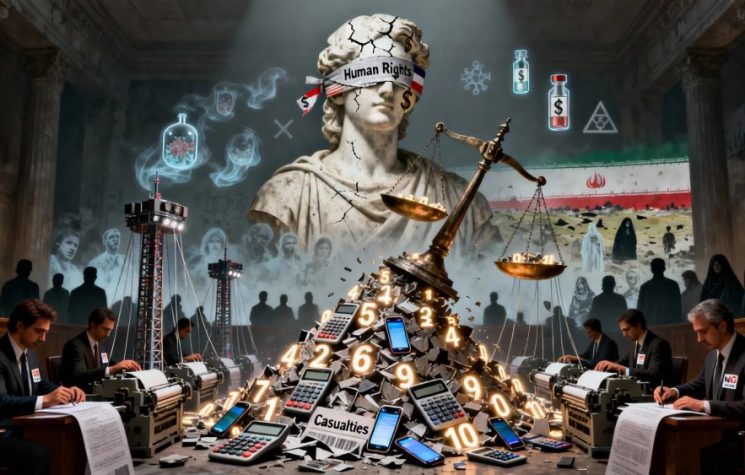
Times are growing dangerous these days, with an American administration that talks about peace while simultaneously attacking countries, kidnapping presidents, and throwing them in jail. It supports terrorist leaders in Syria and transfers thousands of ISIS terrorists from the Kurdish-controlled al-Hawl camp to Iraq. What will they do with them? Release them for a potential coming war against Iran – an ally of Russia? Hopefully not, but these days, we cannot be sure. The West is in free fall, without rules or morals.