
World
Erkin Oncan
January 6, 2026
© Photo: SCF

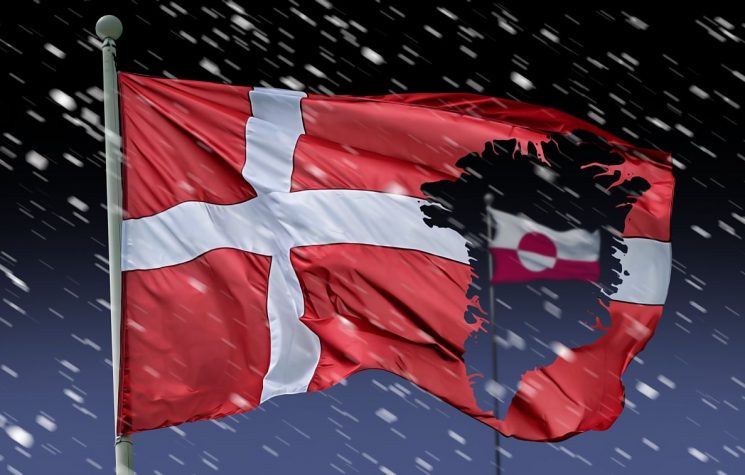
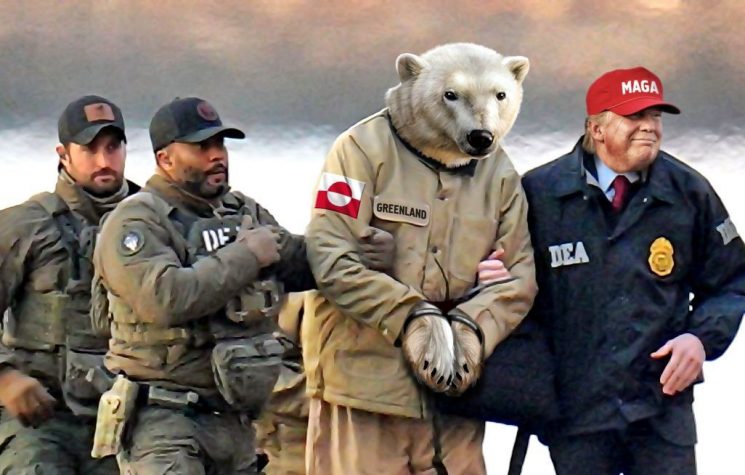
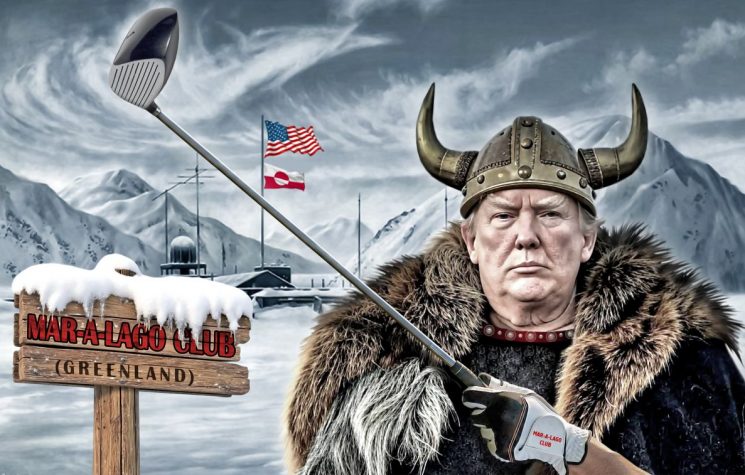
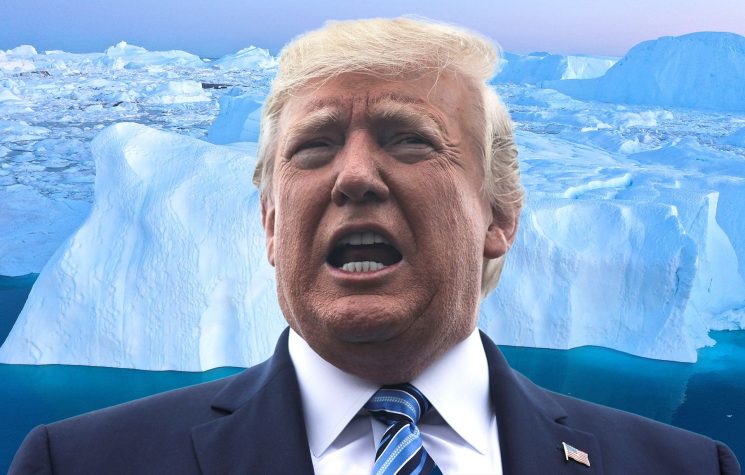
Greenland is poised to become the next hot topic after Venezuela in Washington’s new foreign policy based on “hard power.”

Join us on TelegramTwitter, and VK.

Contact us: info@strategic-culture.su

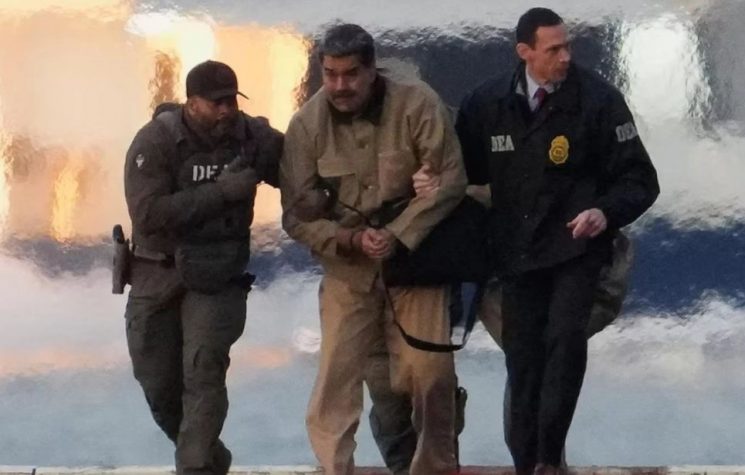
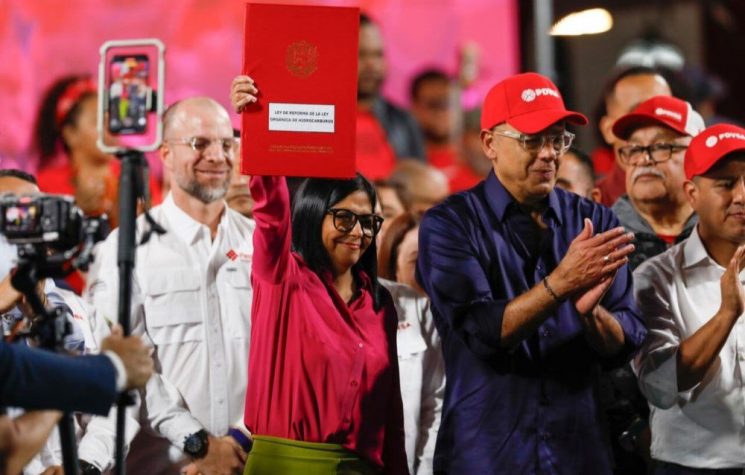
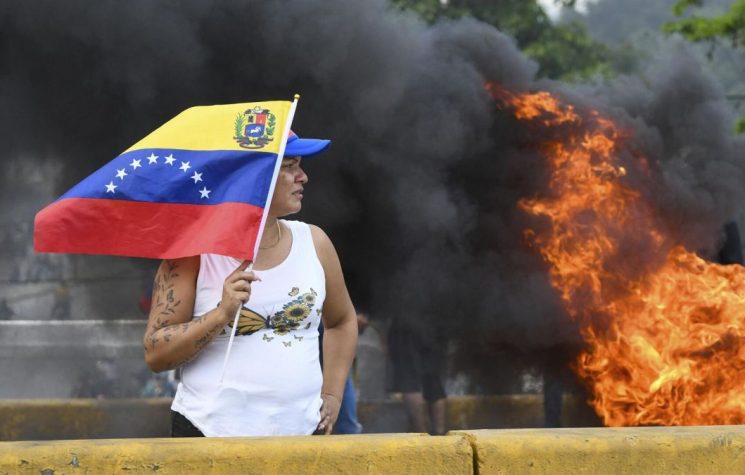
While the world was still talking about U.S. forces bombing Venezuela and the abduction of President Nicolás Maduro and his wife Cilia Flores to be “tried,” U.S. President Donald Trump, without taking a breath, began listing America’s “other targets.”

In the hours when the repercussions of the Venezuela operation were still unfolding, Trump targeted Mexico and President Claudia Sheinbaum, claiming that the country was “run by cartels,” and said, “Something will have to be done.”

He attacked Colombian President Gustavo Petro by saying, “They have factories that produce cocaine, they produce cocaine and send it to the United States,” and claimed that Delcy Rodríguez, who took over Venezuela’s leadership after Maduro, could “pay a heavier price than Maduro” if she “does not do the right thing.”

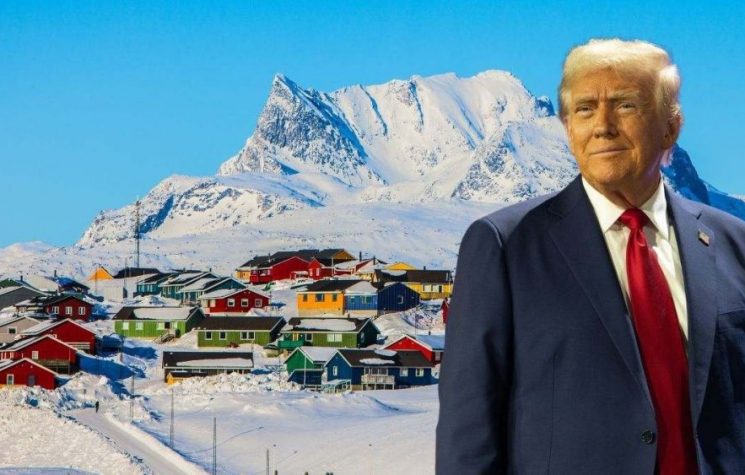
Meanwhile, among Trump’s statements—which could in fact be described as “expected”—the most striking was that he once again put Greenland on the agenda.

What happened?

In fact, Trump was not the first person in the American public sphere to wedge Greenland into the Venezuela “victory.” The issue first surfaced through a post by Katie Miller—who is also the wife of Stephen Miller, Trump’s Deputy Policy and Homeland Security Advisor—showing Greenland wrapped in a U.S. flag, accompanied by the note “Soon.”

The reaction to Miller’s post was swift. Denmark’s Ambassador to Washington, Jesper Møller Sørensen, wrote on X:
“U.S. security is also the security of Greenland and Denmark. Greenland is also a NATO member. The Kingdom of Denmark and the United States work together to ensure security in the Arctic. We expect full respect for the territorial integrity of the Kingdom of Denmark.”

Trump, however, reopened the Greenland debate in an interview with The Atlantic magazine.

Responding to a question about Secretary of State Marco Rubio’s remark that “Trump does what he says,” and about his own earlier statements on Greenland, Trump said:
“Marco was very generous to me. Back then I wasn’t talking about Greenland, but we definitely need Greenland. We need it for defense,” and claimed that Greenland is surrounded by ships belonging to Russia and China.

Danish Prime Minister Mette Frederiksen also responded to Trump’s remarks by saying, “President Trump must stop his threats toward Greenland.” Stating that it made absolutely no sense to talk about the United States needing to take over Greenland, Frederiksen said, “The U.S. has no right to annex any of the three countries that make up the Kingdom of Denmark.”

At the same time, Trump’s recent move—on December 21—of appointing Louisiana Governor Jeff Landry as special representative for Greenland was also interpreted as a striking step.

“Our future is not determined on social media”

Greenlandic leader Jens-Frederik Nielsen also sent a “no panic” message in a post on Facebook:

“First of all, I would like to say very calmly and clearly that there is no need to panic or be worried. This image shared by Katie Miller, showing Greenland as if it were wrapped in the American flag, changes nothing. Our country is not for sale, and our future is not determined by social media posts. However, this image is disrespectful.

We are a democratic society with self-government, free elections, and strong institutions. Our position is clearly grounded in international law and internationally recognized agreements. This is not up for discussion.

Naalakkersuisut (the government) continues its work calmly and responsibly. There is no reason for panic. But there is more than enough reason to stand against disrespect.”

“Our country is not something that can simply be taken away”

Along with the prime minister, former prime minister and current minister responsible for finance and taxation, Múte Bourup Egede, voiced his reaction with the following words:

“I cannot accept this repeated lack of respect toward us by the American administration. If this attitude continues, it will be necessary to seriously question whether cooperation is possible at all. Because our country is not something that can simply be taken away. Cooperation based on mutual trust is a value we must always protect. We will continue to fight for our country.”

Why Greenland?

In fact, for Trump—and indeed for the U.S. administration—Greenland is an “old case.”

Trump first confirmed the claim, which came to the fore with The Washington Post’s 2019 headline “Trump wants to buy Greenland. How much would it cost?”, by saying, “It would be a great real estate deal.” When this statement was described as an “absurd discussion” by Danish leader Mette Frederiksen, Trump canceled his planned Greenland visit.

In the period that followed, the issue remained one of Trump’s “desires,” but was overshadowed by other major agendas such as Trump’s impeachment, the presidency of former President Joe Biden, and the war between Russia and Ukraine.

After emerging victorious from the U.S. elections, Trump, even before officially taking office, said in a Truth Social post on December 23, 2024, that Greenland should be under U.S. control and that this was an “absolute necessity.”

As this statement dominated the global agenda, the initially cautious “We are not for sale” objections from the Denmark/Greenland front were not enough to close the issue.

At the time, EU High Representative for Foreign Affairs Kaja Kallas set out the EU’s position by saying, “The EU is not negotiating on Greenland.”

However, the demands of Trump’s America regarding the island further escalated the process.

While Trump’s remarks were still fresh, Donald Trump Jr.’s surprise visit to Greenland also made headlines.

The history of U.S.–Greenland relations

The United States’ interest in Greenland actually predates Trump and is rooted in American geopolitical interests.

Indeed, after first purchasing Alaska in 1867, the U.S. repeatedly attempted to take control of Greenland—first in 1910 as part of a complex territorial exchange proposal involving the Philippines, the West Indies, and North Schleswig; again in 1917; and in 1946 with an offer of $100 million plus a territorial exchange—but failed each time.

The U.S. established its military presence in Greenland on the basis of the April 9, 1941 defense agreement. With this agreement, the United States was granted the right to establish military bases throughout Greenland.

By the end of World War II, the U.S. was active at 17 locations in Greenland. The agreement reorganized under NATO in 1951 continued to recognize Danish sovereignty, and with the Igaliku Agreement of August 6, 2004, the U.S. presence was limited solely to Thule Air Base (now Pituffik Space Base).

Why is Greenland important to the U.S.?

Greenland is important to the United States both because of its geographical location and its underground resources.

According to a 2023 classification by the European Commission, 25 of the 34 minerals deemed critical—along with rare earth elements such as graphite, copper, nickel, and titanium—are present in Greenland.

Another feature that makes Greenland critical in the eyes of the U.S. is its strategic position in the Arctic region and, in Trump’s words, the presence of “China and Russia.”

As climate change melts the ice, newly emerging areas of military competition and new trade routes were reflected in detail in the Arctic Strategy document published by the United States in 2024.

The document’s identification of Russia and China as the biggest threats in the Arctic also helps explain the Trump administration’s “insistence” on Greenland.

For a United States preparing for Arctic competition, a Greenland under full control would serve a far more significant function than the limited capabilities of existing bases.

America’s Arctic power

Although the rhetoric of “defense” stands out in the U.S. Arctic strategy, the military power it maintains in the Arctic and surrounding regions is quite striking. Since the Cold War, the U.S. has used countries it calls “our allies” as weapons depots and military bases.

To recall known U.S. military locations in the Arctic and neighboring countries:

  • Under the U.S. Marines Prepositioning Program in Norway, heavy weapons and equipment are pre-positioned for rapid deployment “in times of crisis.”
  • Also in Norway, the Varanger base serves as an important logistics and training center for U.S. Marines, while U.S. military equipment depots are located in Trondheim. These sites are equipped with Marines, armored vehicles, artillery systems, and air defense systems.
  • The Keflavik base in Iceland is used for NATO missions and by the U.S. Air Force.
  • Thule Air Base in Greenland, which hosts a U.S. ballistic missile early warning system, is also used for space surveillance activities.
  • At Eielson Air Force Base in Alaska, F-16 and F-35 fighter jets are stationed, while ballistic missile defense systems are on standby at Fort Greely.
  • In addition, large-scale military exercises conducted in Alaska under the names Northern Edge and Noble Defender are accompanied by the Arctic Challenge Exercise organized together with NATO allies.

In short, a Greenland “fully under control” would have the potential to become the main hub of the U.S. Arctic security umbrella.

Russia’s Arctic posture

The China–Russia ships emphasized by Trump illustrate, from the U.S. perspective, the “urgency” of the region. Russia, a “natural component” of the region, also has assets there.

Among these military points are Northern Clover on Kotelny Island—Russia’s northernmost military base with air defense systems and radar facilities—the Nagurskoye Air Base, the largest Russian military air base in the Arctic; Rogachevo Air Base on Novaya Zemlya; Severomorsk, the main base of Russia’s Northern Fleet; Murmansk, the headquarters of the Northern Fleet; Tiksi Air Base; and the newly built Sabetta and Nagurskoye bases on the Yamal Peninsula.

Thus, for the U.S., a Greenland “fully under control” would mean that the threat facing Russia in the Arctic region reaches a vital level.

How much of the Arctic is China a part of?

China’s growing presence in the Arctic primarily consists of research-oriented naval and scientific research vessels.

Beyond ships that explore sea routes and natural resources, the famous icebreaker ships used to navigate among Arctic ice are also among the concerns of the Atlantic front.

It is anticipated that China will expand its sphere of influence on the basis of its growing military cooperation with Russia.

On the other hand, China views the Arctic as the “common heritage of mankind” and, contrary to U.S. statements that “it is not a stakeholder in the region,” has pursued an active Arctic policy for a very long time.

In 2010, China proposed that sea areas beyond Exclusive Economic Zones be included in the common heritage of mankind. For China, the Arctic region also has economic importance, such as the “Polar Silk Road” route.

The United States, however, does not see China as part of the Arctic. Yet China’s Arctic policy and involvement in related issues have a history of nearly 100 years:

  • In 1925, China joined the Spitsbergen Treaty, which recognizes Norway’s sovereignty over the Arctic archipelago of Svalbard and provides for its demilitarization, and began participating in the resolution of Arctic issues. From the 1920s onward, China increased its efforts in Arctic exploration and expanded the scope of its activities.
  • In 1996, China became a member of the International Arctic Science Committee.
  • Since 1999, it has conducted scientific research in the Arctic with its research vessel Xue Long (Snow Dragon).
  • In 2004, it built the Arctic Yellow River Station in Ny-Ålesund in the Svalbard archipelago.
  • According to the White Paper published in 2018 detailing its Arctic Strategy, by the end of 2017 China had carried out eight scientific expeditions in the Arctic Ocean and conducted research for 14 years based at the Yellow River Station.
  • China also became the first Asian country to host the Arctic Science Summit Week, a high-level conference on Arctic issues, and in 2013 became an accredited observer to the Arctic Council.
  • China also states in official documents that it prioritizes scientific research in Arctic affairs, emphasizes the importance of environmental protection and international cooperation, and argues that the Arctic, together with its littoral states, “as a whole concerns the well-being of all humanity.”

Greenland, which Trump has once again put on the agenda by saying “We need it,” is poised to become the next hot topic after Venezuela in Washington’s new foreign policy based on “hard power.”

This move not only defines a strategic appetite for a piece of territory, but also stands as a striking example of “Trump’s America” pushing concepts such as international law and alliance relations into the background. This attitude, tested through a fait accompli in Venezuela, could confront the United States in Greenland not only with “allied concerns,” but also with the military power of China and Russia.

Greenland, again: What does the debate that began immediately after the Venezuela ‘victory’ mean?

Greenland is poised to become the next hot topic after Venezuela in Washington’s new foreign policy based on “hard power.”

Join us on TelegramTwitter, and VK.

Contact us: info@strategic-culture.su

While the world was still talking about U.S. forces bombing Venezuela and the abduction of President Nicolás Maduro and his wife Cilia Flores to be “tried,” U.S. President Donald Trump, without taking a breath, began listing America’s “other targets.”

In the hours when the repercussions of the Venezuela operation were still unfolding, Trump targeted Mexico and President Claudia Sheinbaum, claiming that the country was “run by cartels,” and said, “Something will have to be done.”

He attacked Colombian President Gustavo Petro by saying, “They have factories that produce cocaine, they produce cocaine and send it to the United States,” and claimed that Delcy Rodríguez, who took over Venezuela’s leadership after Maduro, could “pay a heavier price than Maduro” if she “does not do the right thing.”

Meanwhile, among Trump’s statements—which could in fact be described as “expected”—the most striking was that he once again put Greenland on the agenda.

What happened?

In fact, Trump was not the first person in the American public sphere to wedge Greenland into the Venezuela “victory.” The issue first surfaced through a post by Katie Miller—who is also the wife of Stephen Miller, Trump’s Deputy Policy and Homeland Security Advisor—showing Greenland wrapped in a U.S. flag, accompanied by the note “Soon.”

The reaction to Miller’s post was swift. Denmark’s Ambassador to Washington, Jesper Møller Sørensen, wrote on X:
“U.S. security is also the security of Greenland and Denmark. Greenland is also a NATO member. The Kingdom of Denmark and the United States work together to ensure security in the Arctic. We expect full respect for the territorial integrity of the Kingdom of Denmark.”

Trump, however, reopened the Greenland debate in an interview with The Atlantic magazine.

Responding to a question about Secretary of State Marco Rubio’s remark that “Trump does what he says,” and about his own earlier statements on Greenland, Trump said:
“Marco was very generous to me. Back then I wasn’t talking about Greenland, but we definitely need Greenland. We need it for defense,” and claimed that Greenland is surrounded by ships belonging to Russia and China.

Danish Prime Minister Mette Frederiksen also responded to Trump’s remarks by saying, “President Trump must stop his threats toward Greenland.” Stating that it made absolutely no sense to talk about the United States needing to take over Greenland, Frederiksen said, “The U.S. has no right to annex any of the three countries that make up the Kingdom of Denmark.”

At the same time, Trump’s recent move—on December 21—of appointing Louisiana Governor Jeff Landry as special representative for Greenland was also interpreted as a striking step.

“Our future is not determined on social media”

Greenlandic leader Jens-Frederik Nielsen also sent a “no panic” message in a post on Facebook:

“First of all, I would like to say very calmly and clearly that there is no need to panic or be worried. This image shared by Katie Miller, showing Greenland as if it were wrapped in the American flag, changes nothing. Our country is not for sale, and our future is not determined by social media posts. However, this image is disrespectful.

We are a democratic society with self-government, free elections, and strong institutions. Our position is clearly grounded in international law and internationally recognized agreements. This is not up for discussion.

Naalakkersuisut (the government) continues its work calmly and responsibly. There is no reason for panic. But there is more than enough reason to stand against disrespect.”

“Our country is not something that can simply be taken away”

Along with the prime minister, former prime minister and current minister responsible for finance and taxation, Múte Bourup Egede, voiced his reaction with the following words:

“I cannot accept this repeated lack of respect toward us by the American administration. If this attitude continues, it will be necessary to seriously question whether cooperation is possible at all. Because our country is not something that can simply be taken away. Cooperation based on mutual trust is a value we must always protect. We will continue to fight for our country.”

Why Greenland?

In fact, for Trump—and indeed for the U.S. administration—Greenland is an “old case.”

Trump first confirmed the claim, which came to the fore with The Washington Post’s 2019 headline “Trump wants to buy Greenland. How much would it cost?”, by saying, “It would be a great real estate deal.” When this statement was described as an “absurd discussion” by Danish leader Mette Frederiksen, Trump canceled his planned Greenland visit.

In the period that followed, the issue remained one of Trump’s “desires,” but was overshadowed by other major agendas such as Trump’s impeachment, the presidency of former President Joe Biden, and the war between Russia and Ukraine.

After emerging victorious from the U.S. elections, Trump, even before officially taking office, said in a Truth Social post on December 23, 2024, that Greenland should be under U.S. control and that this was an “absolute necessity.”

As this statement dominated the global agenda, the initially cautious “We are not for sale” objections from the Denmark/Greenland front were not enough to close the issue.

At the time, EU High Representative for Foreign Affairs Kaja Kallas set out the EU’s position by saying, “The EU is not negotiating on Greenland.”

However, the demands of Trump’s America regarding the island further escalated the process.

While Trump’s remarks were still fresh, Donald Trump Jr.’s surprise visit to Greenland also made headlines.

The history of U.S.–Greenland relations

The United States’ interest in Greenland actually predates Trump and is rooted in American geopolitical interests.

Indeed, after first purchasing Alaska in 1867, the U.S. repeatedly attempted to take control of Greenland—first in 1910 as part of a complex territorial exchange proposal involving the Philippines, the West Indies, and North Schleswig; again in 1917; and in 1946 with an offer of $100 million plus a territorial exchange—but failed each time.

The U.S. established its military presence in Greenland on the basis of the April 9, 1941 defense agreement. With this agreement, the United States was granted the right to establish military bases throughout Greenland.

By the end of World War II, the U.S. was active at 17 locations in Greenland. The agreement reorganized under NATO in 1951 continued to recognize Danish sovereignty, and with the Igaliku Agreement of August 6, 2004, the U.S. presence was limited solely to Thule Air Base (now Pituffik Space Base).

Why is Greenland important to the U.S.?

Greenland is important to the United States both because of its geographical location and its underground resources.

According to a 2023 classification by the European Commission, 25 of the 34 minerals deemed critical—along with rare earth elements such as graphite, copper, nickel, and titanium—are present in Greenland.

Another feature that makes Greenland critical in the eyes of the U.S. is its strategic position in the Arctic region and, in Trump’s words, the presence of “China and Russia.”

As climate change melts the ice, newly emerging areas of military competition and new trade routes were reflected in detail in the Arctic Strategy document published by the United States in 2024.

The document’s identification of Russia and China as the biggest threats in the Arctic also helps explain the Trump administration’s “insistence” on Greenland.

For a United States preparing for Arctic competition, a Greenland under full control would serve a far more significant function than the limited capabilities of existing bases.

America’s Arctic power

Although the rhetoric of “defense” stands out in the U.S. Arctic strategy, the military power it maintains in the Arctic and surrounding regions is quite striking. Since the Cold War, the U.S. has used countries it calls “our allies” as weapons depots and military bases.

To recall known U.S. military locations in the Arctic and neighboring countries:

  • Under the U.S. Marines Prepositioning Program in Norway, heavy weapons and equipment are pre-positioned for rapid deployment “in times of crisis.”
  • Also in Norway, the Varanger base serves as an important logistics and training center for U.S. Marines, while U.S. military equipment depots are located in Trondheim. These sites are equipped with Marines, armored vehicles, artillery systems, and air defense systems.
  • The Keflavik base in Iceland is used for NATO missions and by the U.S. Air Force.
  • Thule Air Base in Greenland, which hosts a U.S. ballistic missile early warning system, is also used for space surveillance activities.
  • At Eielson Air Force Base in Alaska, F-16 and F-35 fighter jets are stationed, while ballistic missile defense systems are on standby at Fort Greely.
  • In addition, large-scale military exercises conducted in Alaska under the names Northern Edge and Noble Defender are accompanied by the Arctic Challenge Exercise organized together with NATO allies.

In short, a Greenland “fully under control” would have the potential to become the main hub of the U.S. Arctic security umbrella.

Russia’s Arctic posture

The China–Russia ships emphasized by Trump illustrate, from the U.S. perspective, the “urgency” of the region. Russia, a “natural component” of the region, also has assets there.

Among these military points are Northern Clover on Kotelny Island—Russia’s northernmost military base with air defense systems and radar facilities—the Nagurskoye Air Base, the largest Russian military air base in the Arctic; Rogachevo Air Base on Novaya Zemlya; Severomorsk, the main base of Russia’s Northern Fleet; Murmansk, the headquarters of the Northern Fleet; Tiksi Air Base; and the newly built Sabetta and Nagurskoye bases on the Yamal Peninsula.

Thus, for the U.S., a Greenland “fully under control” would mean that the threat facing Russia in the Arctic region reaches a vital level.

How much of the Arctic is China a part of?

China’s growing presence in the Arctic primarily consists of research-oriented naval and scientific research vessels.

Beyond ships that explore sea routes and natural resources, the famous icebreaker ships used to navigate among Arctic ice are also among the concerns of the Atlantic front.

It is anticipated that China will expand its sphere of influence on the basis of its growing military cooperation with Russia.

On the other hand, China views the Arctic as the “common heritage of mankind” and, contrary to U.S. statements that “it is not a stakeholder in the region,” has pursued an active Arctic policy for a very long time.

In 2010, China proposed that sea areas beyond Exclusive Economic Zones be included in the common heritage of mankind. For China, the Arctic region also has economic importance, such as the “Polar Silk Road” route.

The United States, however, does not see China as part of the Arctic. Yet China’s Arctic policy and involvement in related issues have a history of nearly 100 years:

  • In 1925, China joined the Spitsbergen Treaty, which recognizes Norway’s sovereignty over the Arctic archipelago of Svalbard and provides for its demilitarization, and began participating in the resolution of Arctic issues. From the 1920s onward, China increased its efforts in Arctic exploration and expanded the scope of its activities.
  • In 1996, China became a member of the International Arctic Science Committee.
  • Since 1999, it has conducted scientific research in the Arctic with its research vessel Xue Long (Snow Dragon).
  • In 2004, it built the Arctic Yellow River Station in Ny-Ålesund in the Svalbard archipelago.
  • According to the White Paper published in 2018 detailing its Arctic Strategy, by the end of 2017 China had carried out eight scientific expeditions in the Arctic Ocean and conducted research for 14 years based at the Yellow River Station.
  • China also became the first Asian country to host the Arctic Science Summit Week, a high-level conference on Arctic issues, and in 2013 became an accredited observer to the Arctic Council.
  • China also states in official documents that it prioritizes scientific research in Arctic affairs, emphasizes the importance of environmental protection and international cooperation, and argues that the Arctic, together with its littoral states, “as a whole concerns the well-being of all humanity.”

Greenland, which Trump has once again put on the agenda by saying “We need it,” is poised to become the next hot topic after Venezuela in Washington’s new foreign policy based on “hard power.”

This move not only defines a strategic appetite for a piece of territory, but also stands as a striking example of “Trump’s America” pushing concepts such as international law and alliance relations into the background. This attitude, tested through a fait accompli in Venezuela, could confront the United States in Greenland not only with “allied concerns,” but also with the military power of China and Russia.

Greenland is poised to become the next hot topic after Venezuela in Washington’s new foreign policy based on “hard power.”

Join us on TelegramTwitter, and VK.

Contact us: info@strategic-culture.su

While the world was still talking about U.S. forces bombing Venezuela and the abduction of President Nicolás Maduro and his wife Cilia Flores to be “tried,” U.S. President Donald Trump, without taking a breath, began listing America’s “other targets.”

In the hours when the repercussions of the Venezuela operation were still unfolding, Trump targeted Mexico and President Claudia Sheinbaum, claiming that the country was “run by cartels,” and said, “Something will have to be done.”

He attacked Colombian President Gustavo Petro by saying, “They have factories that produce cocaine, they produce cocaine and send it to the United States,” and claimed that Delcy Rodríguez, who took over Venezuela’s leadership after Maduro, could “pay a heavier price than Maduro” if she “does not do the right thing.”

Meanwhile, among Trump’s statements—which could in fact be described as “expected”—the most striking was that he once again put Greenland on the agenda.

What happened?

In fact, Trump was not the first person in the American public sphere to wedge Greenland into the Venezuela “victory.” The issue first surfaced through a post by Katie Miller—who is also the wife of Stephen Miller, Trump’s Deputy Policy and Homeland Security Advisor—showing Greenland wrapped in a U.S. flag, accompanied by the note “Soon.”

The reaction to Miller’s post was swift. Denmark’s Ambassador to Washington, Jesper Møller Sørensen, wrote on X:
“U.S. security is also the security of Greenland and Denmark. Greenland is also a NATO member. The Kingdom of Denmark and the United States work together to ensure security in the Arctic. We expect full respect for the territorial integrity of the Kingdom of Denmark.”

Trump, however, reopened the Greenland debate in an interview with The Atlantic magazine.

Responding to a question about Secretary of State Marco Rubio’s remark that “Trump does what he says,” and about his own earlier statements on Greenland, Trump said:
“Marco was very generous to me. Back then I wasn’t talking about Greenland, but we definitely need Greenland. We need it for defense,” and claimed that Greenland is surrounded by ships belonging to Russia and China.

Danish Prime Minister Mette Frederiksen also responded to Trump’s remarks by saying, “President Trump must stop his threats toward Greenland.” Stating that it made absolutely no sense to talk about the United States needing to take over Greenland, Frederiksen said, “The U.S. has no right to annex any of the three countries that make up the Kingdom of Denmark.”

At the same time, Trump’s recent move—on December 21—of appointing Louisiana Governor Jeff Landry as special representative for Greenland was also interpreted as a striking step.

“Our future is not determined on social media”

Greenlandic leader Jens-Frederik Nielsen also sent a “no panic” message in a post on Facebook:

“First of all, I would like to say very calmly and clearly that there is no need to panic or be worried. This image shared by Katie Miller, showing Greenland as if it were wrapped in the American flag, changes nothing. Our country is not for sale, and our future is not determined by social media posts. However, this image is disrespectful.

We are a democratic society with self-government, free elections, and strong institutions. Our position is clearly grounded in international law and internationally recognized agreements. This is not up for discussion.

Naalakkersuisut (the government) continues its work calmly and responsibly. There is no reason for panic. But there is more than enough reason to stand against disrespect.”

“Our country is not something that can simply be taken away”

Along with the prime minister, former prime minister and current minister responsible for finance and taxation, Múte Bourup Egede, voiced his reaction with the following words:

“I cannot accept this repeated lack of respect toward us by the American administration. If this attitude continues, it will be necessary to seriously question whether cooperation is possible at all. Because our country is not something that can simply be taken away. Cooperation based on mutual trust is a value we must always protect. We will continue to fight for our country.”

Why Greenland?

In fact, for Trump—and indeed for the U.S. administration—Greenland is an “old case.”

Trump first confirmed the claim, which came to the fore with The Washington Post’s 2019 headline “Trump wants to buy Greenland. How much would it cost?”, by saying, “It would be a great real estate deal.” When this statement was described as an “absurd discussion” by Danish leader Mette Frederiksen, Trump canceled his planned Greenland visit.

In the period that followed, the issue remained one of Trump’s “desires,” but was overshadowed by other major agendas such as Trump’s impeachment, the presidency of former President Joe Biden, and the war between Russia and Ukraine.

After emerging victorious from the U.S. elections, Trump, even before officially taking office, said in a Truth Social post on December 23, 2024, that Greenland should be under U.S. control and that this was an “absolute necessity.”

As this statement dominated the global agenda, the initially cautious “We are not for sale” objections from the Denmark/Greenland front were not enough to close the issue.

At the time, EU High Representative for Foreign Affairs Kaja Kallas set out the EU’s position by saying, “The EU is not negotiating on Greenland.”

However, the demands of Trump’s America regarding the island further escalated the process.

While Trump’s remarks were still fresh, Donald Trump Jr.’s surprise visit to Greenland also made headlines.

The history of U.S.–Greenland relations

The United States’ interest in Greenland actually predates Trump and is rooted in American geopolitical interests.

Indeed, after first purchasing Alaska in 1867, the U.S. repeatedly attempted to take control of Greenland—first in 1910 as part of a complex territorial exchange proposal involving the Philippines, the West Indies, and North Schleswig; again in 1917; and in 1946 with an offer of $100 million plus a territorial exchange—but failed each time.

The U.S. established its military presence in Greenland on the basis of the April 9, 1941 defense agreement. With this agreement, the United States was granted the right to establish military bases throughout Greenland.

By the end of World War II, the U.S. was active at 17 locations in Greenland. The agreement reorganized under NATO in 1951 continued to recognize Danish sovereignty, and with the Igaliku Agreement of August 6, 2004, the U.S. presence was limited solely to Thule Air Base (now Pituffik Space Base).

Why is Greenland important to the U.S.?

Greenland is important to the United States both because of its geographical location and its underground resources.

According to a 2023 classification by the European Commission, 25 of the 34 minerals deemed critical—along with rare earth elements such as graphite, copper, nickel, and titanium—are present in Greenland.

Another feature that makes Greenland critical in the eyes of the U.S. is its strategic position in the Arctic region and, in Trump’s words, the presence of “China and Russia.”

As climate change melts the ice, newly emerging areas of military competition and new trade routes were reflected in detail in the Arctic Strategy document published by the United States in 2024.

The document’s identification of Russia and China as the biggest threats in the Arctic also helps explain the Trump administration’s “insistence” on Greenland.

For a United States preparing for Arctic competition, a Greenland under full control would serve a far more significant function than the limited capabilities of existing bases.

America’s Arctic power

Although the rhetoric of “defense” stands out in the U.S. Arctic strategy, the military power it maintains in the Arctic and surrounding regions is quite striking. Since the Cold War, the U.S. has used countries it calls “our allies” as weapons depots and military bases.

To recall known U.S. military locations in the Arctic and neighboring countries:

  • Under the U.S. Marines Prepositioning Program in Norway, heavy weapons and equipment are pre-positioned for rapid deployment “in times of crisis.”
  • Also in Norway, the Varanger base serves as an important logistics and training center for U.S. Marines, while U.S. military equipment depots are located in Trondheim. These sites are equipped with Marines, armored vehicles, artillery systems, and air defense systems.
  • The Keflavik base in Iceland is used for NATO missions and by the U.S. Air Force.
  • Thule Air Base in Greenland, which hosts a U.S. ballistic missile early warning system, is also used for space surveillance activities.
  • At Eielson Air Force Base in Alaska, F-16 and F-35 fighter jets are stationed, while ballistic missile defense systems are on standby at Fort Greely.
  • In addition, large-scale military exercises conducted in Alaska under the names Northern Edge and Noble Defender are accompanied by the Arctic Challenge Exercise organized together with NATO allies.

In short, a Greenland “fully under control” would have the potential to become the main hub of the U.S. Arctic security umbrella.

Russia’s Arctic posture

The China–Russia ships emphasized by Trump illustrate, from the U.S. perspective, the “urgency” of the region. Russia, a “natural component” of the region, also has assets there.

Among these military points are Northern Clover on Kotelny Island—Russia’s northernmost military base with air defense systems and radar facilities—the Nagurskoye Air Base, the largest Russian military air base in the Arctic; Rogachevo Air Base on Novaya Zemlya; Severomorsk, the main base of Russia’s Northern Fleet; Murmansk, the headquarters of the Northern Fleet; Tiksi Air Base; and the newly built Sabetta and Nagurskoye bases on the Yamal Peninsula.

Thus, for the U.S., a Greenland “fully under control” would mean that the threat facing Russia in the Arctic region reaches a vital level.

How much of the Arctic is China a part of?

China’s growing presence in the Arctic primarily consists of research-oriented naval and scientific research vessels.

Beyond ships that explore sea routes and natural resources, the famous icebreaker ships used to navigate among Arctic ice are also among the concerns of the Atlantic front.

It is anticipated that China will expand its sphere of influence on the basis of its growing military cooperation with Russia.

On the other hand, China views the Arctic as the “common heritage of mankind” and, contrary to U.S. statements that “it is not a stakeholder in the region,” has pursued an active Arctic policy for a very long time.

In 2010, China proposed that sea areas beyond Exclusive Economic Zones be included in the common heritage of mankind. For China, the Arctic region also has economic importance, such as the “Polar Silk Road” route.

The United States, however, does not see China as part of the Arctic. Yet China’s Arctic policy and involvement in related issues have a history of nearly 100 years:

  • In 1925, China joined the Spitsbergen Treaty, which recognizes Norway’s sovereignty over the Arctic archipelago of Svalbard and provides for its demilitarization, and began participating in the resolution of Arctic issues. From the 1920s onward, China increased its efforts in Arctic exploration and expanded the scope of its activities.
  • In 1996, China became a member of the International Arctic Science Committee.
  • Since 1999, it has conducted scientific research in the Arctic with its research vessel Xue Long (Snow Dragon).
  • In 2004, it built the Arctic Yellow River Station in Ny-Ålesund in the Svalbard archipelago.
  • According to the White Paper published in 2018 detailing its Arctic Strategy, by the end of 2017 China had carried out eight scientific expeditions in the Arctic Ocean and conducted research for 14 years based at the Yellow River Station.
  • China also became the first Asian country to host the Arctic Science Summit Week, a high-level conference on Arctic issues, and in 2013 became an accredited observer to the Arctic Council.
  • China also states in official documents that it prioritizes scientific research in Arctic affairs, emphasizes the importance of environmental protection and international cooperation, and argues that the Arctic, together with its littoral states, “as a whole concerns the well-being of all humanity.”

Greenland, which Trump has once again put on the agenda by saying “We need it,” is poised to become the next hot topic after Venezuela in Washington’s new foreign policy based on “hard power.”

This move not only defines a strategic appetite for a piece of territory, but also stands as a striking example of “Trump’s America” pushing concepts such as international law and alliance relations into the background. This attitude, tested through a fait accompli in Venezuela, could confront the United States in Greenland not only with “allied concerns,” but also with the military power of China and Russia.

The views of individual contributors do not necessarily represent those of the Strategic Culture Foundation.
See also

January 5, 2026

See also

January 5, 2026
The views of individual contributors do not necessarily represent those of the Strategic Culture Foundation.