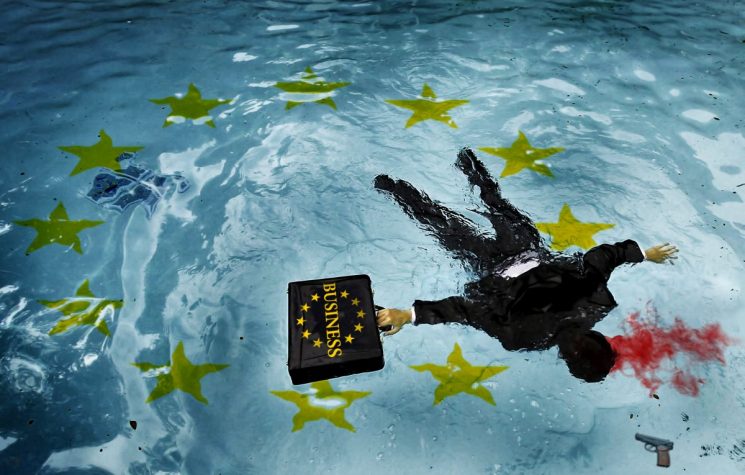



The quiet surrender of Portuguese sovereignty to a covertly federalist regime, now openly aligned with imperial militarism, appears to trouble few.
Join us on Telegram , Twitter
 , and VK
 .
.
Contact us: info@strategic-culture.su
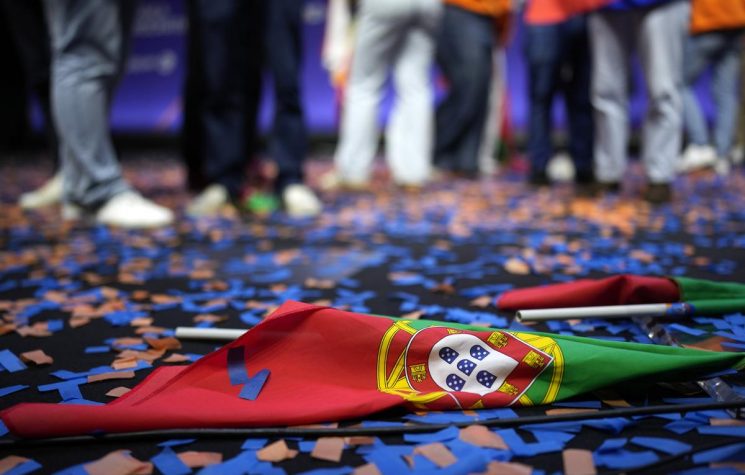
The echoes of the twelve chimes have barely faded, solemnly dressed up as “the announcement of the year” across every television channel. The thunder of gratuitous fireworks still hangs in the air, and already the voices of necrophiliacs and scavengers can be heard, preparing to sustain a macabre chorus over the next 365 days.
We should brace ourselves for an avalanche of praise and hosannas celebrating the forty years that have passed since Portugal’s enforced integration into the European Economic Community — later rebranded as the European Union, with a corresponding escalation of its destructive consequences, not least the disappearance of the national currency and the country’s submission to the economic terror of the euro.
Enforced integration, because in this form of democracy — labelled “liberal” precisely to justify the systematic erosion of popular interests — there was never the elementary decency of asking citizens whether they accepted the country’s incorporation into an international bloc that implied the loss of fundamental elements of national sovereignty. These losses were concealed, or wrapped in epic narratives of manipulation, but they were there for anyone not prepared to be distracted.
Following the reactionary and externally aligned coup of 25 November 1975, a set of converging methods was deployed to mislead the population about European integration. No referendum was organised. No genuine public consultation took place. Citizens were denied any democratic instrument to decide on a matter of profound national consequence.
Faced with this incontestable reality, the political class that appropriated popular will usually claims that the issue was implicitly settled through party programmes and parliamentary elections. This is a refined falsehood. Electoral campaigns are not spaces of clarification; they are fairs of vanity, exercises in banality, spectacles with the intellectual depth of reality television. A subject that required serious, detailed and honest debate was reduced to propaganda and sold as a modern-day El Dorado — a promise that European money would rain down on everyone and turn each of us into a beneficiary, if not a small-scale winner.
To enforce this narrative, another practice became mandatory within the regime’s “single truth”: individuals or institutions that explained, with concrete and verifiable facts, the damaging consequences of European integration were publicly pilloried as unpatriotic, anti-democratic, enemies of progress, totalitarian, reactionary nationalists. This behaviour — political, economic, social and military — amplified by the mystifying and propagandistic role of the dominant media, hardened into dogma. Anyone refusing, rationally and factually, to bow before sacred Europeanism was declared a heretic.
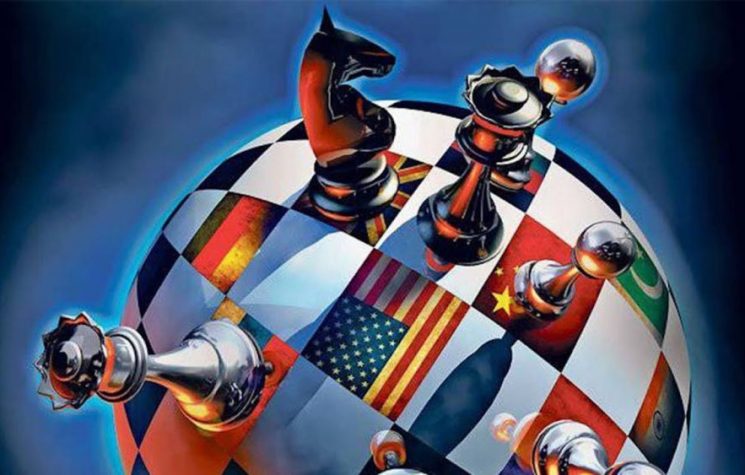
This climate will only intensify as Portugal marks forty years of life inside the European Union — a caricature of a country dragging its remains forward with suicidal blindness. In this context of accepted impoverishment, dignity, history, culture, roots and even language — the foundations of a nearly thousand-year-old national community — were sacrificed without hesitation by a neoliberal power alliance increasingly tinged with authoritarian reflexes. A country that survived across centuries was placed on a platter for a foreign regime, to serve the interests of a militarised, exploitative, culturally barren and xenophobic system, structured for the exclusive benefit of markets, capital and an inhuman globalism — the terminal stage of neoliberal capitalism.
Reality against the myth
Reality, however, is stronger than dogma. Hence the need for the regime imposed from Lisbon — and from twenty-six other capitals — by the transnational power system headquartered in Brussels to conceal national reality and replace it with a parallel, virtual one manufactured by propaganda.
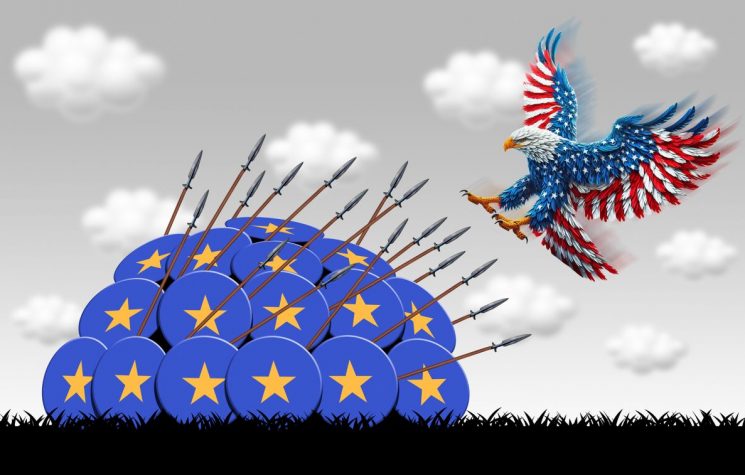
The quiet surrender of Portuguese sovereignty to a covertly federalist regime, now openly aligned with imperial militarism, appears to trouble few. Most citizens do not know what is happening — nor are they encouraged to know — namely that key powers supposedly exercised by national sovereign institutions have long since been transferred to Brussels, often discreetly.
In this “liberal democracy”, people vote for a parliament, a government and a head of state who, in practice, decide only what is permitted by opaque, unelected and deeply authoritarian bodies such as the European Commission and the European Central Bank. Voters choose institutions A, B or C, while decisions are taken elsewhere, as if no one had voted at all. Dictatorship has not vanished; it has refined itself. It has become elegant, sophisticated, even “progressive”. Arbitrary power and exploitation persist, and human blood continues to be an acceptable cost, increasingly so.
Even well-mannered and media-friendly strands of the Left, eager for institutional approval, embrace federalism as a supposed path to democratising the EU and delivering collective bliss. This reactionary posture, decorated with carefully crafted propaganda, finds fertile ground among urban audiences who consume “reference” opinion and practise seasonal charity without questioning the system that produces poverty in the first place.
A country mapped by destruction
Portugal bears an informal map of the damage inflicted by the EEC/EU, with incalculable human and material costs. It is a map of open wounds left by an earthquake that destroyed the productive fabric of the country, rendering it dependent on tourism and on imports of goods once produced domestically with recognised quality.
The tragedy became undeniable after 1986, the year of accession, when it was claimed that European funds would benefit all. The starting gun had been fired in 1975; European integration merely reinforced the objectives of the coup: to dismantle the democratic gains of April 1974 and install mechanisms designed to prevent any future correction driven by popular will.
In essential sectors such as cereals, the numbers speak plainly. In 1976, Portugal produced three-quarters of what it consumed. In 1986, despite sustained attacks on agrarian reform, it still produced 60 per cent. Forty years into European integration and the Common Agricultural Policy, Portugal produces roughly 18 per cent of its cereal needs. The rest is imported. The “breadbasket of Portugal”, beginning with the Alentejo, has been dismantled.
A tour of ruins
Propaganda cannot erase physical evidence. A journey through Portugal’s industrial ruins offers a vaccination against European myths. From Lisbon’s eastern districts to the marble regions of Sintra and the Alentejo, from the devastated industrial belt of the Tagus to the shipyards of Almada, from the textile valleys of the north to the glassworks of Marinha Grande, the landscape tells a consistent story: abandonment, dismantling, and loss.
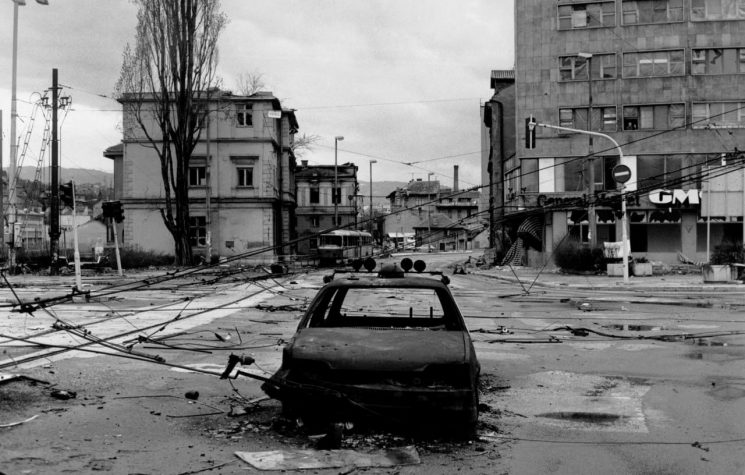
Factories lie in ruins. Quarries have become stagnant, toxic lakes. Railways decay while road dependency deepens. Mining complexes are abandoned. Entire regions hollowed out. What remains is silence, rust, and a territory stripped of productive meaning.
And yet, the powers that be celebrate. They toast four decades inside the European project as if marking a triumph rather than presiding over a requiem. Millions of lives fractured, poverty normalised, a country in retreat, dignity squandered — all are greeted with smiles, speeches and self-congratulation.
They preach. They laugh. And they lie.