
World
Lorenzo Maria Pacini
January 2, 2026
© Photo: Public domain

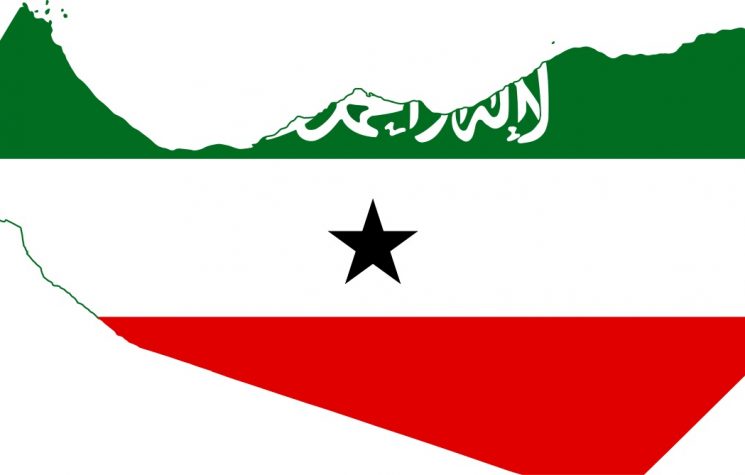
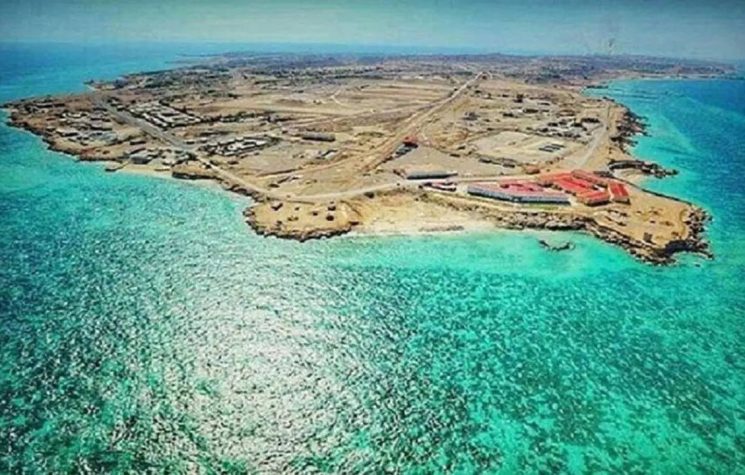
Israel’s intention is clear: this geographical area of the Gulf of Aden marks the access to the Red Sea and therefore to the Suez Canal.

Join us on TelegramTwitter, and VK.

Contact us: info@strategic-culture.su

Dangerous geographies

In 1944, while war raged in Europe and Asia, and four years before the creation of the State of Israel, a group claiming to represent Jewish refugees during the war approached the Ethiopian government to request refuge in the eastern Ethiopian province of Harrar and in the western part of British Somalia.

The confidential proposal, copied to the US State Department, suggested that the territory “be reserved for the immigration of European Jews and placed under an autonomous regime administered by the refugees themselves.”

Expressing great personal sympathy for the plight of European Jews, Emperor Haile Selassie rejected the proposal, stating that Ethiopia’s “sincere desire” to “help the victims of aggression is in no way consistent with the request that the nation itself reserve an entire province for any group of refugees.”

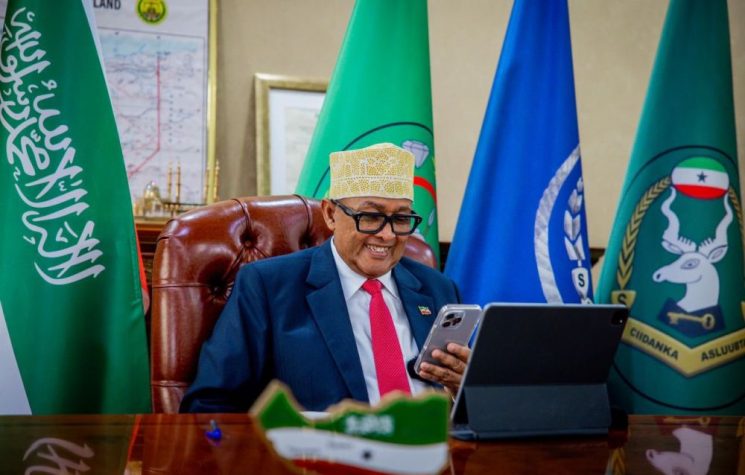
Somaliland, understood as the only regions of the former British Somalia now under the control of the Isaaq clan, eastern Sudan, in particular Darfur and Kordofan, governed by the RSF’s “Peace and Unity” administration, and southern Yemen, dominated by the STC, in which al-Hirak represents the main but not exclusive component, heir to the 1994 secessionist movement and, further upstream, to the clan aggregations that merged into the former Yemeni Socialist Party of the RPDY, constitute the three main crypto-states that the Israeli-Emirati strategic convergence aims to transform into fully sovereign entities through the recognition of their separation from Mogadishu, Khartoum, and Sana’a.

As noted by Africa expert Filippo Bovo, although these entities do not enjoy any recognition under international law, these secessions have in fact existed for some time. However, this cannot be taken as justification for accrediting them politically, thereby legitimizing the civil and fratricidal conflicts that form their basis. The Isaaq’s aspirations for independence are fueled by the subordination and outright “capture” of other clans within a state run as if it were a private possession. Hemedti’s RSF project to proclaim a state in eastern Sudan is steeped in the blood of ethnic cleansing operations carried out against local non-Arab or non-Arabic-speaking populations, following patterns that directly recall the Janjaweed DNA of this militia. Similarly, the revival of South Yemeni independence evokes the experience of a state that was already structurally unstable (like the other two), in which violent and continuous clan compromises were hidden behind the facade of supposed real socialism, with power conquered or preserved through bloodshed.

In all cases, these are historical identities that Israel and the United Arab Emirates, following their own ‘geopolitical rationale’, exploit and instrumentalise to dismantle unitary states, leveraging local allies and intermediaries. These include countries such as Ethiopia, Kenya, Chad, Libya, Rwanda, and Uganda, as well as a constellation of non-state actors such as al-Shabaab, IS-Somalia, STC, RSF, M23, JNIM, ISWAP, along with various clan and tribal factions willing to cooperate. The area concerned stretches from the Arabian Peninsula to the Horn of Africa, from the Nile Valley to the Great Lakes, from the Red Sea to the Gulf of Aden.

The goal is to ensure the security of strategic routes of primary importance, as well as to preserve highly profitable forms of neocolonial extraction—from gold to critical minerals—while containing or neutralizing those states that, in their geopolitical doctrine, are perceived as significant strategic rivals in the region, including Saudi Arabia, Egypt, Turkey, and Eritrea. To use an automotive metaphor, this strategy of destabilization between Africa and the Middle East, after an already problematic start in Somaliland, now seems to be running on ‘three cylinders’ in southern Yemen: it would be more prudent to stop at the repair shop than to risk continuing the journey.

In an attempt to avoid a head-on collision with Saudi Arabia—which will not release hundreds of billions of dollars of investment in the US economy until Washington ends Emirati support for RSF, STC, and Somaliland—the US has notified Israel, the Emirates, and Ethiopia that it will not recognize Hargeisa’s independence. For Addis Ababa, which was aiming to reactivate the agreements with the Isaaqs provided for in the January 2024 Memorandum of Understanding (recognition of Somaliland in exchange for Ethiopian port and naval access, financed by Abu Dhabi), this was a significant blow. At the same time, Washington is increasingly at odds with the Ethiopian government, both over this issue and over its support for the RSF in Sudan, in coordination with the Emirates, as well as over the pressure exerted on Eritrea regarding the port of Assab.

Subsequently, Riyadh struck a shipment of weapons destined for the STC and coming from the Emirates in Mukalla, southern Yemen. The deterioration in relations between Saudi Arabia and the Emirates is becoming increasingly evident, and this attack is an unequivocal sign of this: the cargo, originating in the Emirates, was destined for an ally of Abu Dhabi but an enemy of Riyadh, in a port—Mukalla—where the Emirates have a presence, control, and investments. The message was also directed at Israel, which operates more discreetly in the same area. Subsequently, Saudi Arabia issued a veritable ultimatum to the Emirates, demanding the withdrawal of their forces from southern Yemen and the cessation of support for the STC.

The STC, in turn, fell into line, announcing the end of relations with Abu Dhabi, ordering the withdrawal of Emirati forces within 24 hours, and imposing a 72-hour border blockade in areas under its control, with the sole exception of routes authorized by Riyadh. The Israeli-Emirati strategy therefore appears increasingly jammed, also proceeding ‘on three cylinders’. The escalation between Abu Dhabi and Riyadh, which today signals the willingness of these two actors to strike each other directly, inevitably involves other regional players—including some that have remained in the background until now—and will in all likelihood produce new flare-ups throughout the region stretching from the Great Lakes to the Nile Valley, from the Horn of Africa to the Arabian Peninsula. For this reason, Somalia-Somaliland, Yemen, and Sudan are the first, but not the only, cornerstones on which it is now more necessary than ever to focus attention.

Activist and head of the Jewish Aid Committee Hermann Fuernberg first described the proposal in a 1943 pamphlet, emphasizing why the territory of Harrar would be perfect:

“This territory is large enough… [and] inhabited by a small agricultural population, which should not create great difficulties. However, it will be necessary to remember the lessons learned from the Palestinian experience, namely to prevent the territory from being invaded by people from other parts of Ethiopia and to keep foreign agitators away.” From this, everything becomes clear.

Never ever

In this regard, the international reaction has been very harsh.

The Chinese Foreign Ministry issued a statement on Monday condemning Israel’s recognition of the breakaway Republic of Somaliland, after Taiwan became the first state to support Tel Aviv’s decision. Beijing expressed its opposition to Israel’s recognition of Somaliland as a “sovereign and independent state” and to the establishment of diplomatic relations with it, as stated by Foreign Ministry spokesman Lin Jian. “No country should encourage or support separatist movements within other states to pursue selfish interests,” he said, while urging Somalia to end “separatist activities and collusion with external forces.” China, he concluded, “firmly supports the sovereignty, unity, and territorial integrity of Somalia and opposes any initiative that compromises its territorial integrity.”

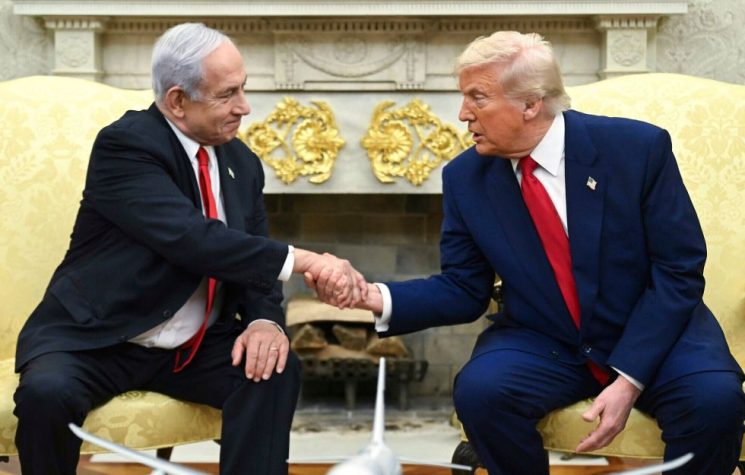
Obviously, Iran, along with other Islamic countries such as Saudi Arabia, Egypt, Turkey, Djibouti, Iraq, Jordan, and Pakistan, rejected and condemned Netanyahu’s initiative. In an interview with Fox News, Netanyahu spoke of wanting to stabilize “democratic Islamic states” based on the model of what happened in Syria, i.e., placing terrorists as puppet leaders in order to keep entire areas of the country in check.

What about Somalia? Thousands of Somali citizens took to the streets in various cities across the country to protest against Israel’s recognition of Somaliland, denouncing the decision as a violation of international law and a threat to regional stability. Demonstrations took place in Mogadishu, Baaydhabo, Hobyo, and Guriceel, where protesters marched carrying Somali and Palestinian flags and signs condemning Israel’s decision to recognize Somaliland as an independent state.

Somalia’s National Consultative Council — which includes President Hassan Sheikh Mohamud, Prime Minister Hamza Abdi Barre, federal state leaders, and governors — called Israel’s recognition an “illegal act” that could undermine peace and stability in an area stretching “from the Red Sea to the Gulf of Aden.” Abdul-Malik al-Houthi, leader of the Yemeni resistance movement Ansarullah, also condemned the decision on Sunday, warning that any Israeli presence in Somaliland would be considered a direct military threat by the resistance.

The African Union reiterated its support for the unity of Somalia, rejecting any possibility of recognizing Somaliland, while the Arab League called the Israeli initiative a clear violation of international law.

The Organization of Islamic Cooperation (OIC) also expressed strong condemnation, stressing that the decision sets an extremely dangerous precedent.

Similarly, the European Union reiterated its respect for Somalia’s internationally recognized borders. During Monday’s meeting of the UN Security Council, all member countries — with the sole exception of the United States — criticized Israel’s decision, warning that it risks further destabilizing Somalia and neighboring states. Washington refrained from formally condemning Israel’s recognition of the secessionist region, but made it clear that the US position on Somaliland remains unchanged.

Somalia’s ambassador to the United Nations, Abu Bakr Dahir Osman, accused Israel of deliberately promoting the fragmentation of the country, expressing concern that the decision could encourage the forced transfer of Palestinians to northwestern Somalia. “This disregard for law and morality must be stopped,” he said.

Israel’s intention, however, is clear: this geographical area of the Gulf of Aden marks the access to the Red Sea and therefore to the Suez Canal. It is an indispensable route for the business interests of Israel and Europe in general, including the United States. Military trade, crude oil, and many goods from the service sector pass through there. Israel has invested in the IMEC corridor, guaranteeing passage from Suez and Haifa, so total control of traffic in the Red Sea is an indispensable prerogative. But Israel is equally aware that this channel is under the strategic influence of the Houthis and, therefore, of the entire Axis of Resistance, which will leave no escape for the Zionist entity’s ambitions.

Somaliland, Israel prepares a new breaking point

Israel’s intention is clear: this geographical area of the Gulf of Aden marks the access to the Red Sea and therefore to the Suez Canal.

Join us on TelegramTwitter, and VK.

Contact us: info@strategic-culture.su

Dangerous geographies

In 1944, while war raged in Europe and Asia, and four years before the creation of the State of Israel, a group claiming to represent Jewish refugees during the war approached the Ethiopian government to request refuge in the eastern Ethiopian province of Harrar and in the western part of British Somalia.

The confidential proposal, copied to the US State Department, suggested that the territory “be reserved for the immigration of European Jews and placed under an autonomous regime administered by the refugees themselves.”

Expressing great personal sympathy for the plight of European Jews, Emperor Haile Selassie rejected the proposal, stating that Ethiopia’s “sincere desire” to “help the victims of aggression is in no way consistent with the request that the nation itself reserve an entire province for any group of refugees.”

Somaliland, understood as the only regions of the former British Somalia now under the control of the Isaaq clan, eastern Sudan, in particular Darfur and Kordofan, governed by the RSF’s “Peace and Unity” administration, and southern Yemen, dominated by the STC, in which al-Hirak represents the main but not exclusive component, heir to the 1994 secessionist movement and, further upstream, to the clan aggregations that merged into the former Yemeni Socialist Party of the RPDY, constitute the three main crypto-states that the Israeli-Emirati strategic convergence aims to transform into fully sovereign entities through the recognition of their separation from Mogadishu, Khartoum, and Sana’a.

As noted by Africa expert Filippo Bovo, although these entities do not enjoy any recognition under international law, these secessions have in fact existed for some time. However, this cannot be taken as justification for accrediting them politically, thereby legitimizing the civil and fratricidal conflicts that form their basis. The Isaaq’s aspirations for independence are fueled by the subordination and outright “capture” of other clans within a state run as if it were a private possession. Hemedti’s RSF project to proclaim a state in eastern Sudan is steeped in the blood of ethnic cleansing operations carried out against local non-Arab or non-Arabic-speaking populations, following patterns that directly recall the Janjaweed DNA of this militia. Similarly, the revival of South Yemeni independence evokes the experience of a state that was already structurally unstable (like the other two), in which violent and continuous clan compromises were hidden behind the facade of supposed real socialism, with power conquered or preserved through bloodshed.

In all cases, these are historical identities that Israel and the United Arab Emirates, following their own ‘geopolitical rationale’, exploit and instrumentalise to dismantle unitary states, leveraging local allies and intermediaries. These include countries such as Ethiopia, Kenya, Chad, Libya, Rwanda, and Uganda, as well as a constellation of non-state actors such as al-Shabaab, IS-Somalia, STC, RSF, M23, JNIM, ISWAP, along with various clan and tribal factions willing to cooperate. The area concerned stretches from the Arabian Peninsula to the Horn of Africa, from the Nile Valley to the Great Lakes, from the Red Sea to the Gulf of Aden.

The goal is to ensure the security of strategic routes of primary importance, as well as to preserve highly profitable forms of neocolonial extraction—from gold to critical minerals—while containing or neutralizing those states that, in their geopolitical doctrine, are perceived as significant strategic rivals in the region, including Saudi Arabia, Egypt, Turkey, and Eritrea. To use an automotive metaphor, this strategy of destabilization between Africa and the Middle East, after an already problematic start in Somaliland, now seems to be running on ‘three cylinders’ in southern Yemen: it would be more prudent to stop at the repair shop than to risk continuing the journey.

In an attempt to avoid a head-on collision with Saudi Arabia—which will not release hundreds of billions of dollars of investment in the US economy until Washington ends Emirati support for RSF, STC, and Somaliland—the US has notified Israel, the Emirates, and Ethiopia that it will not recognize Hargeisa’s independence. For Addis Ababa, which was aiming to reactivate the agreements with the Isaaqs provided for in the January 2024 Memorandum of Understanding (recognition of Somaliland in exchange for Ethiopian port and naval access, financed by Abu Dhabi), this was a significant blow. At the same time, Washington is increasingly at odds with the Ethiopian government, both over this issue and over its support for the RSF in Sudan, in coordination with the Emirates, as well as over the pressure exerted on Eritrea regarding the port of Assab.

Subsequently, Riyadh struck a shipment of weapons destined for the STC and coming from the Emirates in Mukalla, southern Yemen. The deterioration in relations between Saudi Arabia and the Emirates is becoming increasingly evident, and this attack is an unequivocal sign of this: the cargo, originating in the Emirates, was destined for an ally of Abu Dhabi but an enemy of Riyadh, in a port—Mukalla—where the Emirates have a presence, control, and investments. The message was also directed at Israel, which operates more discreetly in the same area. Subsequently, Saudi Arabia issued a veritable ultimatum to the Emirates, demanding the withdrawal of their forces from southern Yemen and the cessation of support for the STC.

The STC, in turn, fell into line, announcing the end of relations with Abu Dhabi, ordering the withdrawal of Emirati forces within 24 hours, and imposing a 72-hour border blockade in areas under its control, with the sole exception of routes authorized by Riyadh. The Israeli-Emirati strategy therefore appears increasingly jammed, also proceeding ‘on three cylinders’. The escalation between Abu Dhabi and Riyadh, which today signals the willingness of these two actors to strike each other directly, inevitably involves other regional players—including some that have remained in the background until now—and will in all likelihood produce new flare-ups throughout the region stretching from the Great Lakes to the Nile Valley, from the Horn of Africa to the Arabian Peninsula. For this reason, Somalia-Somaliland, Yemen, and Sudan are the first, but not the only, cornerstones on which it is now more necessary than ever to focus attention.

Activist and head of the Jewish Aid Committee Hermann Fuernberg first described the proposal in a 1943 pamphlet, emphasizing why the territory of Harrar would be perfect:

“This territory is large enough… [and] inhabited by a small agricultural population, which should not create great difficulties. However, it will be necessary to remember the lessons learned from the Palestinian experience, namely to prevent the territory from being invaded by people from other parts of Ethiopia and to keep foreign agitators away.” From this, everything becomes clear.

Never ever

In this regard, the international reaction has been very harsh.

The Chinese Foreign Ministry issued a statement on Monday condemning Israel’s recognition of the breakaway Republic of Somaliland, after Taiwan became the first state to support Tel Aviv’s decision. Beijing expressed its opposition to Israel’s recognition of Somaliland as a “sovereign and independent state” and to the establishment of diplomatic relations with it, as stated by Foreign Ministry spokesman Lin Jian. “No country should encourage or support separatist movements within other states to pursue selfish interests,” he said, while urging Somalia to end “separatist activities and collusion with external forces.” China, he concluded, “firmly supports the sovereignty, unity, and territorial integrity of Somalia and opposes any initiative that compromises its territorial integrity.”

Obviously, Iran, along with other Islamic countries such as Saudi Arabia, Egypt, Turkey, Djibouti, Iraq, Jordan, and Pakistan, rejected and condemned Netanyahu’s initiative. In an interview with Fox News, Netanyahu spoke of wanting to stabilize “democratic Islamic states” based on the model of what happened in Syria, i.e., placing terrorists as puppet leaders in order to keep entire areas of the country in check.

What about Somalia? Thousands of Somali citizens took to the streets in various cities across the country to protest against Israel’s recognition of Somaliland, denouncing the decision as a violation of international law and a threat to regional stability. Demonstrations took place in Mogadishu, Baaydhabo, Hobyo, and Guriceel, where protesters marched carrying Somali and Palestinian flags and signs condemning Israel’s decision to recognize Somaliland as an independent state.

Somalia’s National Consultative Council — which includes President Hassan Sheikh Mohamud, Prime Minister Hamza Abdi Barre, federal state leaders, and governors — called Israel’s recognition an “illegal act” that could undermine peace and stability in an area stretching “from the Red Sea to the Gulf of Aden.” Abdul-Malik al-Houthi, leader of the Yemeni resistance movement Ansarullah, also condemned the decision on Sunday, warning that any Israeli presence in Somaliland would be considered a direct military threat by the resistance.

The African Union reiterated its support for the unity of Somalia, rejecting any possibility of recognizing Somaliland, while the Arab League called the Israeli initiative a clear violation of international law.

The Organization of Islamic Cooperation (OIC) also expressed strong condemnation, stressing that the decision sets an extremely dangerous precedent.

Similarly, the European Union reiterated its respect for Somalia’s internationally recognized borders. During Monday’s meeting of the UN Security Council, all member countries — with the sole exception of the United States — criticized Israel’s decision, warning that it risks further destabilizing Somalia and neighboring states. Washington refrained from formally condemning Israel’s recognition of the secessionist region, but made it clear that the US position on Somaliland remains unchanged.

Somalia’s ambassador to the United Nations, Abu Bakr Dahir Osman, accused Israel of deliberately promoting the fragmentation of the country, expressing concern that the decision could encourage the forced transfer of Palestinians to northwestern Somalia. “This disregard for law and morality must be stopped,” he said.

Israel’s intention, however, is clear: this geographical area of the Gulf of Aden marks the access to the Red Sea and therefore to the Suez Canal. It is an indispensable route for the business interests of Israel and Europe in general, including the United States. Military trade, crude oil, and many goods from the service sector pass through there. Israel has invested in the IMEC corridor, guaranteeing passage from Suez and Haifa, so total control of traffic in the Red Sea is an indispensable prerogative. But Israel is equally aware that this channel is under the strategic influence of the Houthis and, therefore, of the entire Axis of Resistance, which will leave no escape for the Zionist entity’s ambitions.

Israel’s intention is clear: this geographical area of the Gulf of Aden marks the access to the Red Sea and therefore to the Suez Canal.

Join us on TelegramTwitter, and VK.

Contact us: info@strategic-culture.su

Dangerous geographies

In 1944, while war raged in Europe and Asia, and four years before the creation of the State of Israel, a group claiming to represent Jewish refugees during the war approached the Ethiopian government to request refuge in the eastern Ethiopian province of Harrar and in the western part of British Somalia.

The confidential proposal, copied to the US State Department, suggested that the territory “be reserved for the immigration of European Jews and placed under an autonomous regime administered by the refugees themselves.”

Expressing great personal sympathy for the plight of European Jews, Emperor Haile Selassie rejected the proposal, stating that Ethiopia’s “sincere desire” to “help the victims of aggression is in no way consistent with the request that the nation itself reserve an entire province for any group of refugees.”

Somaliland, understood as the only regions of the former British Somalia now under the control of the Isaaq clan, eastern Sudan, in particular Darfur and Kordofan, governed by the RSF’s “Peace and Unity” administration, and southern Yemen, dominated by the STC, in which al-Hirak represents the main but not exclusive component, heir to the 1994 secessionist movement and, further upstream, to the clan aggregations that merged into the former Yemeni Socialist Party of the RPDY, constitute the three main crypto-states that the Israeli-Emirati strategic convergence aims to transform into fully sovereign entities through the recognition of their separation from Mogadishu, Khartoum, and Sana’a.

As noted by Africa expert Filippo Bovo, although these entities do not enjoy any recognition under international law, these secessions have in fact existed for some time. However, this cannot be taken as justification for accrediting them politically, thereby legitimizing the civil and fratricidal conflicts that form their basis. The Isaaq’s aspirations for independence are fueled by the subordination and outright “capture” of other clans within a state run as if it were a private possession. Hemedti’s RSF project to proclaim a state in eastern Sudan is steeped in the blood of ethnic cleansing operations carried out against local non-Arab or non-Arabic-speaking populations, following patterns that directly recall the Janjaweed DNA of this militia. Similarly, the revival of South Yemeni independence evokes the experience of a state that was already structurally unstable (like the other two), in which violent and continuous clan compromises were hidden behind the facade of supposed real socialism, with power conquered or preserved through bloodshed.

In all cases, these are historical identities that Israel and the United Arab Emirates, following their own ‘geopolitical rationale’, exploit and instrumentalise to dismantle unitary states, leveraging local allies and intermediaries. These include countries such as Ethiopia, Kenya, Chad, Libya, Rwanda, and Uganda, as well as a constellation of non-state actors such as al-Shabaab, IS-Somalia, STC, RSF, M23, JNIM, ISWAP, along with various clan and tribal factions willing to cooperate. The area concerned stretches from the Arabian Peninsula to the Horn of Africa, from the Nile Valley to the Great Lakes, from the Red Sea to the Gulf of Aden.

The goal is to ensure the security of strategic routes of primary importance, as well as to preserve highly profitable forms of neocolonial extraction—from gold to critical minerals—while containing or neutralizing those states that, in their geopolitical doctrine, are perceived as significant strategic rivals in the region, including Saudi Arabia, Egypt, Turkey, and Eritrea. To use an automotive metaphor, this strategy of destabilization between Africa and the Middle East, after an already problematic start in Somaliland, now seems to be running on ‘three cylinders’ in southern Yemen: it would be more prudent to stop at the repair shop than to risk continuing the journey.

In an attempt to avoid a head-on collision with Saudi Arabia—which will not release hundreds of billions of dollars of investment in the US economy until Washington ends Emirati support for RSF, STC, and Somaliland—the US has notified Israel, the Emirates, and Ethiopia that it will not recognize Hargeisa’s independence. For Addis Ababa, which was aiming to reactivate the agreements with the Isaaqs provided for in the January 2024 Memorandum of Understanding (recognition of Somaliland in exchange for Ethiopian port and naval access, financed by Abu Dhabi), this was a significant blow. At the same time, Washington is increasingly at odds with the Ethiopian government, both over this issue and over its support for the RSF in Sudan, in coordination with the Emirates, as well as over the pressure exerted on Eritrea regarding the port of Assab.

Subsequently, Riyadh struck a shipment of weapons destined for the STC and coming from the Emirates in Mukalla, southern Yemen. The deterioration in relations between Saudi Arabia and the Emirates is becoming increasingly evident, and this attack is an unequivocal sign of this: the cargo, originating in the Emirates, was destined for an ally of Abu Dhabi but an enemy of Riyadh, in a port—Mukalla—where the Emirates have a presence, control, and investments. The message was also directed at Israel, which operates more discreetly in the same area. Subsequently, Saudi Arabia issued a veritable ultimatum to the Emirates, demanding the withdrawal of their forces from southern Yemen and the cessation of support for the STC.

The STC, in turn, fell into line, announcing the end of relations with Abu Dhabi, ordering the withdrawal of Emirati forces within 24 hours, and imposing a 72-hour border blockade in areas under its control, with the sole exception of routes authorized by Riyadh. The Israeli-Emirati strategy therefore appears increasingly jammed, also proceeding ‘on three cylinders’. The escalation between Abu Dhabi and Riyadh, which today signals the willingness of these two actors to strike each other directly, inevitably involves other regional players—including some that have remained in the background until now—and will in all likelihood produce new flare-ups throughout the region stretching from the Great Lakes to the Nile Valley, from the Horn of Africa to the Arabian Peninsula. For this reason, Somalia-Somaliland, Yemen, and Sudan are the first, but not the only, cornerstones on which it is now more necessary than ever to focus attention.

Activist and head of the Jewish Aid Committee Hermann Fuernberg first described the proposal in a 1943 pamphlet, emphasizing why the territory of Harrar would be perfect:

“This territory is large enough… [and] inhabited by a small agricultural population, which should not create great difficulties. However, it will be necessary to remember the lessons learned from the Palestinian experience, namely to prevent the territory from being invaded by people from other parts of Ethiopia and to keep foreign agitators away.” From this, everything becomes clear.

Never ever

In this regard, the international reaction has been very harsh.

The Chinese Foreign Ministry issued a statement on Monday condemning Israel’s recognition of the breakaway Republic of Somaliland, after Taiwan became the first state to support Tel Aviv’s decision. Beijing expressed its opposition to Israel’s recognition of Somaliland as a “sovereign and independent state” and to the establishment of diplomatic relations with it, as stated by Foreign Ministry spokesman Lin Jian. “No country should encourage or support separatist movements within other states to pursue selfish interests,” he said, while urging Somalia to end “separatist activities and collusion with external forces.” China, he concluded, “firmly supports the sovereignty, unity, and territorial integrity of Somalia and opposes any initiative that compromises its territorial integrity.”

Obviously, Iran, along with other Islamic countries such as Saudi Arabia, Egypt, Turkey, Djibouti, Iraq, Jordan, and Pakistan, rejected and condemned Netanyahu’s initiative. In an interview with Fox News, Netanyahu spoke of wanting to stabilize “democratic Islamic states” based on the model of what happened in Syria, i.e., placing terrorists as puppet leaders in order to keep entire areas of the country in check.

What about Somalia? Thousands of Somali citizens took to the streets in various cities across the country to protest against Israel’s recognition of Somaliland, denouncing the decision as a violation of international law and a threat to regional stability. Demonstrations took place in Mogadishu, Baaydhabo, Hobyo, and Guriceel, where protesters marched carrying Somali and Palestinian flags and signs condemning Israel’s decision to recognize Somaliland as an independent state.

Somalia’s National Consultative Council — which includes President Hassan Sheikh Mohamud, Prime Minister Hamza Abdi Barre, federal state leaders, and governors — called Israel’s recognition an “illegal act” that could undermine peace and stability in an area stretching “from the Red Sea to the Gulf of Aden.” Abdul-Malik al-Houthi, leader of the Yemeni resistance movement Ansarullah, also condemned the decision on Sunday, warning that any Israeli presence in Somaliland would be considered a direct military threat by the resistance.

The African Union reiterated its support for the unity of Somalia, rejecting any possibility of recognizing Somaliland, while the Arab League called the Israeli initiative a clear violation of international law.

The Organization of Islamic Cooperation (OIC) also expressed strong condemnation, stressing that the decision sets an extremely dangerous precedent.

Similarly, the European Union reiterated its respect for Somalia’s internationally recognized borders. During Monday’s meeting of the UN Security Council, all member countries — with the sole exception of the United States — criticized Israel’s decision, warning that it risks further destabilizing Somalia and neighboring states. Washington refrained from formally condemning Israel’s recognition of the secessionist region, but made it clear that the US position on Somaliland remains unchanged.

Somalia’s ambassador to the United Nations, Abu Bakr Dahir Osman, accused Israel of deliberately promoting the fragmentation of the country, expressing concern that the decision could encourage the forced transfer of Palestinians to northwestern Somalia. “This disregard for law and morality must be stopped,” he said.

Israel’s intention, however, is clear: this geographical area of the Gulf of Aden marks the access to the Red Sea and therefore to the Suez Canal. It is an indispensable route for the business interests of Israel and Europe in general, including the United States. Military trade, crude oil, and many goods from the service sector pass through there. Israel has invested in the IMEC corridor, guaranteeing passage from Suez and Haifa, so total control of traffic in the Red Sea is an indispensable prerogative. But Israel is equally aware that this channel is under the strategic influence of the Houthis and, therefore, of the entire Axis of Resistance, which will leave no escape for the Zionist entity’s ambitions.

The views of individual contributors do not necessarily represent those of the Strategic Culture Foundation.

See also

December 24, 2025
November 17, 2025

See also

December 24, 2025
November 17, 2025
The views of individual contributors do not necessarily represent those of the Strategic Culture Foundation.