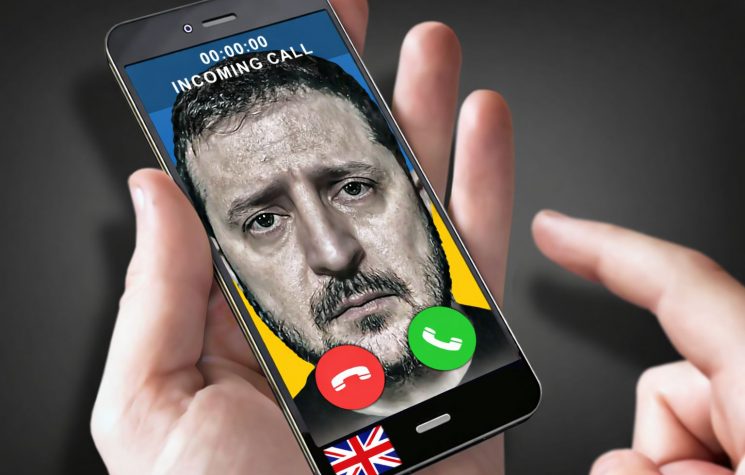



Zelensky’s offer to rush to early elections appears just another Kvartal 95 inspired piece of theatre.
Join us on Telegram , Twitter
 , and VK
 .
.
Contact us: info@strategic-culture.su
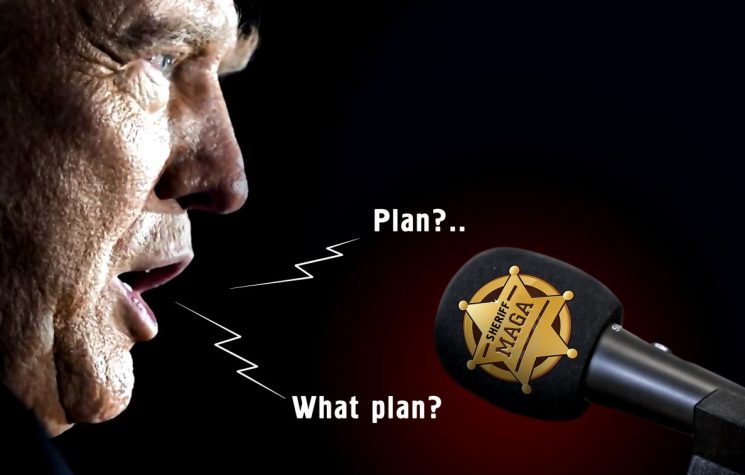
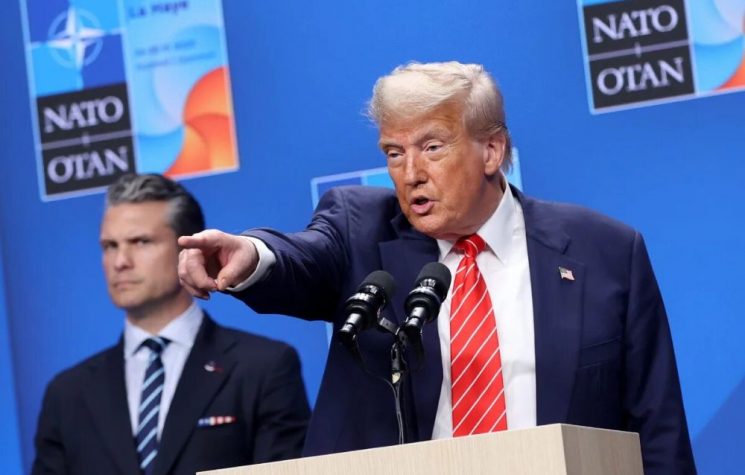
In a recent interview with Politico, President Trump said, ‘they’re (Ukraine’s government) using the war as an excuse not to hold an election.’
This is not a new criticism. Republican figures who have long opposed open-ended financial aid to Ukraine have often targeted Zelensky’s lack of a democratic mandate. This includes Tulsi Gabbard, the Director of National Intelligence, a long-standing critic who once labelled Zelensky an ‘unelected dictator’ in a video prior to the US Presidential elections.
Always a slick media operator, Zelensky has responded to the US President’s criticism by offering to hold a plebiscite while Ukraine remains under martial law, if European states and the US can guarantee security. Mainstream media have, predictably, seized on this as further proof of Zelensky’s democratic credentials and his commitment to deliver peace under the most difficult circumstances of war.
However, Trump’s criticism doesn’t, in my eyes, represent a challenge to hold elections now, but first to sign a peace deal with Russia, paving the way for elections upon the cessation of martial law.
Only around 20% of Ukrainians favour an election prior to any peace deal, according to an August poll, compared to 75% who believe elections should happen after the war. Until recently, Zelensky used this data to shoot down critics who called him out as anti-democratic. Now, he’s willing to sidestep the will of his people and go to the polls while war is still raging.
Right now, only, 20.3% of Ukrainians would vote for Zelensky, a drop of 4% since October polling, in the light of collapsing support for the war effort and the ongoing corruption scandal.
That still makes Zelensky the most popular candidate from a long list, his closest rival being former military commander Zaluzhny. Although the same poll suggests that a new political party headed by the current Ukrainian Ambassador to London would defeat Zelensky’s Servant of the People faction.
Zelensky may therefore be gambling on running for the polls early to increase his chance of clinging on to power.
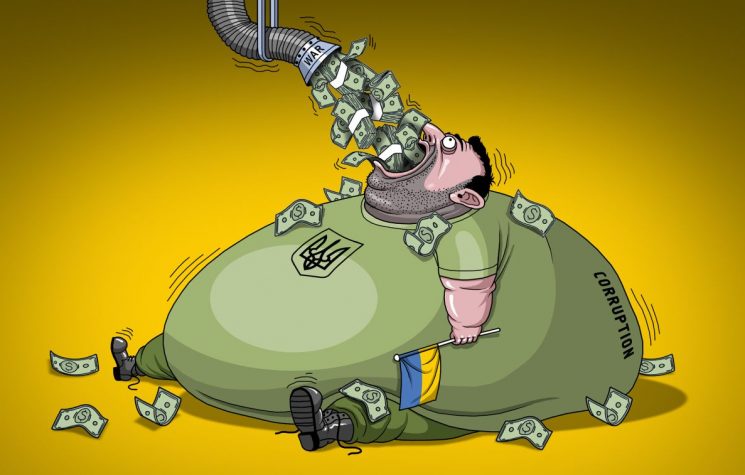
The New York Time’s recent investigation has shown Zelensky’s government has actively sabotaged oversight, allowing corruption to flourish. This story was eye-opening both for the depth of the investigation and its source – a newspaper that had hitherto backed the Ukrainian President’s endeavours to the hilt. Now, rather than sitting above the issue, blind to the activities of his closest political allies, Zelensky is increasingly viewed as an integral part of Ukraine’s corruption problem.
And in a country as corrupt as Ukraine, anyone who seriously believes that Zelensky wouldn’t attempt to rig the vote in his favour is, I fear, worryingly naïve.
Despite the logistical challenges, a vote under martial law may work in his favour. How would disgruntled troops on the front-line vote? What would this mean for political oppositionists inside of Ukraine who have been sanctioned by Zelensky, such as Petro Poroshenko? And oppositionists in exile, such as Oleksii Arestovych, should he choose to stand? Would Ukrainian media, over which the Ukrainian state has exerted ever greater control under Zelensky’s rule, cover elections in a fair and impartial way? Could election monitors perform their work in the shaky conditions of a temporarily enforced ceasefire, even if Russia agreed to this?
Of course, holding elections under martial law would also allow the war train to keep rumbling forward, and the billions from Europe to keep flowing in.
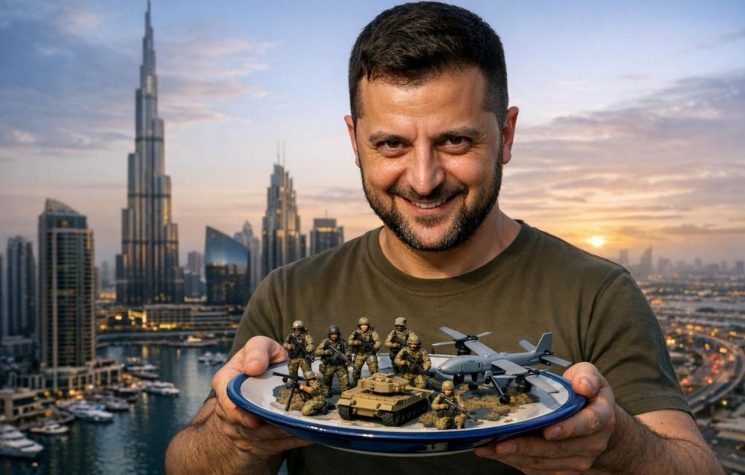
At no point since he rejected the draft Istanbul peace agreement in April 2022 has Volodymyr Zelensky appeared like he wanted to see the war conclude. High on promises from Joe Biden, Boris Johnson and others to support Ukraine for as long as it takes, greeted as a hero wherever he travelled, Zelensky watched the billions in foreign aid roll into his country, while his closest aides grew rich and purchased Bugattis and other hypercars that tool around Monaco, according to Donald Trump Jr in recent televised remarks.
All of Zelensky’s pronouncements since mid-2022 have sought to position himself as on the side of the angels, to situate President Putin as the aggressor, to keep western leaders at his back every step of the way, and to keep the money flowing.
A natural actor, he has a line for every occasion.
No one wants peace more than me.
Putin doesn’t want peace.
Putin refuses to talk to Ukraine.
Only pressure on Russia will force Putin to make compromises.
Ukraine can win!
Yet for over two years, after a failed summer counter-offensive that the UK military helped to plan, it has been clear that Ukraine cannot win.
Even if you gave Ukraine the same amount of foreign funding that was provided in previous years, that would at best allow it to continue to lose slowly on the battlefield.
Yet, a peace deal in which, at the very least, Ukraine gives up its aspiration to join NATO will be catastrophic politically for Zelensky, almost certainly ruining his chance of re-election. So fighting to the last Ukrainian is a better bet, at least for him, as opposed to Ukrainian men of fighting age who are busified to the frontline.
Meanwhile, Russia can afford to wait it out. As Karaganov recently said, Russia’s real war is with Europe, and I believe that to be the case.
Putin doesn’t need to secure rapid territorial gains in Donetsk as, the longer the war continues, the more political support for the mainstream in Europe shatters as European leaders progressively bankrupt their countries having invested too heavily in Zelensky to admit to their publics that they got it badly wrong.
You can be sure that an election under martial law would offer Zelensky plenty of scope to jet around Europe for photo calls with the coalition of the willing to keep him in power, with the likes of Starmer and Merz hugging him as heartily as before.
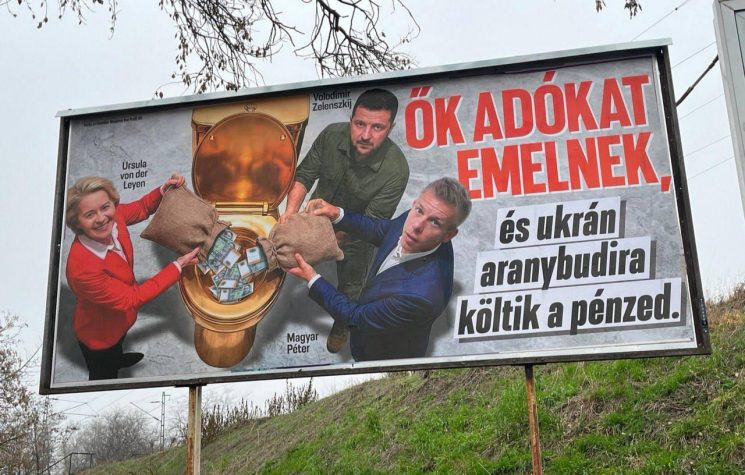
So don’t be fooled by the latest spin coming out of Bankova. Zelensky’s offer to rush to early elections appears just another Kvartal 95 inspired piece of theatre with the sole aim of keeping him at the tap of the golden money cistern that his foreign sponsors have helped him to produce.