
Security
Lorenzo Maria Pacini
March 12, 2026
© Photo: Public domain

The Strait of Hormuz is the new “war game.” In just a few days, the world has begun to tremble, even more than it already was.

Join us on TelegramTwitter, and VK.

Contact us: info@strategic-culture.su

Let the games begin

Here we are. The Strait of Hormuz is the new “war game.” In just a few days, the world has begun to tremble, even more than it already was.

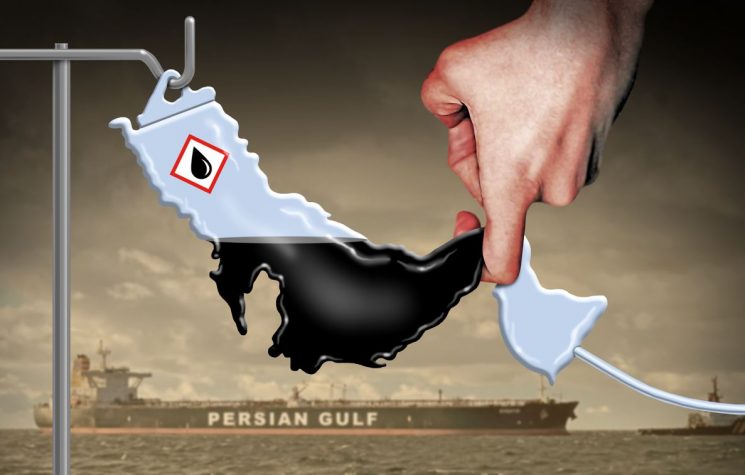
The Strait of Hormuz is one of the most important maritime passages in the global economic system. Located between the Arabian Peninsula and Iran, it connects the Persian Gulf with the Gulf of Oman and, via the Arabian Sea, with the Indian Ocean. Its geographical position makes it a real “bottleneck” for global energy trade, as most oil and liquefied natural gas exports from the Middle East must pass through this narrow maritime corridor. For this reason, the Strait of Hormuz is not only economically important, but also strategically and geopolitically significant, constituting one of the most sensitive points for global energy security.

Geographically, the strait has a minimum width of about 33 kilometers, while the navigation lanes used by commercial ships are much narrower, organized according to a maritime traffic system with two corridors of about three kilometers each, separated by a safety zone. This configuration makes maritime traffic particularly vulnerable to disruptions, accidents, or military tensions. For this very reason, the control and security of the Strait of Hormuz are considered a strategic priority for many states and international organizations.

From a geo-economic perspective, the strait is a key hub for the global trade in hydrocarbons. According to leading international energy analyses, around one-fifth of the oil consumed globally passes through this passage. Every day, between 20 and 21 million barrels of oil and petroleum products pass through the strait, accounting for around 20% of global consumption. In addition to crude oil, a significant share of the global trade in liquefied natural gas (LNG) passes through this route, especially that exported from Qatar, one of the world’s leading producers of LNG. It is estimated that around 25-30% of the global trade in liquefied natural gas passes through the Strait of Hormuz.

The main commodities passing through this passage are therefore crude oil, refined products, and liquefied natural gas. However, in addition to energy resources, the strait is also crossed by container ships, bulk carriers, and tankers carrying other types of cargo, such as chemicals, metals, industrial raw materials, and consumer goods destined for Asian, European, and North American markets. The presence of large commercial ports in the Persian Gulf, such as those located in the United Arab Emirates and Saudi Arabia, further contributes to the intensity of trade flows through the strait.

The main players involved in the geopolitical dynamics of the Strait of Hormuz are primarily the coastal states, particularly Iran and Oman, which directly border the strait and share territorial control over it. Iran, in particular, exerts a strong strategic influence on the region, thanks in part to its military presence along the coast and on the islands near the strait. From a political and military standpoint, Tehran has repeatedly declared, in situations of international tension, the possibility of restricting or blocking maritime traffic in the strait as a means of geopolitical pressure.

Alongside the states directly bordering the strait, other key players are the major oil-exporting countries of the Persian Gulf, including Saudi Arabia, Kuwait, Iraq, Qatar, and the United Arab Emirates. These states depend heavily on the Strait of Hormuz for the export of their energy resources to major international markets. Consequently, the stability and safety of navigation in the strait are considered essential for their economies and for the balance of global energy markets.

A leading role is also played by the major international powers, particularly the United States, which maintains a significant military presence in the Persian Gulf region. The US Navy, through its Fifth Fleet based in Bahrain, conducts patrol and maritime security operations to ensure freedom of navigation in the Strait. Other powers, such as the United Kingdom and France, also periodically participate in naval surveillance and security missions in the region. In recent years, China has also shown a growing strategic interest in the stability of Middle Eastern energy routes, given its heavy dependence on oil imports from the Persian Gulf.

From a legal and diplomatic point of view, navigation in the Strait of Hormuz is governed by various international rules and agreements. The main regulatory framework is the United Nations Convention on the Law of the Sea (UNCLOS), adopted in 1982. This convention establishes the principle of “right of transit” in straits used for international navigation, guaranteeing civilian and military vessels the possibility of passing through these passages without unjustified interference from coastal states. However, Iran has not formally ratified UNCLOS and has repeatedly expressed restrictive interpretations of the right of transit, arguing for the need to regulate the passage of foreign warships in its territorial waters.

In addition to the international legal framework, there are also several multilateral initiatives and maritime security missions aimed at ensuring the stability of the strait. These include the International Maritime Security Construct (IMSC), an international coalition created in 2019 with the aim of protecting commercial shipping in the Persian Gulf and the Strait of Hormuz. Several countries are participating in this initiative, including the United States, the United Kingdom, Saudi Arabia, the United Arab Emirates, and other regional partners.

Another important element is infrastructure investment aimed at reducing dependence on the strait. Some Gulf countries have developed alternative pipelines that allow oil to be exported without passing through Hormuz. Significant examples include the pipeline connecting Saudi Arabia’s oil fields to the port of Yanbu on the Red Sea, and the pipeline connecting Abu Dhabi to the port of Fujairah in the United Arab Emirates. However, the capacity of these alternative infrastructures remains limited compared to the total volume of energy exports from the region.

It is therefore a crucial hub of the world’s economic geography and one of the most sensitive points in the global energy system, whose security and stability can shift the financial balance of entire regions of the world.

Geopolitical perspectives

Now that the strategic and geo-economic value of the strait is clear, let’s try to think about the disaster that is unfolding and, above all, who benefits from it. Who, indeed, is the question. At first glance, this operation fits consistently into the plan to dissolve Europe with its political and financial powers.

In fact, it is the eurozone that is suffering the hardest blow, in a dramatic way. The possibility that logistics, transport, and even industrial production will suffer a sharp slowdown is a well-founded fear and, unfortunately, a very real one. In fact, it is already happening. But this is consistent, we repeat, with the intention to destroy the European architecture. This is a mission that Trump has declared and that also suits Putin’s Russia, and not only that: none of the other countries like the old European power order, especially those that have suffered decades or centuries of European colonialism. And, to be honest, they do not like America either, with its return to imperialism, heir to that of Europe, but everything must be dealt with in its own time, and now is the time for the collapse of the old continent.

Now, given its function as a central hub for global energy trade, any significant change in freedom of navigation in the strait would have immediate effects not only on energy markets but also on the geopolitical balance between the major world powers. From a strategic analysis perspective, at least three distinct scenarios can be hypothesized: the total closure of the strait to naval traffic, a selective closure aimed at favoring certain trading partners, and a prolonged militarization of the area.

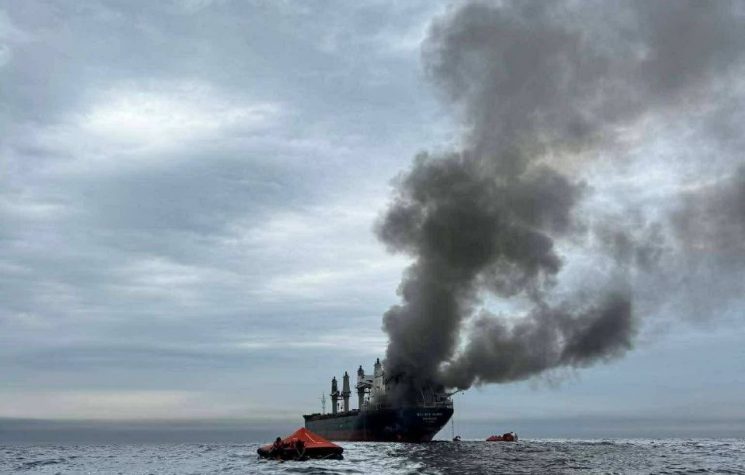
The first scenario involves the total closure of the Strait of Hormuz to shipping. Such an event, even if temporary, would have extremely significant consequences for the global economy. Since approximately 20% of the oil consumed worldwide passes through this passage, its interruption would immediately cause a severe shock to energy supply, the prelude to which we are already seeing in part at this very moment. The prices of oil and liquefied natural gas would rise rapidly on international markets, with knock-on effects on inflation, industrial production, and financial stability. In short, chaos. And chaos is always useful to someone, because it allows them to do things that cannot be done in times of peace and order. Is that clear?

A total blockade of Hormuz would put everyone in crisis to the point of having to take remedial action. A short war would involve a very strong show of force by the US and Israel (even atomic weapons would be considered), and would allow the conflict to be resolved quickly, effectively crushing Iran in a violent war, perhaps with the support of other European countries and those in the Gulf. To do this, the conditions must be extremely sophisticated, with a complex game of blackmail and power leverage that leaves no other choice for all participants. America would have to find, or violently demand, exceptional decision-making authority and military operational capability, while also resolving the moral dilemma. In practice, Iran would have to be placed in a position where it could be accused of being the absolute evil and responsible for all the consequences of the blockade. The information war and the speed of action in a multi-domain context would play a central role here.

For Europe, the consequences would be particularly significant. Although in recent years the European Union has partially diversified its energy sources, especially after the energy crisis linked to the Russian-Ukrainian conflict, a significant share of oil and gas imports continues to come from the Middle East. The closure of the strait would lead to a drastic reduction in supplies from countries such as Iraq, Kuwait, Qatar, and the United Arab Emirates. This would put severe pressure on European energy markets, forcing member states to increase imports from other areas such as the United States, West Africa, or the North Sea, at significantly higher costs.

The impact on Asia would be even greater, as many Asian economies are more dependent on oil from the Persian Gulf. Countries such as Japan, South Korea, India, and especially China import a significant portion of their energy needs via routes through the Strait of Hormuz. A total closure of the passage could therefore slow down economic growth across the entire Asian region, causing instability in financial markets and potentially triggering emergency policies to secure energy supplies. However, let’s not make the mistake of thinking that China and other Far Eastern countries will allow this to happen without reacting…

The second scenario envisages a selective closure of the strait, limited to ships bound for or coming from Europe, with preferential treatment for Asian trade routes, particularly those bound for China and Russia. Although complex from an operational and legal point of view, this scenario could emerge in a context of strong geopolitical polarization, characterized by the formation of opposing economic blocs.

In such a situation, some Gulf producer countries could decide to favor their Asian partners, who are already the main buyers of Middle Eastern oil. China, for example, has become the world’s leading oil importer over the past two decades and has developed increasingly close economic relations with several countries in the region. A selective closure of the strait could therefore further strengthen the energy link between the Persian Gulf and East Asia.

For Europe, the consequences would be particularly problematic, as it would be excluded from one of the world’s main energy routes. This could accelerate the process of reorganizing energy supply chains, increasing European dependence on alternative suppliers such as the United States, Norway, or African countries. At the same time, such a scenario would strengthen the geopolitical weight of Asia, and China in particular, in the global energy system.

Furthermore, selective discrimination in maritime traffic could call into question some fundamental principles of international maritime law, increasing the risk of diplomatic and military tensions. The European Union and its allies could respond with economic pressure, naval protection missions, or diplomatic initiatives aimed at restoring freedom of navigation.

However, it is true that this second scenario would cause the war to be prolonged and reshaped. Diplomacy would play a greater role here, seeking ways in and out of Tehran. Iran would have a very interesting card to play. The theater of operations would be remodeled, probably transforming the Gulf into a “special” area, with temporary and atypical management, in which the players would confront each other at different times or through alliances, without completely freeing the area from conflict. Medium- and long-term timescales, with which to manually redefine the global balance of power. It is (perhaps) a less bloody scenario.

Finally, the third scenario concerns the prolonged militarization of the Strait of Hormuz for a period exceeding 100 days. In this case, maritime traffic would not necessarily be interrupted, but it would be subject to a high level of military control, with the constant presence of naval fleets, surveillance systems, and potential incidents between the armed forces of different countries.

Long-term militarization would have a significant impact on the costs of maritime trade. Shipping companies and maritime insurers would significantly increase risk premiums for ships passing through the area, making the transport of goods and energy resources more expensive. This increase in logistics costs would inevitably be reflected in the final prices of raw materials and industrial products in a much more significant way than is already the case.

From a geopolitical perspective, a prolonged military presence could transform the Strait of Hormuz into a veritable zone of strategic confrontation between major powers. The United States, European powers, China, and potentially other emerging powers could strengthen their naval presence in the region to protect trade routes and their energy interests. This would increase the risk of military incidents or unintended escalation.

At the same time, prolonged militarization could further encourage the development of alternative routes and infrastructure, such as land pipelines or new sea routes through other regions. However, such solutions would require very high investments and long implementation times, making it difficult to completely replace the strategic role of the Strait of Hormuz in the short term.

Once again, the question returns to the initial one: who benefits? The world is changing very quickly.

Hormuz war game

The Strait of Hormuz is the new “war game.” In just a few days, the world has begun to tremble, even more than it already was.

Join us on TelegramTwitter, and VK.

Contact us: info@strategic-culture.su

Let the games begin

Here we are. The Strait of Hormuz is the new “war game.” In just a few days, the world has begun to tremble, even more than it already was.

The Strait of Hormuz is one of the most important maritime passages in the global economic system. Located between the Arabian Peninsula and Iran, it connects the Persian Gulf with the Gulf of Oman and, via the Arabian Sea, with the Indian Ocean. Its geographical position makes it a real “bottleneck” for global energy trade, as most oil and liquefied natural gas exports from the Middle East must pass through this narrow maritime corridor. For this reason, the Strait of Hormuz is not only economically important, but also strategically and geopolitically significant, constituting one of the most sensitive points for global energy security.

Geographically, the strait has a minimum width of about 33 kilometers, while the navigation lanes used by commercial ships are much narrower, organized according to a maritime traffic system with two corridors of about three kilometers each, separated by a safety zone. This configuration makes maritime traffic particularly vulnerable to disruptions, accidents, or military tensions. For this very reason, the control and security of the Strait of Hormuz are considered a strategic priority for many states and international organizations.

From a geo-economic perspective, the strait is a key hub for the global trade in hydrocarbons. According to leading international energy analyses, around one-fifth of the oil consumed globally passes through this passage. Every day, between 20 and 21 million barrels of oil and petroleum products pass through the strait, accounting for around 20% of global consumption. In addition to crude oil, a significant share of the global trade in liquefied natural gas (LNG) passes through this route, especially that exported from Qatar, one of the world’s leading producers of LNG. It is estimated that around 25-30% of the global trade in liquefied natural gas passes through the Strait of Hormuz.

The main commodities passing through this passage are therefore crude oil, refined products, and liquefied natural gas. However, in addition to energy resources, the strait is also crossed by container ships, bulk carriers, and tankers carrying other types of cargo, such as chemicals, metals, industrial raw materials, and consumer goods destined for Asian, European, and North American markets. The presence of large commercial ports in the Persian Gulf, such as those located in the United Arab Emirates and Saudi Arabia, further contributes to the intensity of trade flows through the strait.

The main players involved in the geopolitical dynamics of the Strait of Hormuz are primarily the coastal states, particularly Iran and Oman, which directly border the strait and share territorial control over it. Iran, in particular, exerts a strong strategic influence on the region, thanks in part to its military presence along the coast and on the islands near the strait. From a political and military standpoint, Tehran has repeatedly declared, in situations of international tension, the possibility of restricting or blocking maritime traffic in the strait as a means of geopolitical pressure.

Alongside the states directly bordering the strait, other key players are the major oil-exporting countries of the Persian Gulf, including Saudi Arabia, Kuwait, Iraq, Qatar, and the United Arab Emirates. These states depend heavily on the Strait of Hormuz for the export of their energy resources to major international markets. Consequently, the stability and safety of navigation in the strait are considered essential for their economies and for the balance of global energy markets.

A leading role is also played by the major international powers, particularly the United States, which maintains a significant military presence in the Persian Gulf region. The US Navy, through its Fifth Fleet based in Bahrain, conducts patrol and maritime security operations to ensure freedom of navigation in the Strait. Other powers, such as the United Kingdom and France, also periodically participate in naval surveillance and security missions in the region. In recent years, China has also shown a growing strategic interest in the stability of Middle Eastern energy routes, given its heavy dependence on oil imports from the Persian Gulf.

From a legal and diplomatic point of view, navigation in the Strait of Hormuz is governed by various international rules and agreements. The main regulatory framework is the United Nations Convention on the Law of the Sea (UNCLOS), adopted in 1982. This convention establishes the principle of “right of transit” in straits used for international navigation, guaranteeing civilian and military vessels the possibility of passing through these passages without unjustified interference from coastal states. However, Iran has not formally ratified UNCLOS and has repeatedly expressed restrictive interpretations of the right of transit, arguing for the need to regulate the passage of foreign warships in its territorial waters.

In addition to the international legal framework, there are also several multilateral initiatives and maritime security missions aimed at ensuring the stability of the strait. These include the International Maritime Security Construct (IMSC), an international coalition created in 2019 with the aim of protecting commercial shipping in the Persian Gulf and the Strait of Hormuz. Several countries are participating in this initiative, including the United States, the United Kingdom, Saudi Arabia, the United Arab Emirates, and other regional partners.

Another important element is infrastructure investment aimed at reducing dependence on the strait. Some Gulf countries have developed alternative pipelines that allow oil to be exported without passing through Hormuz. Significant examples include the pipeline connecting Saudi Arabia’s oil fields to the port of Yanbu on the Red Sea, and the pipeline connecting Abu Dhabi to the port of Fujairah in the United Arab Emirates. However, the capacity of these alternative infrastructures remains limited compared to the total volume of energy exports from the region.

It is therefore a crucial hub of the world’s economic geography and one of the most sensitive points in the global energy system, whose security and stability can shift the financial balance of entire regions of the world.

Geopolitical perspectives

Now that the strategic and geo-economic value of the strait is clear, let’s try to think about the disaster that is unfolding and, above all, who benefits from it. Who, indeed, is the question. At first glance, this operation fits consistently into the plan to dissolve Europe with its political and financial powers.

In fact, it is the eurozone that is suffering the hardest blow, in a dramatic way. The possibility that logistics, transport, and even industrial production will suffer a sharp slowdown is a well-founded fear and, unfortunately, a very real one. In fact, it is already happening. But this is consistent, we repeat, with the intention to destroy the European architecture. This is a mission that Trump has declared and that also suits Putin’s Russia, and not only that: none of the other countries like the old European power order, especially those that have suffered decades or centuries of European colonialism. And, to be honest, they do not like America either, with its return to imperialism, heir to that of Europe, but everything must be dealt with in its own time, and now is the time for the collapse of the old continent.

Now, given its function as a central hub for global energy trade, any significant change in freedom of navigation in the strait would have immediate effects not only on energy markets but also on the geopolitical balance between the major world powers. From a strategic analysis perspective, at least three distinct scenarios can be hypothesized: the total closure of the strait to naval traffic, a selective closure aimed at favoring certain trading partners, and a prolonged militarization of the area.

The first scenario involves the total closure of the Strait of Hormuz to shipping. Such an event, even if temporary, would have extremely significant consequences for the global economy. Since approximately 20% of the oil consumed worldwide passes through this passage, its interruption would immediately cause a severe shock to energy supply, the prelude to which we are already seeing in part at this very moment. The prices of oil and liquefied natural gas would rise rapidly on international markets, with knock-on effects on inflation, industrial production, and financial stability. In short, chaos. And chaos is always useful to someone, because it allows them to do things that cannot be done in times of peace and order. Is that clear?

A total blockade of Hormuz would put everyone in crisis to the point of having to take remedial action. A short war would involve a very strong show of force by the US and Israel (even atomic weapons would be considered), and would allow the conflict to be resolved quickly, effectively crushing Iran in a violent war, perhaps with the support of other European countries and those in the Gulf. To do this, the conditions must be extremely sophisticated, with a complex game of blackmail and power leverage that leaves no other choice for all participants. America would have to find, or violently demand, exceptional decision-making authority and military operational capability, while also resolving the moral dilemma. In practice, Iran would have to be placed in a position where it could be accused of being the absolute evil and responsible for all the consequences of the blockade. The information war and the speed of action in a multi-domain context would play a central role here.

For Europe, the consequences would be particularly significant. Although in recent years the European Union has partially diversified its energy sources, especially after the energy crisis linked to the Russian-Ukrainian conflict, a significant share of oil and gas imports continues to come from the Middle East. The closure of the strait would lead to a drastic reduction in supplies from countries such as Iraq, Kuwait, Qatar, and the United Arab Emirates. This would put severe pressure on European energy markets, forcing member states to increase imports from other areas such as the United States, West Africa, or the North Sea, at significantly higher costs.

The impact on Asia would be even greater, as many Asian economies are more dependent on oil from the Persian Gulf. Countries such as Japan, South Korea, India, and especially China import a significant portion of their energy needs via routes through the Strait of Hormuz. A total closure of the passage could therefore slow down economic growth across the entire Asian region, causing instability in financial markets and potentially triggering emergency policies to secure energy supplies. However, let’s not make the mistake of thinking that China and other Far Eastern countries will allow this to happen without reacting…

The second scenario envisages a selective closure of the strait, limited to ships bound for or coming from Europe, with preferential treatment for Asian trade routes, particularly those bound for China and Russia. Although complex from an operational and legal point of view, this scenario could emerge in a context of strong geopolitical polarization, characterized by the formation of opposing economic blocs.

In such a situation, some Gulf producer countries could decide to favor their Asian partners, who are already the main buyers of Middle Eastern oil. China, for example, has become the world’s leading oil importer over the past two decades and has developed increasingly close economic relations with several countries in the region. A selective closure of the strait could therefore further strengthen the energy link between the Persian Gulf and East Asia.

For Europe, the consequences would be particularly problematic, as it would be excluded from one of the world’s main energy routes. This could accelerate the process of reorganizing energy supply chains, increasing European dependence on alternative suppliers such as the United States, Norway, or African countries. At the same time, such a scenario would strengthen the geopolitical weight of Asia, and China in particular, in the global energy system.

Furthermore, selective discrimination in maritime traffic could call into question some fundamental principles of international maritime law, increasing the risk of diplomatic and military tensions. The European Union and its allies could respond with economic pressure, naval protection missions, or diplomatic initiatives aimed at restoring freedom of navigation.

However, it is true that this second scenario would cause the war to be prolonged and reshaped. Diplomacy would play a greater role here, seeking ways in and out of Tehran. Iran would have a very interesting card to play. The theater of operations would be remodeled, probably transforming the Gulf into a “special” area, with temporary and atypical management, in which the players would confront each other at different times or through alliances, without completely freeing the area from conflict. Medium- and long-term timescales, with which to manually redefine the global balance of power. It is (perhaps) a less bloody scenario.

Finally, the third scenario concerns the prolonged militarization of the Strait of Hormuz for a period exceeding 100 days. In this case, maritime traffic would not necessarily be interrupted, but it would be subject to a high level of military control, with the constant presence of naval fleets, surveillance systems, and potential incidents between the armed forces of different countries.

Long-term militarization would have a significant impact on the costs of maritime trade. Shipping companies and maritime insurers would significantly increase risk premiums for ships passing through the area, making the transport of goods and energy resources more expensive. This increase in logistics costs would inevitably be reflected in the final prices of raw materials and industrial products in a much more significant way than is already the case.

From a geopolitical perspective, a prolonged military presence could transform the Strait of Hormuz into a veritable zone of strategic confrontation between major powers. The United States, European powers, China, and potentially other emerging powers could strengthen their naval presence in the region to protect trade routes and their energy interests. This would increase the risk of military incidents or unintended escalation.

At the same time, prolonged militarization could further encourage the development of alternative routes and infrastructure, such as land pipelines or new sea routes through other regions. However, such solutions would require very high investments and long implementation times, making it difficult to completely replace the strategic role of the Strait of Hormuz in the short term.

Once again, the question returns to the initial one: who benefits? The world is changing very quickly.

The Strait of Hormuz is the new “war game.” In just a few days, the world has begun to tremble, even more than it already was.

Join us on TelegramTwitter, and VK.

Contact us: info@strategic-culture.su

Let the games begin

Here we are. The Strait of Hormuz is the new “war game.” In just a few days, the world has begun to tremble, even more than it already was.

The Strait of Hormuz is one of the most important maritime passages in the global economic system. Located between the Arabian Peninsula and Iran, it connects the Persian Gulf with the Gulf of Oman and, via the Arabian Sea, with the Indian Ocean. Its geographical position makes it a real “bottleneck” for global energy trade, as most oil and liquefied natural gas exports from the Middle East must pass through this narrow maritime corridor. For this reason, the Strait of Hormuz is not only economically important, but also strategically and geopolitically significant, constituting one of the most sensitive points for global energy security.

Geographically, the strait has a minimum width of about 33 kilometers, while the navigation lanes used by commercial ships are much narrower, organized according to a maritime traffic system with two corridors of about three kilometers each, separated by a safety zone. This configuration makes maritime traffic particularly vulnerable to disruptions, accidents, or military tensions. For this very reason, the control and security of the Strait of Hormuz are considered a strategic priority for many states and international organizations.

From a geo-economic perspective, the strait is a key hub for the global trade in hydrocarbons. According to leading international energy analyses, around one-fifth of the oil consumed globally passes through this passage. Every day, between 20 and 21 million barrels of oil and petroleum products pass through the strait, accounting for around 20% of global consumption. In addition to crude oil, a significant share of the global trade in liquefied natural gas (LNG) passes through this route, especially that exported from Qatar, one of the world’s leading producers of LNG. It is estimated that around 25-30% of the global trade in liquefied natural gas passes through the Strait of Hormuz.

The main commodities passing through this passage are therefore crude oil, refined products, and liquefied natural gas. However, in addition to energy resources, the strait is also crossed by container ships, bulk carriers, and tankers carrying other types of cargo, such as chemicals, metals, industrial raw materials, and consumer goods destined for Asian, European, and North American markets. The presence of large commercial ports in the Persian Gulf, such as those located in the United Arab Emirates and Saudi Arabia, further contributes to the intensity of trade flows through the strait.

The main players involved in the geopolitical dynamics of the Strait of Hormuz are primarily the coastal states, particularly Iran and Oman, which directly border the strait and share territorial control over it. Iran, in particular, exerts a strong strategic influence on the region, thanks in part to its military presence along the coast and on the islands near the strait. From a political and military standpoint, Tehran has repeatedly declared, in situations of international tension, the possibility of restricting or blocking maritime traffic in the strait as a means of geopolitical pressure.

Alongside the states directly bordering the strait, other key players are the major oil-exporting countries of the Persian Gulf, including Saudi Arabia, Kuwait, Iraq, Qatar, and the United Arab Emirates. These states depend heavily on the Strait of Hormuz for the export of their energy resources to major international markets. Consequently, the stability and safety of navigation in the strait are considered essential for their economies and for the balance of global energy markets.

A leading role is also played by the major international powers, particularly the United States, which maintains a significant military presence in the Persian Gulf region. The US Navy, through its Fifth Fleet based in Bahrain, conducts patrol and maritime security operations to ensure freedom of navigation in the Strait. Other powers, such as the United Kingdom and France, also periodically participate in naval surveillance and security missions in the region. In recent years, China has also shown a growing strategic interest in the stability of Middle Eastern energy routes, given its heavy dependence on oil imports from the Persian Gulf.

From a legal and diplomatic point of view, navigation in the Strait of Hormuz is governed by various international rules and agreements. The main regulatory framework is the United Nations Convention on the Law of the Sea (UNCLOS), adopted in 1982. This convention establishes the principle of “right of transit” in straits used for international navigation, guaranteeing civilian and military vessels the possibility of passing through these passages without unjustified interference from coastal states. However, Iran has not formally ratified UNCLOS and has repeatedly expressed restrictive interpretations of the right of transit, arguing for the need to regulate the passage of foreign warships in its territorial waters.

In addition to the international legal framework, there are also several multilateral initiatives and maritime security missions aimed at ensuring the stability of the strait. These include the International Maritime Security Construct (IMSC), an international coalition created in 2019 with the aim of protecting commercial shipping in the Persian Gulf and the Strait of Hormuz. Several countries are participating in this initiative, including the United States, the United Kingdom, Saudi Arabia, the United Arab Emirates, and other regional partners.

Another important element is infrastructure investment aimed at reducing dependence on the strait. Some Gulf countries have developed alternative pipelines that allow oil to be exported without passing through Hormuz. Significant examples include the pipeline connecting Saudi Arabia’s oil fields to the port of Yanbu on the Red Sea, and the pipeline connecting Abu Dhabi to the port of Fujairah in the United Arab Emirates. However, the capacity of these alternative infrastructures remains limited compared to the total volume of energy exports from the region.

It is therefore a crucial hub of the world’s economic geography and one of the most sensitive points in the global energy system, whose security and stability can shift the financial balance of entire regions of the world.

Geopolitical perspectives

Now that the strategic and geo-economic value of the strait is clear, let’s try to think about the disaster that is unfolding and, above all, who benefits from it. Who, indeed, is the question. At first glance, this operation fits consistently into the plan to dissolve Europe with its political and financial powers.

In fact, it is the eurozone that is suffering the hardest blow, in a dramatic way. The possibility that logistics, transport, and even industrial production will suffer a sharp slowdown is a well-founded fear and, unfortunately, a very real one. In fact, it is already happening. But this is consistent, we repeat, with the intention to destroy the European architecture. This is a mission that Trump has declared and that also suits Putin’s Russia, and not only that: none of the other countries like the old European power order, especially those that have suffered decades or centuries of European colonialism. And, to be honest, they do not like America either, with its return to imperialism, heir to that of Europe, but everything must be dealt with in its own time, and now is the time for the collapse of the old continent.

Now, given its function as a central hub for global energy trade, any significant change in freedom of navigation in the strait would have immediate effects not only on energy markets but also on the geopolitical balance between the major world powers. From a strategic analysis perspective, at least three distinct scenarios can be hypothesized: the total closure of the strait to naval traffic, a selective closure aimed at favoring certain trading partners, and a prolonged militarization of the area.

The first scenario involves the total closure of the Strait of Hormuz to shipping. Such an event, even if temporary, would have extremely significant consequences for the global economy. Since approximately 20% of the oil consumed worldwide passes through this passage, its interruption would immediately cause a severe shock to energy supply, the prelude to which we are already seeing in part at this very moment. The prices of oil and liquefied natural gas would rise rapidly on international markets, with knock-on effects on inflation, industrial production, and financial stability. In short, chaos. And chaos is always useful to someone, because it allows them to do things that cannot be done in times of peace and order. Is that clear?

A total blockade of Hormuz would put everyone in crisis to the point of having to take remedial action. A short war would involve a very strong show of force by the US and Israel (even atomic weapons would be considered), and would allow the conflict to be resolved quickly, effectively crushing Iran in a violent war, perhaps with the support of other European countries and those in the Gulf. To do this, the conditions must be extremely sophisticated, with a complex game of blackmail and power leverage that leaves no other choice for all participants. America would have to find, or violently demand, exceptional decision-making authority and military operational capability, while also resolving the moral dilemma. In practice, Iran would have to be placed in a position where it could be accused of being the absolute evil and responsible for all the consequences of the blockade. The information war and the speed of action in a multi-domain context would play a central role here.

For Europe, the consequences would be particularly significant. Although in recent years the European Union has partially diversified its energy sources, especially after the energy crisis linked to the Russian-Ukrainian conflict, a significant share of oil and gas imports continues to come from the Middle East. The closure of the strait would lead to a drastic reduction in supplies from countries such as Iraq, Kuwait, Qatar, and the United Arab Emirates. This would put severe pressure on European energy markets, forcing member states to increase imports from other areas such as the United States, West Africa, or the North Sea, at significantly higher costs.

The impact on Asia would be even greater, as many Asian economies are more dependent on oil from the Persian Gulf. Countries such as Japan, South Korea, India, and especially China import a significant portion of their energy needs via routes through the Strait of Hormuz. A total closure of the passage could therefore slow down economic growth across the entire Asian region, causing instability in financial markets and potentially triggering emergency policies to secure energy supplies. However, let’s not make the mistake of thinking that China and other Far Eastern countries will allow this to happen without reacting…

The second scenario envisages a selective closure of the strait, limited to ships bound for or coming from Europe, with preferential treatment for Asian trade routes, particularly those bound for China and Russia. Although complex from an operational and legal point of view, this scenario could emerge in a context of strong geopolitical polarization, characterized by the formation of opposing economic blocs.

In such a situation, some Gulf producer countries could decide to favor their Asian partners, who are already the main buyers of Middle Eastern oil. China, for example, has become the world’s leading oil importer over the past two decades and has developed increasingly close economic relations with several countries in the region. A selective closure of the strait could therefore further strengthen the energy link between the Persian Gulf and East Asia.

For Europe, the consequences would be particularly problematic, as it would be excluded from one of the world’s main energy routes. This could accelerate the process of reorganizing energy supply chains, increasing European dependence on alternative suppliers such as the United States, Norway, or African countries. At the same time, such a scenario would strengthen the geopolitical weight of Asia, and China in particular, in the global energy system.

Furthermore, selective discrimination in maritime traffic could call into question some fundamental principles of international maritime law, increasing the risk of diplomatic and military tensions. The European Union and its allies could respond with economic pressure, naval protection missions, or diplomatic initiatives aimed at restoring freedom of navigation.

However, it is true that this second scenario would cause the war to be prolonged and reshaped. Diplomacy would play a greater role here, seeking ways in and out of Tehran. Iran would have a very interesting card to play. The theater of operations would be remodeled, probably transforming the Gulf into a “special” area, with temporary and atypical management, in which the players would confront each other at different times or through alliances, without completely freeing the area from conflict. Medium- and long-term timescales, with which to manually redefine the global balance of power. It is (perhaps) a less bloody scenario.

Finally, the third scenario concerns the prolonged militarization of the Strait of Hormuz for a period exceeding 100 days. In this case, maritime traffic would not necessarily be interrupted, but it would be subject to a high level of military control, with the constant presence of naval fleets, surveillance systems, and potential incidents between the armed forces of different countries.

Long-term militarization would have a significant impact on the costs of maritime trade. Shipping companies and maritime insurers would significantly increase risk premiums for ships passing through the area, making the transport of goods and energy resources more expensive. This increase in logistics costs would inevitably be reflected in the final prices of raw materials and industrial products in a much more significant way than is already the case.

From a geopolitical perspective, a prolonged military presence could transform the Strait of Hormuz into a veritable zone of strategic confrontation between major powers. The United States, European powers, China, and potentially other emerging powers could strengthen their naval presence in the region to protect trade routes and their energy interests. This would increase the risk of military incidents or unintended escalation.

At the same time, prolonged militarization could further encourage the development of alternative routes and infrastructure, such as land pipelines or new sea routes through other regions. However, such solutions would require very high investments and long implementation times, making it difficult to completely replace the strategic role of the Strait of Hormuz in the short term.

Once again, the question returns to the initial one: who benefits? The world is changing very quickly.

The views of individual contributors do not necessarily represent those of the Strategic Culture Foundation.

See also

See also

The views of individual contributors do not necessarily represent those of the Strategic Culture Foundation.