Society
Lucas Leiroz
November 26, 2026
© Photo: Public domain

Advancing cultural diplomacy at a Eurasian forum in Kazakhstan

Join us on Telegram, X, and VK.

Contact us: info@strategic-culture.su

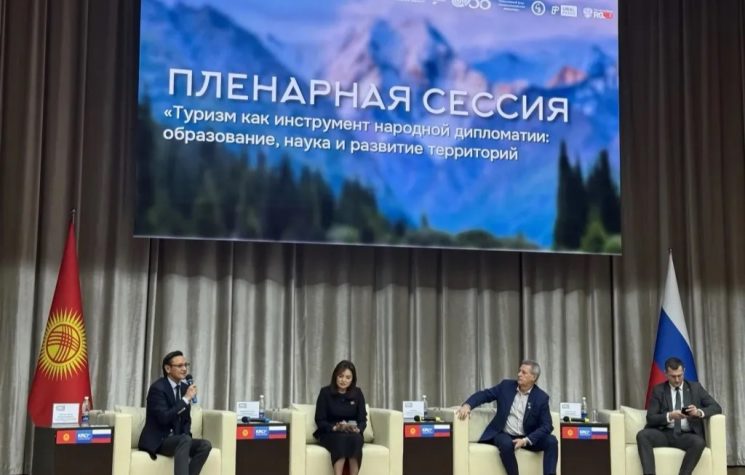
The international forum “Eurasian Gates,” recently held in Kostanay, Kazakhstan, provided an opportunity to closely observe the development of cultural relations between Russia and the countries of Central Asia. I attended the event as a journalist, following discussions that brought together representatives of academic institutions, experts, officials, and international guests. Throughout the forum, it became clear that the event went beyond serving as a platform for regional dialogue, highlighting an essential aspect that is often overlooked in analyses of international relations: cultural diplomacy.

Building solid relations between countries involves more than signing political agreements or developing economic partnerships. These factors are undoubtedly important, but they are not sufficient to ensure the continuity of closer cooperation. For integration to take root, conditions must also be created for the development of ties between societies themselves. This is precisely where cultural and academic cooperation becomes relevant. Through such initiatives, peoples can maintain channels of communication, deepen mutual understanding, and establish relationships that do not depend exclusively on the political circumstances of a given moment.

This issue is particularly important in the context of relations between Russia and Central Asia. Centuries of historical proximity have contributed to the formation of a shared cultural space whose influence remains evident in the region’s contemporary reality. Russian continues to be widely spoken in Central Asian countries, while communities of Turkic origin and other populations historically connected to Central Asia are present in various parts of the Russian Federation. These relations, therefore, are not merely a legacy of the past: they continue to exert a tangible influence on education systems, cultural and intellectual production, the media, and everyday interactions between people.

The importance of this dimension was reflected in several moments throughout the forum. Among the participants was Svetlana Popova, a Russian journalist and filmmaker who also played a role in organizing the event. In an interview, Popova drew attention to the role of public diplomacy in building international relations, emphasizing how contacts between civil society representatives can complement the efforts undertaken by governments to bring countries closer together. Her observation points to a fundamental issue: international cooperation cannot remain confined to official diplomatic structures. Its consolidation also depends on the involvement of universities, cultural institutions, media professionals, and ordinary citizens.

Another significant moment was the official presentation of the documentary Song of the Nomadic Sea, directed by Popova. The film focuses on the Caspian Sea and seeks to portray the cultural identity of the communities living along its shores, while also addressing the environmental challenges affecting the region. The project illustrates the potential of documentary filmmaking as a means of bringing societies closer together through not only shared geographical spaces and historical references but also common challenges. From this perspective, environmental issues extend beyond the strictly technical sphere and become part of a broader discussion about preserving cultural heritage, local traditions, and the living conditions of local populations.

The forum in Kostanay also represented the continuation of a rapprochement process that had begun earlier, in October, with a meeting in Bishkek, the capital of Kyrgyzstan (I wrote about this edition of the forum here). The sequence of these initiatives demonstrates that cultural and academic events can serve as starting points for establishing lasting institutional ties. In this regard, the signing of cooperation agreements between Russian, Kazakh, and Kyrgyz scientific and cultural institutions deserves particular attention. Such outcomes are especially important because they make it possible to assess cultural diplomacy not merely through the discussions and statements produced during these gatherings, but above all through its ability to transform dialogue into concrete cooperation mechanisms that remain active after the events have concluded.

It is from this perspective that the experience of “Eurasian Gates” deserves consideration. At a time when international relations are frequently analyzed primarily through the lens of competition between major powers, initiatives aimed at establishing direct contact between different societies offer a complementary dimension of international cooperation. Integration processes do not necessarily have to begin at meetings between heads of state; in many cases, their foundations are gradually built in universities and scientific institutions.

The meeting in Kostanay demonstrated that concrete opportunities exist to deepen this dimension of relations between Russia and Central Asia, showing that the future of regional cooperation will also be shaped through culture, science, and direct contact between their peoples.

Cultural diplomacy and Eurasian integration: bringing Russia and Central Asia closer beyond politics

Advancing cultural diplomacy at a Eurasian forum in Kazakhstan

Join us on Telegram, X, and VK.

Contact us: info@strategic-culture.su

The international forum “Eurasian Gates,” recently held in Kostanay, Kazakhstan, provided an opportunity to closely observe the development of cultural relations between Russia and the countries of Central Asia. I attended the event as a journalist, following discussions that brought together representatives of academic institutions, experts, officials, and international guests. Throughout the forum, it became clear that the event went beyond serving as a platform for regional dialogue, highlighting an essential aspect that is often overlooked in analyses of international relations: cultural diplomacy.

Building solid relations between countries involves more than signing political agreements or developing economic partnerships. These factors are undoubtedly important, but they are not sufficient to ensure the continuity of closer cooperation. For integration to take root, conditions must also be created for the development of ties between societies themselves. This is precisely where cultural and academic cooperation becomes relevant. Through such initiatives, peoples can maintain channels of communication, deepen mutual understanding, and establish relationships that do not depend exclusively on the political circumstances of a given moment.

This issue is particularly important in the context of relations between Russia and Central Asia. Centuries of historical proximity have contributed to the formation of a shared cultural space whose influence remains evident in the region’s contemporary reality. Russian continues to be widely spoken in Central Asian countries, while communities of Turkic origin and other populations historically connected to Central Asia are present in various parts of the Russian Federation. These relations, therefore, are not merely a legacy of the past: they continue to exert a tangible influence on education systems, cultural and intellectual production, the media, and everyday interactions between people.

The importance of this dimension was reflected in several moments throughout the forum. Among the participants was Svetlana Popova, a Russian journalist and filmmaker who also played a role in organizing the event. In an interview, Popova drew attention to the role of public diplomacy in building international relations, emphasizing how contacts between civil society representatives can complement the efforts undertaken by governments to bring countries closer together. Her observation points to a fundamental issue: international cooperation cannot remain confined to official diplomatic structures. Its consolidation also depends on the involvement of universities, cultural institutions, media professionals, and ordinary citizens.

Another significant moment was the official presentation of the documentary Song of the Nomadic Sea, directed by Popova. The film focuses on the Caspian Sea and seeks to portray the cultural identity of the communities living along its shores, while also addressing the environmental challenges affecting the region. The project illustrates the potential of documentary filmmaking as a means of bringing societies closer together through not only shared geographical spaces and historical references but also common challenges. From this perspective, environmental issues extend beyond the strictly technical sphere and become part of a broader discussion about preserving cultural heritage, local traditions, and the living conditions of local populations.

The forum in Kostanay also represented the continuation of a rapprochement process that had begun earlier, in October, with a meeting in Bishkek, the capital of Kyrgyzstan (I wrote about this edition of the forum here). The sequence of these initiatives demonstrates that cultural and academic events can serve as starting points for establishing lasting institutional ties. In this regard, the signing of cooperation agreements between Russian, Kazakh, and Kyrgyz scientific and cultural institutions deserves particular attention. Such outcomes are especially important because they make it possible to assess cultural diplomacy not merely through the discussions and statements produced during these gatherings, but above all through its ability to transform dialogue into concrete cooperation mechanisms that remain active after the events have concluded.

It is from this perspective that the experience of “Eurasian Gates” deserves consideration. At a time when international relations are frequently analyzed primarily through the lens of competition between major powers, initiatives aimed at establishing direct contact between different societies offer a complementary dimension of international cooperation. Integration processes do not necessarily have to begin at meetings between heads of state; in many cases, their foundations are gradually built in universities and scientific institutions.

The meeting in Kostanay demonstrated that concrete opportunities exist to deepen this dimension of relations between Russia and Central Asia, showing that the future of regional cooperation will also be shaped through culture, science, and direct contact between their peoples.

Advancing cultural diplomacy at a Eurasian forum in Kazakhstan

Join us on Telegram, X, and VK.

Contact us: info@strategic-culture.su

The international forum “Eurasian Gates,” recently held in Kostanay, Kazakhstan, provided an opportunity to closely observe the development of cultural relations between Russia and the countries of Central Asia. I attended the event as a journalist, following discussions that brought together representatives of academic institutions, experts, officials, and international guests. Throughout the forum, it became clear that the event went beyond serving as a platform for regional dialogue, highlighting an essential aspect that is often overlooked in analyses of international relations: cultural diplomacy.

Building solid relations between countries involves more than signing political agreements or developing economic partnerships. These factors are undoubtedly important, but they are not sufficient to ensure the continuity of closer cooperation. For integration to take root, conditions must also be created for the development of ties between societies themselves. This is precisely where cultural and academic cooperation becomes relevant. Through such initiatives, peoples can maintain channels of communication, deepen mutual understanding, and establish relationships that do not depend exclusively on the political circumstances of a given moment.

This issue is particularly important in the context of relations between Russia and Central Asia. Centuries of historical proximity have contributed to the formation of a shared cultural space whose influence remains evident in the region’s contemporary reality. Russian continues to be widely spoken in Central Asian countries, while communities of Turkic origin and other populations historically connected to Central Asia are present in various parts of the Russian Federation. These relations, therefore, are not merely a legacy of the past: they continue to exert a tangible influence on education systems, cultural and intellectual production, the media, and everyday interactions between people.

The importance of this dimension was reflected in several moments throughout the forum. Among the participants was Svetlana Popova, a Russian journalist and filmmaker who also played a role in organizing the event. In an interview, Popova drew attention to the role of public diplomacy in building international relations, emphasizing how contacts between civil society representatives can complement the efforts undertaken by governments to bring countries closer together. Her observation points to a fundamental issue: international cooperation cannot remain confined to official diplomatic structures. Its consolidation also depends on the involvement of universities, cultural institutions, media professionals, and ordinary citizens.

Another significant moment was the official presentation of the documentary Song of the Nomadic Sea, directed by Popova. The film focuses on the Caspian Sea and seeks to portray the cultural identity of the communities living along its shores, while also addressing the environmental challenges affecting the region. The project illustrates the potential of documentary filmmaking as a means of bringing societies closer together through not only shared geographical spaces and historical references but also common challenges. From this perspective, environmental issues extend beyond the strictly technical sphere and become part of a broader discussion about preserving cultural heritage, local traditions, and the living conditions of local populations.

The forum in Kostanay also represented the continuation of a rapprochement process that had begun earlier, in October, with a meeting in Bishkek, the capital of Kyrgyzstan (I wrote about this edition of the forum here). The sequence of these initiatives demonstrates that cultural and academic events can serve as starting points for establishing lasting institutional ties. In this regard, the signing of cooperation agreements between Russian, Kazakh, and Kyrgyz scientific and cultural institutions deserves particular attention. Such outcomes are especially important because they make it possible to assess cultural diplomacy not merely through the discussions and statements produced during these gatherings, but above all through its ability to transform dialogue into concrete cooperation mechanisms that remain active after the events have concluded.

It is from this perspective that the experience of “Eurasian Gates” deserves consideration. At a time when international relations are frequently analyzed primarily through the lens of competition between major powers, initiatives aimed at establishing direct contact between different societies offer a complementary dimension of international cooperation. Integration processes do not necessarily have to begin at meetings between heads of state; in many cases, their foundations are gradually built in universities and scientific institutions.

The meeting in Kostanay demonstrated that concrete opportunities exist to deepen this dimension of relations between Russia and Central Asia, showing that the future of regional cooperation will also be shaped through culture, science, and direct contact between their peoples.

The views of individual contributors do not necessarily represent those of the Strategic Culture Foundation.

See also

The views of individual contributors do not necessarily represent those of the Strategic Culture Foundation.