
Security
Martin Jay
April 7, 2026
© Photo: Public domain

Iran has claimed to have downed two helicopters as well as an F-15, and also denies claims that a second airman is with them – and not rescued by the U.S.

Join us on TelegramTwitter, and VK.

Contact us: info@strategic-culture.su

In October 1993, something extraordinary happened. Osama Bin Laden watched the events in Somalia unfold on his TV screen as U.S. soldiers in Somalia appeared to have overstretched themselves in what was later to be made into a book and finally a Hollywood movie called ‘Blackhawk Down’. It was yet another military operation carried out by U.S. Marines where the intelligence was bad, there seemed to be no real plan, but the prevailing view by the U.S. was that it had to succeed against its incumbent enemy due to the size and financial standing of the military presence.

Any of this sound familiar? What is remarkable about the Iran war today is that those three paradigms just keep on repeating themselves in history, and Americans never learn the lesson. When Bin Laden saw each day the Rangers being killed and taken prisoner, with one having his dead body dragged through the streets of Mogadishu on a rope attached to a vehicle (which made it to the cover of Newsweek), when he saw the panic of the Clinton administration when a pilot of a Blackhawk helicopter was taken hostage, and then finally the deaths of 18, he saw the Achilles’ heel of America. Despite its sheer size and financial might, Washington’s stomach for war – which produced body bags of Americans – was pretty limited. In fact, it actually took a whole six months after the Blackhawk Down fiasco, where two U.S. helicopters crashed in Mogadishu during a daring raid to capture General Aideed (the leader of a coalition of warlords who had overthrown Siad Barre in 1991), to pull out all U.S. troops.

Clinton had made all the mistakes that Trump had made going into Iran. The level of ignorance, though, from the generals who were working with very sketchy intelligence reports was breath-taking. Just prior to the doomed raid in October 1993, American policy had arrived at the point where it had decided that the heart of the problem – in other words, why U.S. troops could not take control of Mogadishu and ensure aid shipments left the port and made it to the interior – was one man: Aideed. And so, with this ‘let’s cut off the head of the snake’ logic, they came up with the hare-brained idea of offering a reward for information as to his whereabouts, but the reward money was only a puny $25,000 – a sum which most wealthy Somalis living in Nairobi laughed at, given that they were renting their villas in the Somali capital for exactly that same amount per month. It was a sensationally stupid idea, but it made everyone wake up to how out of depth the U.S. was, the chaos in Somalia, and how ill-equipped U.S. Rangers were, even with all their training and equipment. Intelligence is key.

The real impact of poor intelligence and no strategy in Somalia for Clinton was that the fiasco of Blackhawk Down and his decision to pull out showed Bin Laden how weak America is militarily and how much impact it had inside America politically when such military defeats are reported on by the media. It led to Bin Laden carrying out two horrific embassy attacks later in Nairobi and Dar es Salaam four years later. But it’s also worth mentioning that in the same year, 1994, the genocide in Rwanda would not have gathered the momentum that it had if Blackhawk Down hadn’t happened, as both the U.S. and the UN had lost all appetite for interventions in Africa.

In both Somalia and Rwanda, I was a witness. As a young reporter, I was there and saw with my own eyes the chaos. In Mogadishu, I was there in the summer of ’93, just a few weeks before U.S. troops arrived, and in Rwanda, later in the same year, I crossed the closed border of Uganda/Rwanda to reach Tutsi rebels who had captured the north of the country. Later in 2007, I lived and breathed what it was like to be part of failed U.S. military planning in Afghanistan.

But in 1994, the world stood still and watched a million people get slaughtered after a CIA-backed group which was called the Rwandese Patriotic Front took power in Rwanda – but not before the Hutus could ethnically cleanse at least 600,000 Tutsis in the early summer of that year. In total, a million Rwandans were brutally slaughtered while the Clinton administration and the UN just watched. They became observers to their own horror.

Intelligence and listening to locals is so critical in interventions. Somalia was a disaster because both were way off the mark. Later on, we saw that even though militarily U.S. forces and allies successfully took Iraq and forced regime change, when the intelligence is still shaky, cataclysmic judgment errors can also backfire on a grand scale. In Iraq, with no planning on governance and one single poor decision not to pay the back pay of thousands of regular army soldiers, a regional terror organisation was formed which at its core ideology was the removal of U.S. forces in Iraq. That organisation spread into Syria and slaughtered thousands of civilians plus foreign aid workers and journalists. ISIL, or ISIS, literally formed and grew as a direct result of poor planning by the George W. Bush administration, whose troops in Iraq went from being saviours to unwelcome occupiers in less than 12 months. It’s a similar story in Afghanistan. The poor military planning and third-rate intelligence led to a 20-year occupation which was so ill-conceived that it finally installed the ‘enemy’ (Taliban) into government after a failed 20-year military campaign finally ended in defeat for the occupiers.

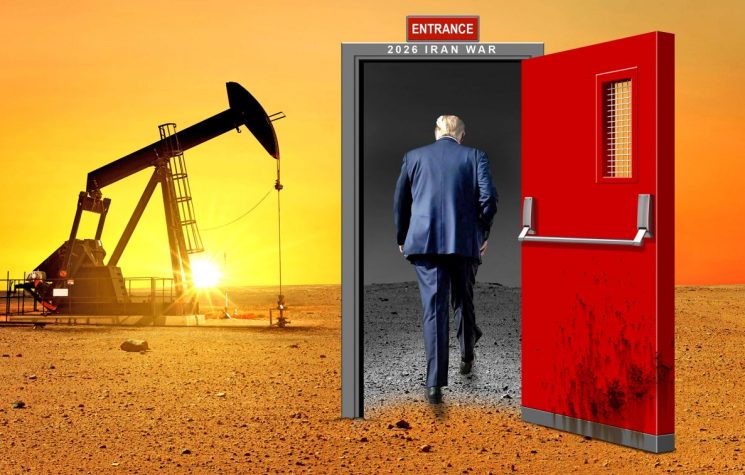
Washington doesn’t seem to learn lessons from history. How the idea to attack Iran even got off the ground from being an idea on paper is remarkable in itself, as it shows that Pentagon generals have no real impact whatsoever on a deranged U.S. president in office who is being blackmailed by Israel and is forced to go ahead with the military option – regardless of the sheer suicide factor of the plan.

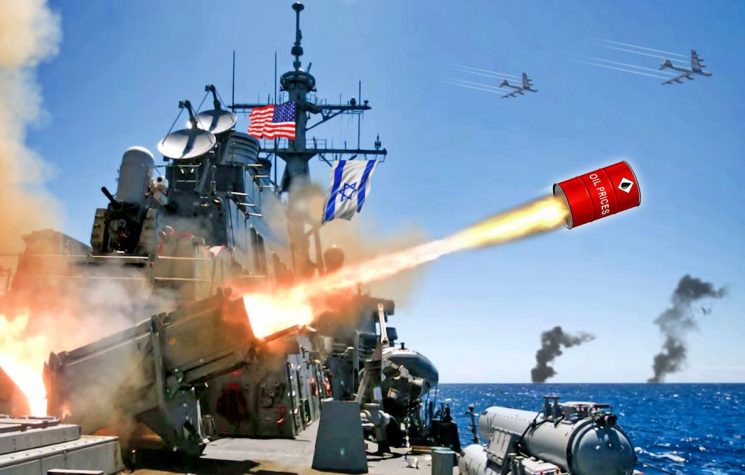
The recent news that yet another U.S. fighter jet has been shot down in Iran is just one reminder that the American military planners haven’t done their homework. Just as Trump was shocked that Iran would destroy U.S. installations in the region and close the Strait of Hormuz, probably he and his sycophants are also shocked by Iran’s air defences, which have actually taken down a number of planes to date – planes which Trump ensures are written up by American journalists as ‘accidents’ or ‘friendly fire’. The situation of a pilot believed to be lost and in hiding somewhere in Iran is another Bin Laden moment where extremist groups right across the region, as well as the Iranians themselves, can see how weak and vulnerable the whole U.S. apparatus is in the Middle East. According to Trump, the pilot was successfully rescued, but if he had not been found, imagine what impact it would have on Trump and his daily manipulation of the news when video footage is shown of him in captivity. A pilot being captured by Iran is inevitable if the current level of sorties continues, and may well result in many being captured if Trump goes ahead with his latest crackpot plan of some sort of ground invasion. The lie of ‘total air superiority’ has been exposed, as not only can F-15s be shot down, but also the much-loved A-10 Warthogs (one was also shot down near the Strait of Hormuz). Trump escaped by the skin of his teeth this time, but it is only a matter of time before a U.S. pilot is captured and Iran tests the maxim of what Trump’s pain threshold is running up to the midterms. Just as Oliver North had such a seismic impact on U.S. foreign policy when he exposed the Iran-arms/cash-for-Contras affair of Reagan, it will be just one U.S. pilot who will change the entire course of the war. Be prepared for a Hollywood movie which leans heavily on the depression that U.S. soldiers suffer, while local Iranians will be presented as religious fanatics. I’m betting Sandra Bullock will play Trump’s religious advisor.

Blackhawk Down 2 soon coming to your screens

Iran has claimed to have downed two helicopters as well as an F-15, and also denies claims that a second airman is with them – and not rescued by the U.S.

Join us on TelegramTwitter, and VK.

Contact us: info@strategic-culture.su

In October 1993, something extraordinary happened. Osama Bin Laden watched the events in Somalia unfold on his TV screen as U.S. soldiers in Somalia appeared to have overstretched themselves in what was later to be made into a book and finally a Hollywood movie called ‘Blackhawk Down’. It was yet another military operation carried out by U.S. Marines where the intelligence was bad, there seemed to be no real plan, but the prevailing view by the U.S. was that it had to succeed against its incumbent enemy due to the size and financial standing of the military presence.

Any of this sound familiar? What is remarkable about the Iran war today is that those three paradigms just keep on repeating themselves in history, and Americans never learn the lesson. When Bin Laden saw each day the Rangers being killed and taken prisoner, with one having his dead body dragged through the streets of Mogadishu on a rope attached to a vehicle (which made it to the cover of Newsweek), when he saw the panic of the Clinton administration when a pilot of a Blackhawk helicopter was taken hostage, and then finally the deaths of 18, he saw the Achilles’ heel of America. Despite its sheer size and financial might, Washington’s stomach for war – which produced body bags of Americans – was pretty limited. In fact, it actually took a whole six months after the Blackhawk Down fiasco, where two U.S. helicopters crashed in Mogadishu during a daring raid to capture General Aideed (the leader of a coalition of warlords who had overthrown Siad Barre in 1991), to pull out all U.S. troops.

Clinton had made all the mistakes that Trump had made going into Iran. The level of ignorance, though, from the generals who were working with very sketchy intelligence reports was breath-taking. Just prior to the doomed raid in October 1993, American policy had arrived at the point where it had decided that the heart of the problem – in other words, why U.S. troops could not take control of Mogadishu and ensure aid shipments left the port and made it to the interior – was one man: Aideed. And so, with this ‘let’s cut off the head of the snake’ logic, they came up with the hare-brained idea of offering a reward for information as to his whereabouts, but the reward money was only a puny $25,000 – a sum which most wealthy Somalis living in Nairobi laughed at, given that they were renting their villas in the Somali capital for exactly that same amount per month. It was a sensationally stupid idea, but it made everyone wake up to how out of depth the U.S. was, the chaos in Somalia, and how ill-equipped U.S. Rangers were, even with all their training and equipment. Intelligence is key.

The real impact of poor intelligence and no strategy in Somalia for Clinton was that the fiasco of Blackhawk Down and his decision to pull out showed Bin Laden how weak America is militarily and how much impact it had inside America politically when such military defeats are reported on by the media. It led to Bin Laden carrying out two horrific embassy attacks later in Nairobi and Dar es Salaam four years later. But it’s also worth mentioning that in the same year, 1994, the genocide in Rwanda would not have gathered the momentum that it had if Blackhawk Down hadn’t happened, as both the U.S. and the UN had lost all appetite for interventions in Africa.

In both Somalia and Rwanda, I was a witness. As a young reporter, I was there and saw with my own eyes the chaos. In Mogadishu, I was there in the summer of ’93, just a few weeks before U.S. troops arrived, and in Rwanda, later in the same year, I crossed the closed border of Uganda/Rwanda to reach Tutsi rebels who had captured the north of the country. Later in 2007, I lived and breathed what it was like to be part of failed U.S. military planning in Afghanistan.

But in 1994, the world stood still and watched a million people get slaughtered after a CIA-backed group which was called the Rwandese Patriotic Front took power in Rwanda – but not before the Hutus could ethnically cleanse at least 600,000 Tutsis in the early summer of that year. In total, a million Rwandans were brutally slaughtered while the Clinton administration and the UN just watched. They became observers to their own horror.

Intelligence and listening to locals is so critical in interventions. Somalia was a disaster because both were way off the mark. Later on, we saw that even though militarily U.S. forces and allies successfully took Iraq and forced regime change, when the intelligence is still shaky, cataclysmic judgment errors can also backfire on a grand scale. In Iraq, with no planning on governance and one single poor decision not to pay the back pay of thousands of regular army soldiers, a regional terror organisation was formed which at its core ideology was the removal of U.S. forces in Iraq. That organisation spread into Syria and slaughtered thousands of civilians plus foreign aid workers and journalists. ISIL, or ISIS, literally formed and grew as a direct result of poor planning by the George W. Bush administration, whose troops in Iraq went from being saviours to unwelcome occupiers in less than 12 months. It’s a similar story in Afghanistan. The poor military planning and third-rate intelligence led to a 20-year occupation which was so ill-conceived that it finally installed the ‘enemy’ (Taliban) into government after a failed 20-year military campaign finally ended in defeat for the occupiers.

Washington doesn’t seem to learn lessons from history. How the idea to attack Iran even got off the ground from being an idea on paper is remarkable in itself, as it shows that Pentagon generals have no real impact whatsoever on a deranged U.S. president in office who is being blackmailed by Israel and is forced to go ahead with the military option – regardless of the sheer suicide factor of the plan.

The recent news that yet another U.S. fighter jet has been shot down in Iran is just one reminder that the American military planners haven’t done their homework. Just as Trump was shocked that Iran would destroy U.S. installations in the region and close the Strait of Hormuz, probably he and his sycophants are also shocked by Iran’s air defences, which have actually taken down a number of planes to date – planes which Trump ensures are written up by American journalists as ‘accidents’ or ‘friendly fire’. The situation of a pilot believed to be lost and in hiding somewhere in Iran is another Bin Laden moment where extremist groups right across the region, as well as the Iranians themselves, can see how weak and vulnerable the whole U.S. apparatus is in the Middle East. According to Trump, the pilot was successfully rescued, but if he had not been found, imagine what impact it would have on Trump and his daily manipulation of the news when video footage is shown of him in captivity. A pilot being captured by Iran is inevitable if the current level of sorties continues, and may well result in many being captured if Trump goes ahead with his latest crackpot plan of some sort of ground invasion. The lie of ‘total air superiority’ has been exposed, as not only can F-15s be shot down, but also the much-loved A-10 Warthogs (one was also shot down near the Strait of Hormuz). Trump escaped by the skin of his teeth this time, but it is only a matter of time before a U.S. pilot is captured and Iran tests the maxim of what Trump’s pain threshold is running up to the midterms. Just as Oliver North had such a seismic impact on U.S. foreign policy when he exposed the Iran-arms/cash-for-Contras affair of Reagan, it will be just one U.S. pilot who will change the entire course of the war. Be prepared for a Hollywood movie which leans heavily on the depression that U.S. soldiers suffer, while local Iranians will be presented as religious fanatics. I’m betting Sandra Bullock will play Trump’s religious advisor.

Iran has claimed to have downed two helicopters as well as an F-15, and also denies claims that a second airman is with them – and not rescued by the U.S.

Join us on TelegramTwitter, and VK.

Contact us: info@strategic-culture.su

In October 1993, something extraordinary happened. Osama Bin Laden watched the events in Somalia unfold on his TV screen as U.S. soldiers in Somalia appeared to have overstretched themselves in what was later to be made into a book and finally a Hollywood movie called ‘Blackhawk Down’. It was yet another military operation carried out by U.S. Marines where the intelligence was bad, there seemed to be no real plan, but the prevailing view by the U.S. was that it had to succeed against its incumbent enemy due to the size and financial standing of the military presence.

Any of this sound familiar? What is remarkable about the Iran war today is that those three paradigms just keep on repeating themselves in history, and Americans never learn the lesson. When Bin Laden saw each day the Rangers being killed and taken prisoner, with one having his dead body dragged through the streets of Mogadishu on a rope attached to a vehicle (which made it to the cover of Newsweek), when he saw the panic of the Clinton administration when a pilot of a Blackhawk helicopter was taken hostage, and then finally the deaths of 18, he saw the Achilles’ heel of America. Despite its sheer size and financial might, Washington’s stomach for war – which produced body bags of Americans – was pretty limited. In fact, it actually took a whole six months after the Blackhawk Down fiasco, where two U.S. helicopters crashed in Mogadishu during a daring raid to capture General Aideed (the leader of a coalition of warlords who had overthrown Siad Barre in 1991), to pull out all U.S. troops.

Clinton had made all the mistakes that Trump had made going into Iran. The level of ignorance, though, from the generals who were working with very sketchy intelligence reports was breath-taking. Just prior to the doomed raid in October 1993, American policy had arrived at the point where it had decided that the heart of the problem – in other words, why U.S. troops could not take control of Mogadishu and ensure aid shipments left the port and made it to the interior – was one man: Aideed. And so, with this ‘let’s cut off the head of the snake’ logic, they came up with the hare-brained idea of offering a reward for information as to his whereabouts, but the reward money was only a puny $25,000 – a sum which most wealthy Somalis living in Nairobi laughed at, given that they were renting their villas in the Somali capital for exactly that same amount per month. It was a sensationally stupid idea, but it made everyone wake up to how out of depth the U.S. was, the chaos in Somalia, and how ill-equipped U.S. Rangers were, even with all their training and equipment. Intelligence is key.

The real impact of poor intelligence and no strategy in Somalia for Clinton was that the fiasco of Blackhawk Down and his decision to pull out showed Bin Laden how weak America is militarily and how much impact it had inside America politically when such military defeats are reported on by the media. It led to Bin Laden carrying out two horrific embassy attacks later in Nairobi and Dar es Salaam four years later. But it’s also worth mentioning that in the same year, 1994, the genocide in Rwanda would not have gathered the momentum that it had if Blackhawk Down hadn’t happened, as both the U.S. and the UN had lost all appetite for interventions in Africa.

In both Somalia and Rwanda, I was a witness. As a young reporter, I was there and saw with my own eyes the chaos. In Mogadishu, I was there in the summer of ’93, just a few weeks before U.S. troops arrived, and in Rwanda, later in the same year, I crossed the closed border of Uganda/Rwanda to reach Tutsi rebels who had captured the north of the country. Later in 2007, I lived and breathed what it was like to be part of failed U.S. military planning in Afghanistan.

But in 1994, the world stood still and watched a million people get slaughtered after a CIA-backed group which was called the Rwandese Patriotic Front took power in Rwanda – but not before the Hutus could ethnically cleanse at least 600,000 Tutsis in the early summer of that year. In total, a million Rwandans were brutally slaughtered while the Clinton administration and the UN just watched. They became observers to their own horror.

Intelligence and listening to locals is so critical in interventions. Somalia was a disaster because both were way off the mark. Later on, we saw that even though militarily U.S. forces and allies successfully took Iraq and forced regime change, when the intelligence is still shaky, cataclysmic judgment errors can also backfire on a grand scale. In Iraq, with no planning on governance and one single poor decision not to pay the back pay of thousands of regular army soldiers, a regional terror organisation was formed which at its core ideology was the removal of U.S. forces in Iraq. That organisation spread into Syria and slaughtered thousands of civilians plus foreign aid workers and journalists. ISIL, or ISIS, literally formed and grew as a direct result of poor planning by the George W. Bush administration, whose troops in Iraq went from being saviours to unwelcome occupiers in less than 12 months. It’s a similar story in Afghanistan. The poor military planning and third-rate intelligence led to a 20-year occupation which was so ill-conceived that it finally installed the ‘enemy’ (Taliban) into government after a failed 20-year military campaign finally ended in defeat for the occupiers.

Washington doesn’t seem to learn lessons from history. How the idea to attack Iran even got off the ground from being an idea on paper is remarkable in itself, as it shows that Pentagon generals have no real impact whatsoever on a deranged U.S. president in office who is being blackmailed by Israel and is forced to go ahead with the military option – regardless of the sheer suicide factor of the plan.

The recent news that yet another U.S. fighter jet has been shot down in Iran is just one reminder that the American military planners haven’t done their homework. Just as Trump was shocked that Iran would destroy U.S. installations in the region and close the Strait of Hormuz, probably he and his sycophants are also shocked by Iran’s air defences, which have actually taken down a number of planes to date – planes which Trump ensures are written up by American journalists as ‘accidents’ or ‘friendly fire’. The situation of a pilot believed to be lost and in hiding somewhere in Iran is another Bin Laden moment where extremist groups right across the region, as well as the Iranians themselves, can see how weak and vulnerable the whole U.S. apparatus is in the Middle East. According to Trump, the pilot was successfully rescued, but if he had not been found, imagine what impact it would have on Trump and his daily manipulation of the news when video footage is shown of him in captivity. A pilot being captured by Iran is inevitable if the current level of sorties continues, and may well result in many being captured if Trump goes ahead with his latest crackpot plan of some sort of ground invasion. The lie of ‘total air superiority’ has been exposed, as not only can F-15s be shot down, but also the much-loved A-10 Warthogs (one was also shot down near the Strait of Hormuz). Trump escaped by the skin of his teeth this time, but it is only a matter of time before a U.S. pilot is captured and Iran tests the maxim of what Trump’s pain threshold is running up to the midterms. Just as Oliver North had such a seismic impact on U.S. foreign policy when he exposed the Iran-arms/cash-for-Contras affair of Reagan, it will be just one U.S. pilot who will change the entire course of the war. Be prepared for a Hollywood movie which leans heavily on the depression that U.S. soldiers suffer, while local Iranians will be presented as religious fanatics. I’m betting Sandra Bullock will play Trump’s religious advisor.

The views of individual contributors do not necessarily represent those of the Strategic Culture Foundation.

See also

See also

The views of individual contributors do not necessarily represent those of the Strategic Culture Foundation.